
Motor · News & analysis
Pro One takes 40.9% of Germany’s compact-van segment: comparing its four models
On 12 November 2026, Stellantis Pro One reported a 40.9% share of Germany’s compact-van segment for January–October, attributing the figures to DataForce. The Opel Combo, Citroën Berlingo panel van, Peugeot Partner and Fiat Doblò Cargo accounted for 16,296 registrations. For a business planning a purchase, that result helps place the range in context. It does not choose the van: the decision depends on payload, seats, routes, equipment and the terms for an identified vehicle.
What matters
Compare four actual specifications, rather than four brand shares or an isolated maximum capacity.
The 40.9% figure belongs to a segment and a country
The announcement defines the result as Germany’s 1B compact-van segment, covering January to October 2026. It is not a share of every commercial vehicle in Europe or of the Spanish market. That scope matters: a strong position in one category can coexist with a different position elsewhere. A percentage aggregating four brands should not be assigned to any one of them individually either.
The group reports volume growth of 10.2% over the period while the segment contracted by 4.1%. The body of the release specifies a share increase of 5.3 percentage points, rather than relative growth of 5.3%. Volume and share both improve because the group registers more vehicles within a smaller market. This describes a commercial development, rather than a test of consumption, reliability or maintenance cost for the vehicles being considered.
Four models with different registration results
The Combo contributes 6,464 vehicles, followed by the Berlingo panel van at 3,957, the Partner at 3,138 and the Doblò Cargo at 2,737. Those figures add up to the reported group total of 16,296. The release places them second, fourth, sixth and eighth respectively in the segment. Our table retains period and source so that the numbers are not mistaken for one month’s registrations.
A registration ranking can indicate which models to investigate, but does not identify the vehicle that fits a route. A sole trader carrying tools and a small delivery fleet may need different configurations within the same range. Selecting the highest-volume model without examining body, powertrain and equipment reduces a technical decision to a commercial statistic. The useful next step is to request comparable quotations explicitly identifying those variables and the configuration each seller can actually supply.
Maximum capacities are not necessarily simultaneous capacities
Stellantis describes load volumes between 3.3 and 4.4 cubic metres depending on body length, and maximum payload approaching one tonne depending on model, powertrain and equipment. Those maxima should not be assigned to every vehicle or combined as though all can be achieved simultaneously. The individual specification must establish what the quoted vehicle’s combination actually offers.
A hypothetical example illustrates the sequence: one business may fill the available space with light parcels, while another reaches a mass limit first with dense tools. Both need to check access dimensions and load restraints, but not necessarily the same capacity. Describe the regular load using real dimensions and mass, allow for occupants and equipment, and check the limits for the relevant configuration before choosing. A family-wide catalogue cannot replace that vehicle-specific file for a working business.
Smart Compact Van is an entry offering, not another segment
The announcement presents Smart Compact Van as entry versions within four ranges: Berlingo FIRST, Doblò EasyPRO, Combo Start and Partner ACTIVE. It highlights modular features for professionals who often work alone. The earlier Combo Start release explains the FlexiSeat and optional ModuTable. This is product context to verify by market and version, rather than a guarantee that every van bearing a range name includes every accessory described.
The practical question is whether a business needs an occupied seat or a space that can be transformed during work. An optional table has a different value when the van becomes an office while parked, whereas a multi-person crew prioritises other functions. Ask for a demonstration of the conversion and an itemised list of included equipment before reserving. A photograph of another trim cannot establish the offered specification even when its body and badge look similar.
Source: Stellantis Pro One DE / DataForce · 2026-11-12 ↗ · Opel Combo Start · 2026-09-10 ↗
Choose a powertrain by mapping the complete working day
The German announcement mentions petrol, diesel and electric alternatives, plus a planned mild-hybrid addition from 2027. That final stage is a plan, rather than present availability to assume. Nor does the release provide one range figure applying to all four families or a universal business saving. Budgeting must start with the configuration actually offered and a properly described route.
A working day includes departure, transported load, stops, return and the opportunity to refuel or charge. A test-cycle range, where available for the chosen version, does not automatically reproduce that sequence. Our explanation of usable AC charging power helps distinguish vehicle capability from the installation, without transferring the Grandland’s specification to these vans. For a working vehicle, the essential question is whether charging time and location fit the actual operation rather than a theoretical maximum.
Request four quotations with the same scope
A concise but complete comparison should identify length, seats, configuration-specific payload, access and restraint equipment, manoeuvring aids, powertrain and delivery timing. It should then align price, taxes, accessories, maintenance and commercial conditions. Comparing trim names or “from” figures is insufficient, particularly where quotations come from different countries or mix net amounts and final prices.
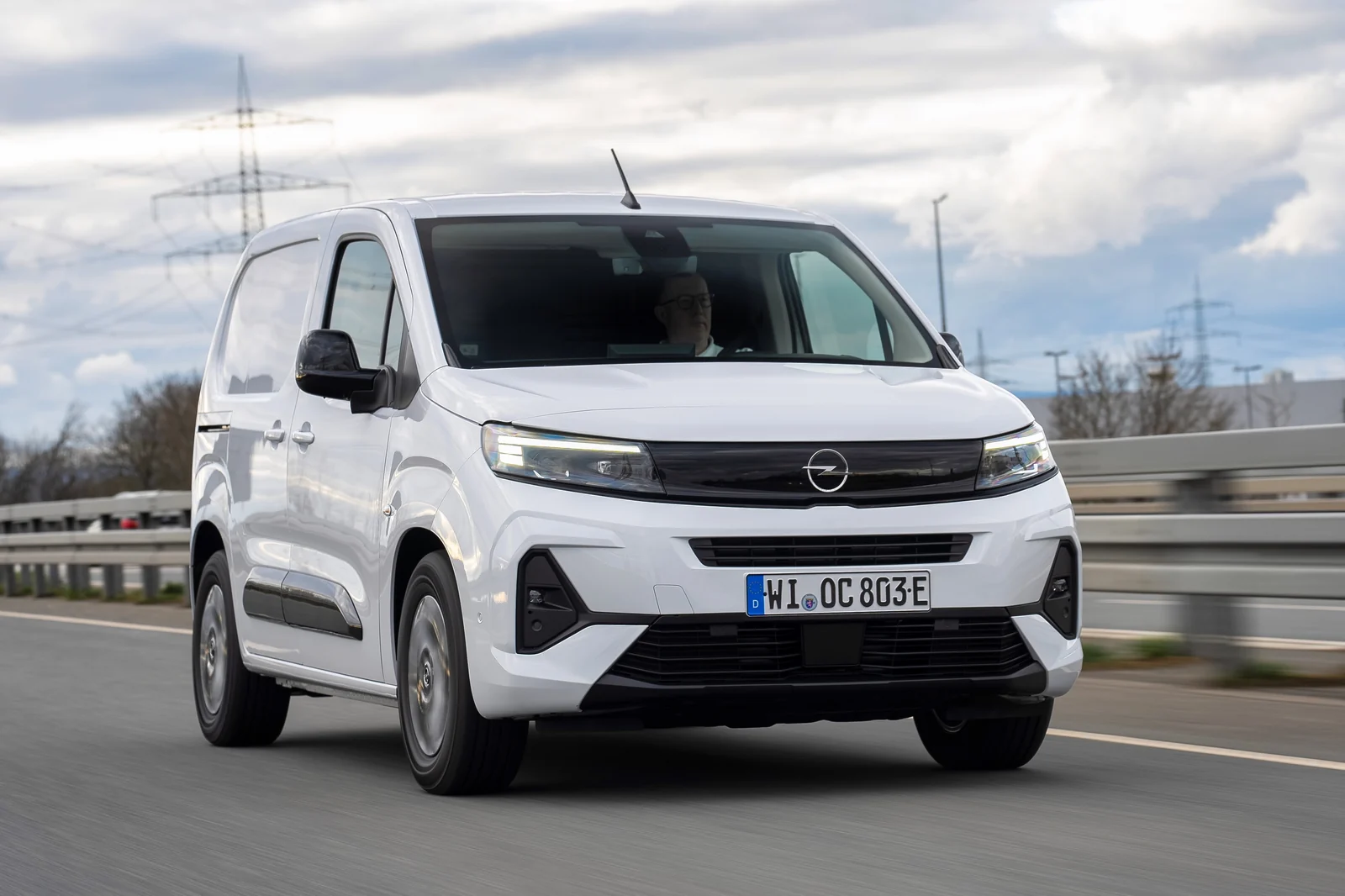
Our guides to assessing company purchases from Europe and comparing import quotations develop that process where Spain is the destination. They do not imply that Autohaus stocks these four vans. The official archive photograph shows a Combo Electric on the road and is linked to the March 2024 press kit. It does not depict the new Start, a recent handover or our own test drive. Its context is part of the information needed for a sound comparison.
| Model | Registrations | Segment rank |
|---|---|---|
| Opel Combo | 6,464 | 2 |
| Citroën Berlingo panel van | 3,957 | 4 |
| Peugeot Partner | 3,138 | 6 |
| Fiat Doblò Cargo | 2,737 | 8 |
The 40.9% share demonstrates combined commercial strength in Germany. Turning that context into a useful purchase requires the exact vehicle: load and seats, configuration, working day and complete quotation. Other businesses’ registrations cannot decide those requirements.
Sources & editorial policy
Written by Autohaus Zephyr from the linked sources. Manufacturer figures are attributed claims, not our own tests. The practical comparisons and clearly identified examples are editorial analysis. Market availability and specifications require confirmation for the exact car.
Corrections: [email protected]
How we work →Keep reading
- Importing cars for a business from Europe: how to assess stock, costs and risks
- How to compare car-import quotes without overlooking costs
- Grandland Electric gets 22 kW AC: when the extra capacity is useful