
Technology · News & analysis
Grandland Electric gets 22 kW AC: when the extra capacity is useful
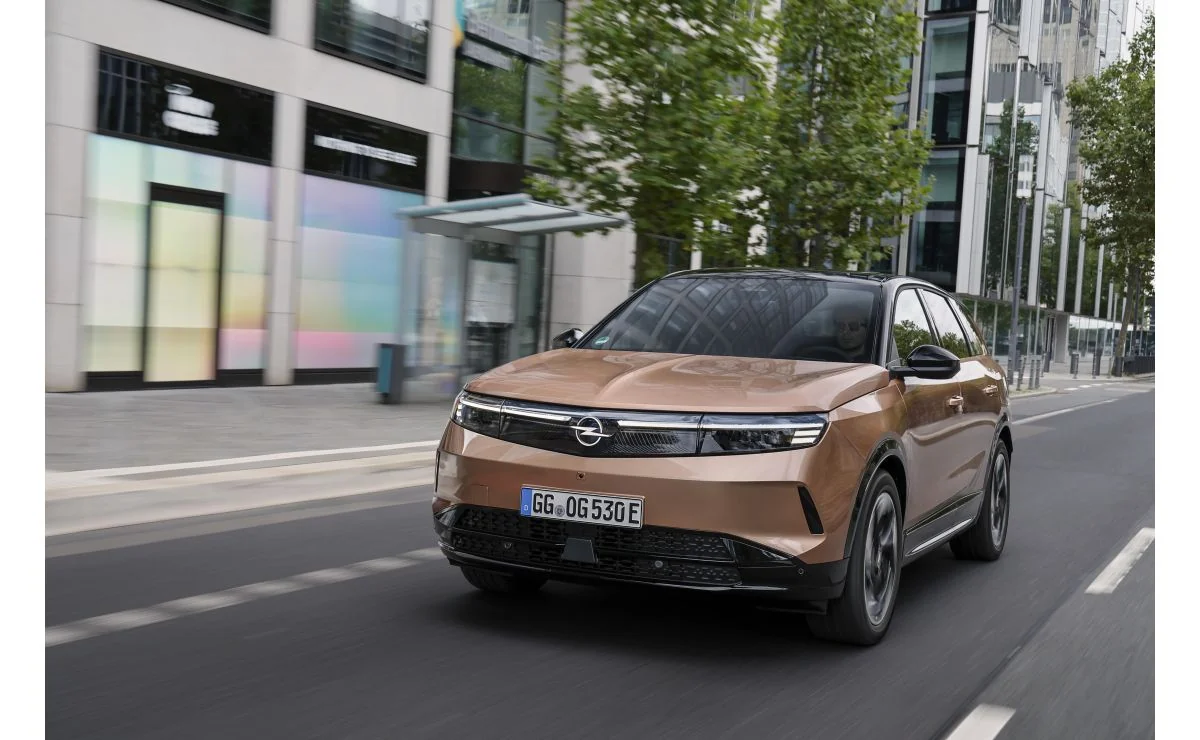
Opel announced on 3 November that Grandland Electric, Electric Long Range and Electric AWD can be equipped with a 22 kW AC onboard charger. The change is useful at compatible AC points during longer parking stops. It does not increase the output of a domestic socket or automatically double charging speed at a DC rapid charger. The buying question is where you park, for how long and which equipment the actual car includes.
What matters
AC charging depends on a chain: charging point, site supply, cable and onboard charger. Raising the vehicle’s limit helps only when the remaining elements can support it.
Three variants and an option to identify precisely
The announcement covers all three battery-electric Grandland variants and describes the charger as a first for an Opel passenger car. Availability does not establish that every already-built example has it as standard. The release sets no universal equipment price or retrofit programme for earlier vehicles. Identify the charger in each car’s configuration before comparing listings.
The equipment is most relevant when a usual parking location offers more than 11 kW and the stay is limited. An overnight connection may already recover the daily energy requirement at a lower rate. Compare the installed onboard charger with the point you will use: a listing that simply says fast charging does not distinguish AC from DC.
Why AC and DC charging need separate comparisons
During AC charging, the onboard unit converts alternating current for the battery. At a DC station, conversion takes place outside the car and charging follows a different path. This announcement therefore concerns compatible AC points. It does not establish a changed rapid-charging curve or higher DC power for the Grandland.
The distinction matters when planning a journey. AC can provide energy while you work, visit a destination or stay at accommodation. A DC stop usually serves a different parking duration. Comparing the two only by their power ratings hides the time the car will actually remain connected. Start with the purpose of the stop and required energy rather than attributing improvements in one charging route to a change in the other.
Read the quoted times without inventing a battery window
Opel compares about five hours at 11 kW with just over two and a half hours at 22 kW for Electric and AWD, both with a 78 kWh gross battery and 73 kWh usable. For Long Range it gives 6.5 versus 3.25 hours and 96.9 kWh usable. The French release identifies its gross capacity as 100 kWh; the international text contains a unit typo there.
Neither release clearly identifies the starting and finishing battery percentages for those times. They must not be labelled a zero-to-full or twenty-to-eighty test. As an ideal arithmetic illustration, adding 44 kWh takes two hours at a constant 22 kW or four at 11 kW, before losses and variations. That illustrates power multiplied by time, not a Grandland measurement or reconstruction of Opel’s test procedure.
Source: Opel — Grandland 22 kW AC, 3 November 2026 ↗ · Opel France — 22 kW charger, capacities and local scope ↗
A lower-powered point remains lower-powered
If a point limits delivery to 11 kW, a car capable of accepting 22 kW cannot automatically draw twice as much. The site’s available supply and the cable also matter. A rating on a charger can describe a maximum while an individual session is shared or restricted by its configuration. The car and point need compatible capabilities for the higher figure to be relevant.
Assess the option through required energy, parking duration and available power. Recovering 44 kWh during three hours is one example where a constant 11 kW would be insufficient even before losses, while 22 kW would provide headroom. This is not a measured Grandland session: it compares a stated need with the capabilities of the car and the site.
Markets and promotions have their own limits
The international announcement describes Electric All In for private buyers purchasing through participating Opel partners in Germany by 31 December 2026. That does not automatically transfer a charging pass, assistance package or warranty terms to Spain or another market. For a cross-border purchase, confirm the destination contract and the services attached to the exact vehicle, as well as its charger.
The releases also quote different WLTP maxima: 519 km for Electric and 691 km for Long Range internationally, versus 523 and 694 km in the French note. Keep those values tied to their release and market rather than selecting one maximum for the entire range. Comparing vehicles requires the exact version’s specification; homologated range, usable capacity and charging power describe different characteristics.
Source: Opel — Grandland 22 kW AC, 3 November 2026 ↗ · Opel France — 22 kW charger, capacities and local scope ↗
The improvement is useful when vehicle, infrastructure and parking duration align. Compare the exact equipment against a real routine, and retain the limits of Opel’s attributed charging references rather than treating them as a universal duration guarantee.
Sources & editorial policy
- Opel — Grandland 22 kW AC, 3 November 2026 ↗
- Opel France — 22 kW charger, capacities and local scope ↗
Written by Autohaus Zephyr from the linked sources. Manufacturer figures are attributed claims, not our own tests. The practical comparisons and clearly identified examples are editorial analysis. Market availability and specifications require confirmation for the exact car.
Corrections: [email protected]
How we work →Keep reading
- 800-Volt Charging: How to Tell Whether It Will Really Save Time
- Used EV battery health reports: how to interpret the results
- Opel previews its Swiss debuts: Corsa GSE, STX and Formula E at Auto Zürich