
Motorsport · News & analysis
Porsche Junior 2027: two distinct routes from simulator to circuit
Porsche announced its 2027 Junior selection on 11 November, bringing together twelve drivers from ten countries and a separate route for five esports talents. The distinction matters: the sporting destination and assessment car differ between the two pathways. Understanding a move from simulator to circuit requires looking beyond a quick lap to the evaluation process, the scope of support and the responsibilities of a real racing campaign. The 11 November announcement does not name a winner.
What matters
Junior and esports candidates share infrastructure, but their cars and prizes differ.
Two selections with different destinations
The Junior route brings together drivers nominated by national Carrera Cups; its winner receives support for a 2027 Porsche Mobil 1 Supercup campaign. The Porsche Esports Supercup route separately seeks a driver for a national one-make series. This is not one final in which seventeen people contest the same seat, and it does not promise that the digital winner goes straight into the international Supercup.
That distinction puts the progression in perspective. A national championship can provide a first physical racing environment with a different scope from an international campaign. Useful follow-up questions concern the specific series, preparation programme and obligations attached to support. Porsche describes broad destinations here rather than publishing a complete individual agreement. Selection therefore remains an opportunity to develop, rather than a guarantee of the next stage of a professional career.
Cologne assesses more than outright pace
The programme combines activities at the Porsche Esports Performance Centre in Cologne with circuit work at Portimão. Interviews, simulator sessions, tests and other assessments form part of the German stage. The sporting logic is straightforward: an isolated lap cannot show how accurately a driver explains a problem, responds to instruction or repeats a task after receiving new information from an engineer.
No public weighting table in this announcement allows an observer to calculate the winner. It would therefore be premature to turn an interview or a particular simulator session into an unofficial ranking. One participant might demonstrate immediate speed while still developing useful feedback; another might improve substantially through the day. The combined assessment makes sense because these qualities cannot all be expressed by the single fastest lap on a timing screen.
Each pathway uses a different car
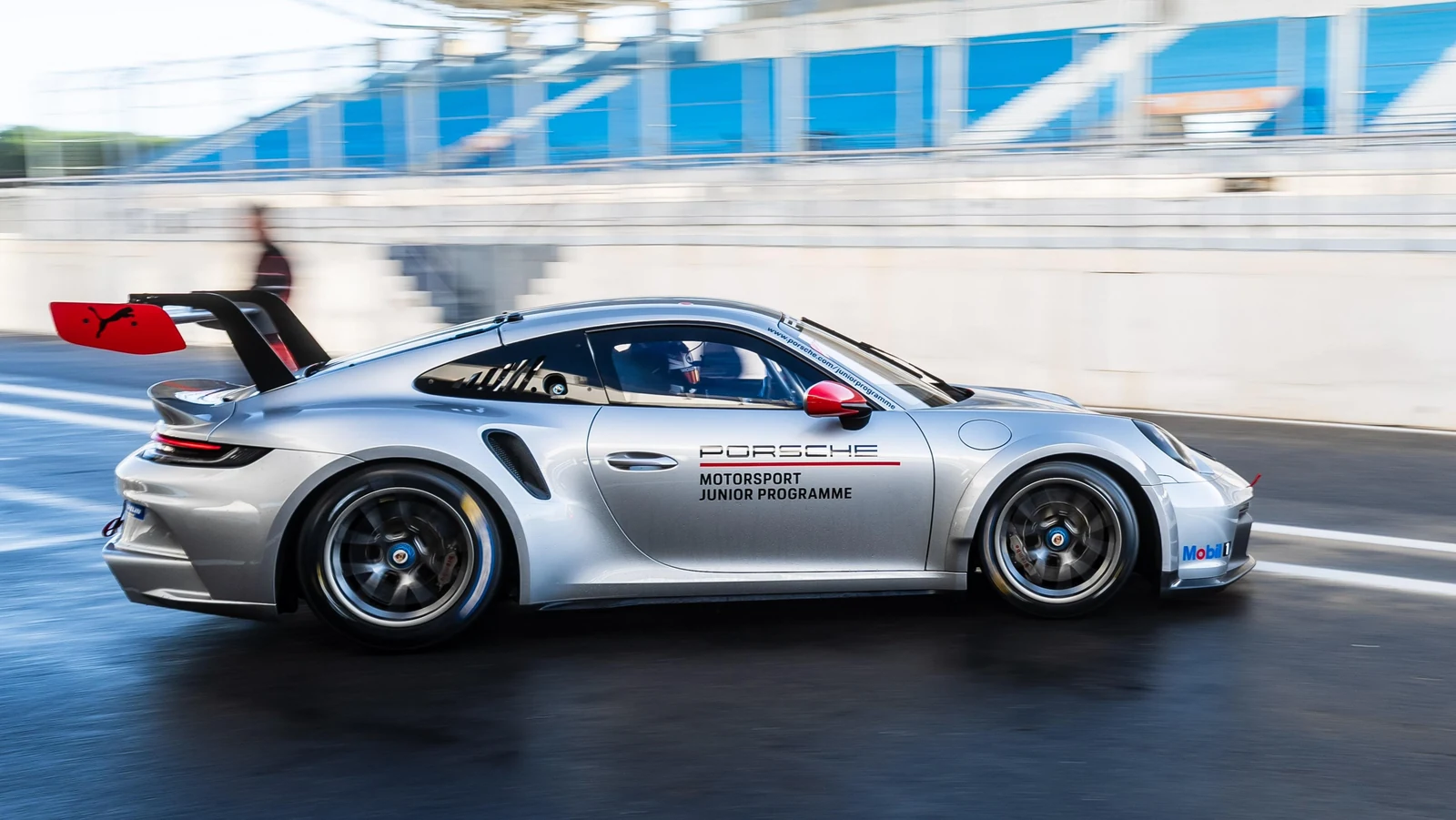
Porsche identifies the 992.2-generation 911 Cup, rated at 382 kW, for the Junior driving assessment. The best esports candidates are described as using a 911 Challenge. The model names matter: treating everyone as if they drove the same car would erase an explicit feature of the programme. Nor should the Cup's power figure be assigned to the Challenge without its own supporting specification.
A simulator allows drivers to rehearse visual references and control sequences without reproducing every physical sensation. During a real transition, observers can look for how those references are rebuilt around bodily load, visibility and material consequences. This does not establish a numerical advantage or disadvantage for digital competitors. The release provides no controlled comparison between the groups, so a conversion formula for their lap times would be invented rather than measured evidence.
Nomination is already an earlier filter
The twelve Junior candidates are aged eighteen to twenty-two and arrive through nominations from different Carrera Cups. Porsche is not announcing an open invitation to every motorist with an impressive online time. Their existing experience matters because they have already worked within teams, practice sessions and races. This is selection within a sporting structure, with previous participation forming part of the route to consideration.
For a driver or family exploring that route, the useful questions are who may nominate a candidate and what the relevant cup requires. Buying a simulator does not buy a Junior application. Winning a different competition also does not automatically confer the support described here. Distinguishing entry conditions, participation and final selection prevents a talent-development announcement from becoming an imaginary commercial offer or a promise of immediate access to a professional team.
Support extends beyond driving sessions
The manufacturer lists coaching in driving dynamics, mental strength, nutrition, fitness and media relations. That makes this a development package alongside sporting support. Its practical relevance is continuity: communicating clearly, managing recovery and retaining concentration across several sessions accompany outright speed. Those abilities can shape how effectively a driver uses an opportunity, even though the release does not assign each one a visible numerical score.
The announcement does not set out every candidate's individual budget or all costs covered by a future agreement. Calling it a season without personal expense would go beyond the published terms. Anyone assessing a real racing project would need to separate funding, coaching services, insurance, travel and conditions for continued support. We describe Porsche's announced programme without suggesting that Autohaus offers driver management, contract advice or a place in either selection pathway.
Follow the decision without merging categories
The most useful result will identify the pathway, car and session as well as the official decision. An esports outcome does not equal Junior selection simply because the activities share facilities. A photograph of a candidate driving also does not establish that a 2027 race has already taken place. This analysis retains the 11 November announcement as its factual reference rather than presenting a later publication date as a fresh selection result.
Our guide to endurance categories explains why progress in a cup does not mean immediate entry into a Hypercar. The Citroën Racing clothing programme provides another example of preparation and equipment serving different roles in competition. The next decisive update here would be an official selection naming the person, destination and defined support. That would require a separate check, rather than an inference from participation in this preview.
The development is an organised connection between esports and physical racing through two separate pathways. Its value is best judged through preparation and the destination of each selected driver, while keeping participation distinct from a confirmed seat.
Sources & editorial policy
Written by Autohaus Zephyr from the linked sources. Manufacturer figures are attributed claims, not our own tests. The practical comparisons and clearly identified examples are editorial analysis. Market availability and specifications require confirmation for the exact car.
Corrections: [email protected]
How we work →Keep reading
- Endurance and Hypercar: How to Read a Race Beyond the Fastest Lap
- Derek Bell at 85: speed, teamwork and fuel management in endurance racing
- Citroën Racing and HRX: what changes in a Formula E race suit