
Motorsport · News & analysis
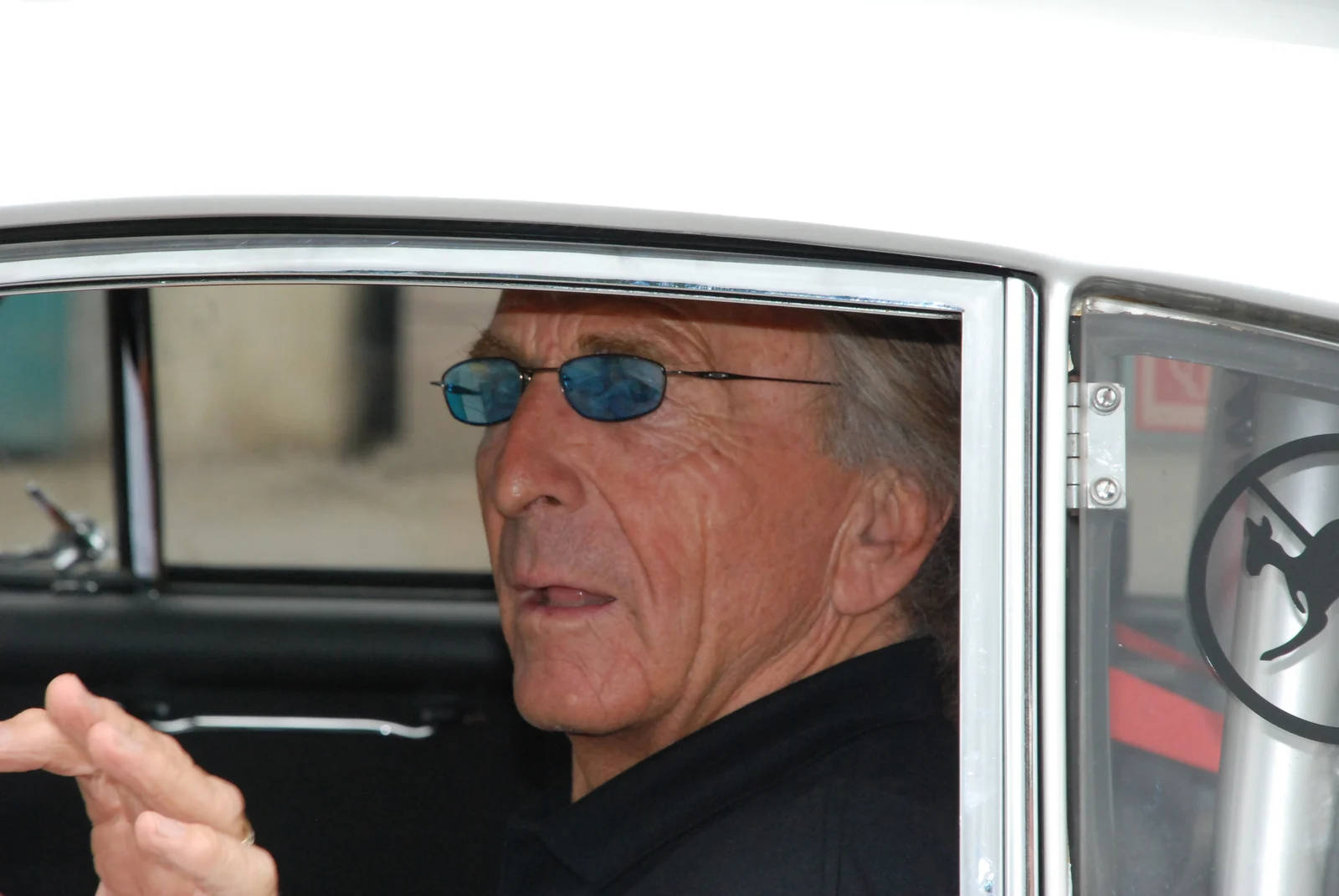
Derek Bell at 85: speed, teamwork and fuel management in endurance racing
Derek Bell turned 85 on 31 October 2026. Porsche marked the occasion in a 28 October tribute recalling five overall Le Mans victories, four with the marque, and world endurance titles in 1985 and 1986. The anniversary offers a specific sporting question: in a 24-hour race, a driver’s speed matters alongside the ability to work within a car, a team and an energy budget. The result cannot be understood through one fast lap or one person’s name alone.
What matters
Bell’s career makes endurance racing easier to read as a shared result. His achievements involve pace, but also the way drivers, machinery and teams work across an entire race.
Four Porsche victories within a five-win Le Mans career
Bell’s four Porsche victories came in 1981 with the 936/81, in 1982 with the 956 and in 1986 and 1987 with the 962C. His fifth win came before all of them, in 1975 with a Mirage GR8-Ford shared with Jacky Ickx, according to organiser ACO’s historical account. His personal record and Porsche’s overlap for four wins, but they are not the same history.
Ickx partnered him in 1975, 1981 and 1982, while Hans-Joachim Stuck and Al Holbert completed the winning crews in 1986 and 1987. Human continuity runs through changes in machinery and line-up. The chronology makes the shared nature of endurance success visible: Bell had two teammates for his last two wins and one for his first three.
Source: Porsche — Derek Bell, 85th Birthday ↗ · ACO — Derek Bell at Le Mans (2018) ↗
Group C connected performance with fuel management
The 956 combined ground effect and turbocharging, technologies that raised cornering speeds, according to Porsche’s tribute. At the same time, Group C regulations linked performance to fuel consumption. Bell and his teammates had to manage that speed over the full distance: efficiency formed part of the contest alongside the prototype’s aerodynamic and mechanical potential.
The useful principle is that maximum pace in isolation may be an incomplete criterion. A decision saving seconds on track can also change consumption, vehicle condition or the work needed later. Endurance racing adds the whole journey together. That helps explain why consistency and mechanical sensitivity feature in Bell’s profile, without presenting either as an alternative to speed or as an automatic guarantee that a team will win.
Information must survive the driver change
The tribute recalls Bell’s work with teammates including Jacky Ickx, Hans-Joachim Stuck and Al Holbert. A result did not belong solely to the person crossing the finish line. A developing problem or altered car response observed by one driver could matter to somebody else during the following stint. The organisation had to turn successive experiences into compatible decisions concerning the same vehicle rather than treat each run as a separate event.
A driver hands over a machine carrying accumulated wear and mechanical condition. Reporting a new vibration, a changed response or a fuel-management difficulty can focus the attention of the next driver and the mechanics. These illustrate the information needed to share a car, rather than claiming a conversation from a particular race. Observation complements lap time within the crew’s contribution.
Consistency appears in the total rather than one image
Porsche describes Bell as calm, consistent and mechanically aware. His 1985 and 1986 world titles and Daytona 24-hour wins in 1986, 1987 and 1989 provide sporting context for the manufacturer’s portrait: he sustained results in championships and races requiring prolonged work over long distances.
A specific example came outside Porsche. In his account of Le Mans 1995, published by Porter Press in 2020, Bell recalls the McLaren F1 GTR he shared with Justin and Andy Wallace running at the front before a clutch thrust-bearing problem cost time. Repairs left the crew third: time spent stationary changed the result despite competitive pace.
Source: Porsche — Derek Bell, 85th Birthday ↗ · Derek Bell / Porter Press — Le Mans 1995 recollection (2020) ↗
From the 1971 prototypes to sharing Le Mans with Justin
Bell raced the Porsche 917 LH at Le Mans in 1971, before the Group C period. His career later crossed other programmes and technical generations. The Ickx partnership also extended beyond Porsche, as the winning 1975 Mirage shows. That sequence explains his versatility without treating the 917, 936, 956 and 962 as equivalent cars.
In 1992 he shared a Porsche with his son Justin and Tiff Needell: ACO records the crew in 12th place. Three years later, father and son reached the podium together with Andy Wallace, third in a McLaren F1 GTR. The family story continued outside Porsche and produced a notable result distinct from Bell’s five overall victories.
Source: Porsche — Derek Bell, 85th Birthday ↗ · ACO — Derek Bell at Le Mans (2018) ↗ · ACO — 1992 Le Mans retrospective (2017) ↗ · Derek Bell / Porter Press — Le Mans 1995 recollection (2020) ↗
Questions answered
Did Bell win all five Le Mans races with Porsche?
Four wins came with Porsche in 1981, 1982, 1986 and 1987. His first was in 1975 with a Mirage GR8-Ford and Jacky Ickx, according to ACO.
Are Group C rules the same as current Hypercar rules?
No. This article compares the need to manage a whole race. Technologies and regulatory limits must be checked for the specific category and season concerned.
Bell’s 85th birthday invites more than nostalgia. Keeping cars and dates in order shows how speed, consumption and shared work combine over a long distance. That way of reading endurance racing remains useful even as the machines and regulations change, provided history and present-day specifications are not treated as interchangeable.
Sources & editorial policy
- Porsche — Derek Bell, 85th Birthday ↗
- ACO — Derek Bell at Le Mans (2018) ↗
- ACO — 1992 Le Mans retrospective (2017) ↗
- Derek Bell / Porter Press — Le Mans 1995 recollection (2020) ↗
Written by Autohaus Zephyr from the linked sources. Manufacturer figures are attributed claims, not our own tests. The practical comparisons and clearly identified examples are editorial analysis. Market availability and specifications require confirmation for the exact car.
Corrections: [email protected]
How we work →