
Motor · News & analysis
Porsche 804: what its 1962 victory explains, and what remained unresolved
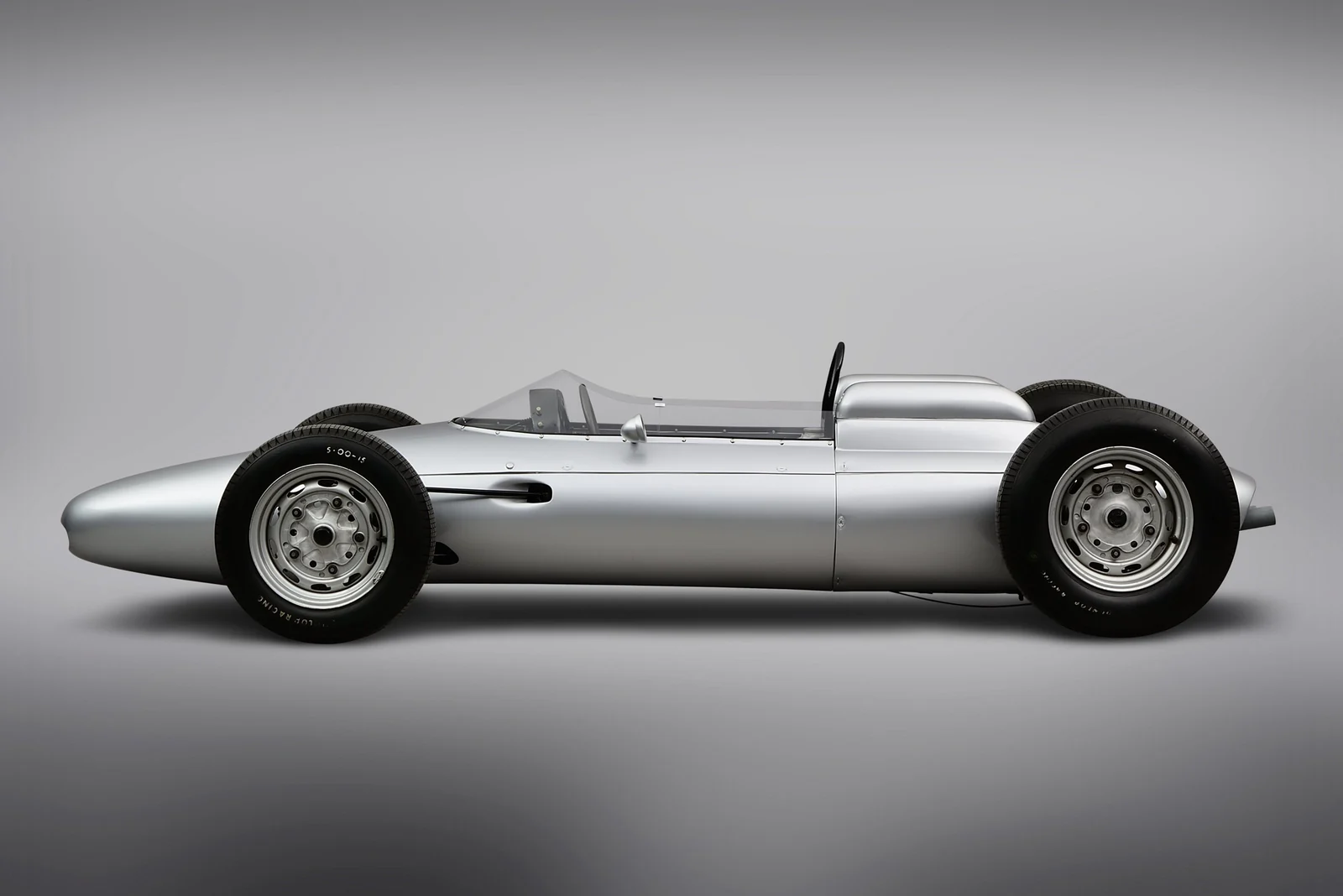
Dan Gurney won the 1962 French Grand Prix in the Porsche 804. The current development is Porsche’s retrospective published on 18 November 2026, rather than a recent race victory. Revisiting the car helps explain why a historic result was not enough to sustain its Formula One constructor programme.
What matters
Rouen counted towards the championship; Solitude was a separate, non-championship race. That distinction changes how the record is read.
A constructor victory with a specific scope
The retrospective identifies Rouen as Porsche’s first and, at the time of publication, only Formula One championship victory as a constructor. The qualification matters. It does not summarise every Porsche motorsport activity or erase participation in other roles. Neither does one victory establish a dominant season. The 804 raced only in 1962, and the account describes a difficult development programme.
Gurney also won at Solitude the following weekend, in a race outside the championship. Recording both wins is compatible with identifying one World Championship Grand Prix victory for the constructor. The distinction gives the second performance its value without adding it to the international standings. Rouen explains a championship milestone; Solitude adds another win to the car’s sporting history. The record retains both results when each event’s category is identified, instead of omitting one or counting both as championship Grands Prix.
Source: Porsche Newsroom · retrospectiva del 18/11/2026 ↗ · Porsche Museum · ficha del Typ 804 ↗
Eight cylinders did not solve the whole problem
The 804 used an air-cooled flat-eight engine, with a displacement of 1,494 cc according to the museum specification. That document lists 132 kW and a vehicle weight of 461 kg. These are manufacturer records for the historic car, rather than current measurements performed by this magazine. We retain the museum’s power unit instead of treating the different abbreviations in the retrospective as interchangeable.
Its complexity extended to twin-spark heads, overhead camshafts, gear-driven valve timing and mechanical cooling ventilation. The account explains that obtaining power at high engine speeds left limited low-speed torque. A six-speed manual transmission formed part of the response: keeping the engine in its useful operating range required suitable ratios and precise shifting. Cylinder count describes an architecture without guaranteeing an advantage on every corner exit. Its value has to be assessed together with the systems that make the engine usable.
Source: Porsche Newsroom · retrospectiva del 18/11/2026 ↗ · Porsche Museum · ficha del Typ 804 ↗
The chassis captures an unfinished technical transition
A tubular steel structure carried aluminium bodywork, double-wishbone suspension, torsion bars and inboard dampers. The 804 introduced rack-and-pinion steering and disc brakes on all four wheels. However, the retrospective describes an unusual annular brake arrangement. Calling these simply modern discs would conceal a relevant difference from later solutions.
The contemporary comparison with the monocoque Lotus 25 helps locate the challenge. Porsche was not competing against a stationary reference: other constructors were changing the relationship between stiffness, weight, dimensions and driver position. A tubular structure alone does not explain a result, just as aluminium bodywork does not establish overall superiority. The 804 is interesting as a group of engineering choices made while the competition itself was developing. Reading the complete package is more informative than awarding a verdict to one material or component.
Source: Porsche Newsroom · retrospectiva del 18/11/2026 ↗ · Porsche Museum · ficha del Typ 804 ↗
Rouen followed changes throughout the car
The Zandvoort debut exposed gear-control problems. After retirement at Monaco, Porsche missed the Belgian Grand Prix and used the interval for development. For Rouen, the account lists revisions to suspension, gear linkage, fuel tanks and seating position. A detachable steering wheel enabled a lower and more reclined driving position.
Gurney benefited from problems affecting faster rivals, which does not invalidate the victory. It does limit what can be inferred from it: winning one race does not prove that a car was consistently the quickest. Reliability, competitors’ failures and circumstances all contribute to a result. A useful interpretation combines the modifications that made completing the distance possible with the competitive context. It need not turn a deserved success into technical dominance unsupported by the source. Nor can the revised seating position, on its own, be credited with the whole result.
Nürburgring put speed and reliability in the same frame
Gurney took pole at the Nürburgring and finished third in a wet race. The retrospective recounts a battery coming loose and the driver holding it in place with his clutch foot as he continued. This is an account of a historical contingency, rather than driving advice or an acceptable present-day safety standard.
The incident shows how an apparently minor component can constrain a complete car’s performance. Engine power, suspension and driver skill do not remove the need for reliable mountings. A race exposes interfaces that a specification table cannot describe. We do not transfer that improvised response to a modern vehicle or infer that a surviving collection car remains in its 1962 condition. Conservation and any proposed operation of a historic car need their own technical assessment. The story’s relevance comes from understanding the failure within its period, not treating the improvisation as a transferable solution.
What the museum preserves, and what this retrospective does not announce
The historic cars selected for Dubai use several models to discuss identity and heritage. This article answers another question: what the 804 achieved as a Formula One constructor entry and which limitations emerged in development. Derek Bell’s endurance career illustrates another kind of sporting continuity: its results belong to their own discipline and do not add to the 804’s record.
The retrospective ends with withdrawal as a constructor after 1962. It announces no current Formula One return. The 975 RSE tested at Jarama belongs to another championship, technology and programme. Comparing them can illuminate changing engineering constraints, but does not combine their results into one record. The 804’s story retains its value when its achievements are reported within the categories and boundaries that actually apply to it.
Source: Porsche Newsroom · retrospectiva del 18/11/2026 ↗ · Porsche Museum · ficha del Typ 804 ↗
The 804 combines a championship victory, a non-championship win and an ambitious technical programme that ended after one season. Its story is clearest when a single result is distinguished from the durability of the project behind it.
Sources & editorial policy
Written by Autohaus Zephyr from the linked sources. Manufacturer figures are attributed claims, not our own tests. The practical comparisons and clearly identified examples are editorial analysis. Market availability and specifications require confirmation for the exact car.
Corrections: [email protected]
How we work →Keep reading
- Four museum Porsches for Dubai: reading each car’s own history
- Derek Bell at 85: speed, teamwork and fuel management in endurance racing
- Porsche 975 RSE at Jarama: six cars and two different race exercises