
Motorsport · News & analysis
Macau 2026: following three FIA World Cups without mixing up the rules
On 13 November, the FIA outlined the sporting features of its three World Cups at the Macau Grand Prix, scheduled for 19–22 November. Their 68 drivers from 34 nations share the 6.120-kilometre Guia Circuit, but not a common car or format. This guide explains Superpole, Race Mode and F4’s new organisation using the official programme reviewed on 18 November; it contains no subsequent results.
What matters
Identify the category and session before reading a classification: winning a qualification race is not the same as winning the World Cup.
Three competitions with different purposes
Formula Regional, GT and Formula 4 each contest their own World Cup within the same weekend. The two single-seater categories are not interchangeable either: F4 offers an initial encounter with the circuit for drivers who may later progress to Formula Regional. The FIA’s total of 68 drivers from 34 nations covers the three competitions together, rather than describing a single starting grid containing that many cars at once.
Begin by separating practice, qualifying, qualification races and main races. Every classification answers a different question about the weekend. Sharing a track does not make the lap times an absolute ranking of driver ability or technology. A GT3 car, a Formula Regional single-seater and an F4 car operate within different technical frameworks. Comparing a lap without that context disguises the distinct work required of their drivers and teams.
Source: FIA · 2026-11-13 ↗
GT: eight manufacturers and individual Superpole runs
The FIA announces eight manufacturers for the GT World Cup: Aston Martin, Audi, BMW, Ferrari, Lamborghini, McLaren, Mercedes-AMG and Porsche. Aston Martin’s return raises manufacturer representation to a record for the event, according to the organiser. That describes the variety of brands entered, rather than guaranteeing equal winning chances. Execution, technical rules and track conditions still shape the outcome throughout the weekend, regardless of the breadth of the manufacturer list.
Superpole returns after its introduction in 2025. The fastest ten drivers in Q1 run individually, receiving two qualifying laps and permission to use a new set of Pirelli tyres. The format places emphasis on a precise individual attempt, but the fastest driver has not yet won the World Cup: racing remains on the programme. Check whether a result describes Q1, Superpole, the qualification race or the main race before interpreting its significance.
Source: FIA · 2026-11-13 ↗
Formula Regional: allocating 100 seconds of Race Mode
Formula Regional’s Race Mode allows drivers to activate full engine performance from the cockpit for limited periods. The FIA specifies a total allowance of 100 seconds per driver in each race, used through successive activations. It is not unrestricted extra performance throughout the race. Nor should the function be assigned automatically to GT or F4 cars merely because they take part in the same Macau Grand Prix meeting.
The tactical question is where to spend that allowance. An activation may help prepare an overtake or respond to another car, but using time now reduces the resource available later. Without telemetry or official information on a particular driver’s use, an individual pass cannot be attributed conclusively to Race Mode. Our F1 energy analysis examines another rule set: it offers context for finite resources rather than rules that can be copied across categories.
Source: FIA · 2026-11-13 ↗
F4 adopts a multi-team structure
The F4 World Cup, introduced in 2025, moves to a multi-team format in 2026. The FIA presents this as a way to intensify competition while helping young drivers gain Guia experience before a possible move into Formula Regional. It is a change in sporting organisation. It does not imply identical preparation, circuit knowledge or future promotion prospects for everyone entered in the event, even if their machinery belongs to the same category.
For a newcomer, adaptation between sessions, consistency and completion of the programme provide useful evidence alongside position. An urban race can offer limited opportunities to recover from poor qualifying. A single lap or incident is also an insufficient basis for predicting a professional career. The Porsche selection pathways describe a different sporting process: a strong performance and a confirmed future seat remain separate facts, whatever promise a driver shows.
Source: FIA · 2026-11-13 ↗
Sunday times for mainland Spain and Switzerland
The FIA programme lists the main F4 race on Sunday 22 November at 09:15 Macau time, GT at 12:35 and Formula Regional at 15:30. Macau is UTC+8; mainland Spain and Switzerland are on CET, UTC+1, at that date. Subtracting seven hours gives starts of 02:15, 05:35 and 08:30 CET respectively. These are conversions of the announced schedule, subject to change, rather than confirmed timings for a particular television or streaming service.
Saturday 21 November includes qualification races: F4 at 11:40 Macau time, GT at 14:35 and Formula Regional at 16:15, equivalent to 04:40, 07:35 and 09:15 CET. This article uses the advance programme and may appear after some Saturday sessions have taken place. Consult current FIA classifications for their results and the latest programme for changes. We do not claim here that any of these sessions have been completed or report their eventual winners.
Source: FIA · 2026-11-13 ↗
Looking beyond the final position
Pirelli is the announced exclusive tyre supplier across the three World Cups, with different dry and wet specifications for each category. That helps explain tyre decisions without implying everyone uses one identical compound. Weather can change how a session should be interpreted. Attributing an advantage to a particular tyre requires evidence about the actual fitment and conditions, rather than simply a position on the timing screen or the manufacturer’s name on a sidewall.
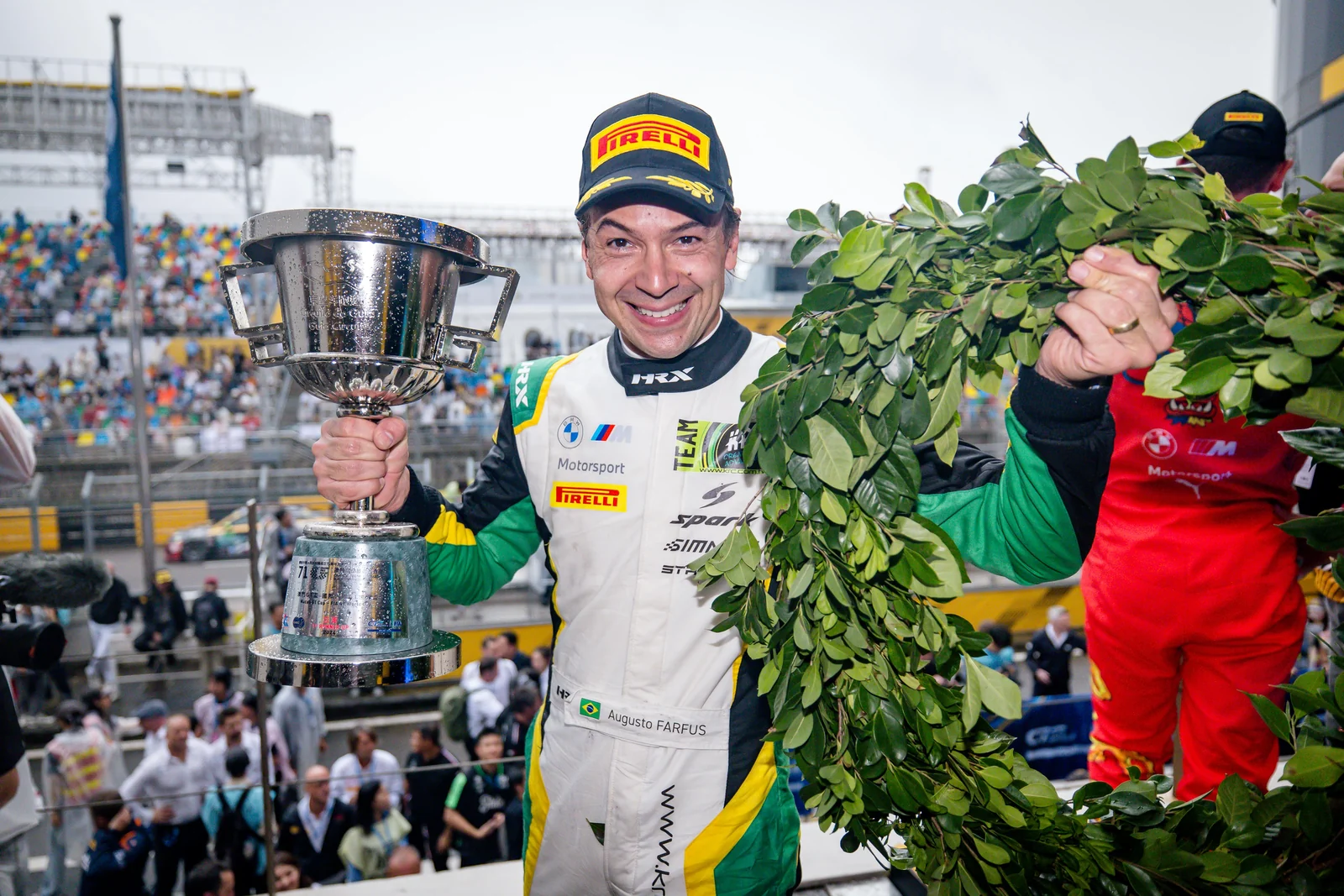
The lead photograph shows Augusto Farfus in Macau in November 2024, with its archive date and photographer credited. It illustrates the background of a driver announced for the 2026 GT field and does not depict a result from this edition. Apply the same time distinction throughout the weekend: the advance programme explains rules and timings, official results establish what happened, and technical context explains why a classification never tells the entire story of a race.
Source: FIA · 2026-11-13 ↗ · BMW M Motorsport · 2026-10-13 ↗
| World Cup | Macau (UTC+8) | Mainland Spain and Switzerland (CET) |
|---|---|---|
| F4 | 09:15 | 02:15 |
| GT | 12:35 | 05:35 |
| Formula Regional | 15:30 | 08:30 |
Macau combines three World Cups with different rules and phases. Superpole, the 100-second Race Mode allowance and F4’s new format help explain them, while the programme reviewed on 18 November must remain separate from later results.
Sources & editorial policy
Written by Autohaus Zephyr from the linked sources. Manufacturer figures are attributed claims, not our own tests. The practical comparisons and clearly identified examples are editorial analysis. Market availability and specifications require confirmation for the exact car.
Corrections: [email protected]
How we work →Keep reading
- Formula 1 2026: How to Read the Relationship Between Aerodynamics and Energy
- Endurance and Hypercar: How to Read a Race Beyond the Fastest Lap
- Porsche Junior 2027: two distinct routes from simulator to circuit