
Motorsport · Practical guide
Formula 1 2026: How to Read the Relationship Between Aerodynamics and Energy
An F1 car’s speed cannot be explained by one component alone. Assessing a setup means connecting aerodynamics, energy use and the phase of the lap, while checking which version of the regulations is being discussed.
What matters
Before accepting a technical explanation, identify the document and its date, the part of the lap being analysed, and the conditions being compared. The initial 2026 presentation does not replace later revisions.
A technical change that must be read by version
The FIA presented the 2026 technical framework as a combined change to the power unit, chassis and aerodynamics, including active aerodynamic systems. That combination matters: an aerodynamic change can alter the conditions in which energy is used, while an energy decision can affect how performance is assessed at different points around a circuit. It is therefore misleading to reduce the regulations to one component or one power figure.
The timeline is part of the analysis, too. On 28 February 2026, the FIA announced modifications following pre-season testing and work with teams and drivers. An infographic or explanation based on the initial presentation may help explain the broad approach, but it may not capture every later detail. For a specific claim, find the relevant official edition and check whether a subsequent revision affects it.
Source: FIA · Presentación del marco técnico F1 2026 ↗ · FIA · Amendments to 2026 F1 Regulations ↗
Why aerodynamics cannot be judged from a photograph
Aerodynamic drag resists forward motion and can affect performance on a straight; aerodynamic load contributes to a car’s behaviour through corners. These aims can conflict: a solution that favours one part of a lap is not necessarily the most effective elsewhere. Active aerodynamics adds questions of operation and context. The shape of a wing alone does not tell you which configuration was used or in what phase of the lap it should be assessed.
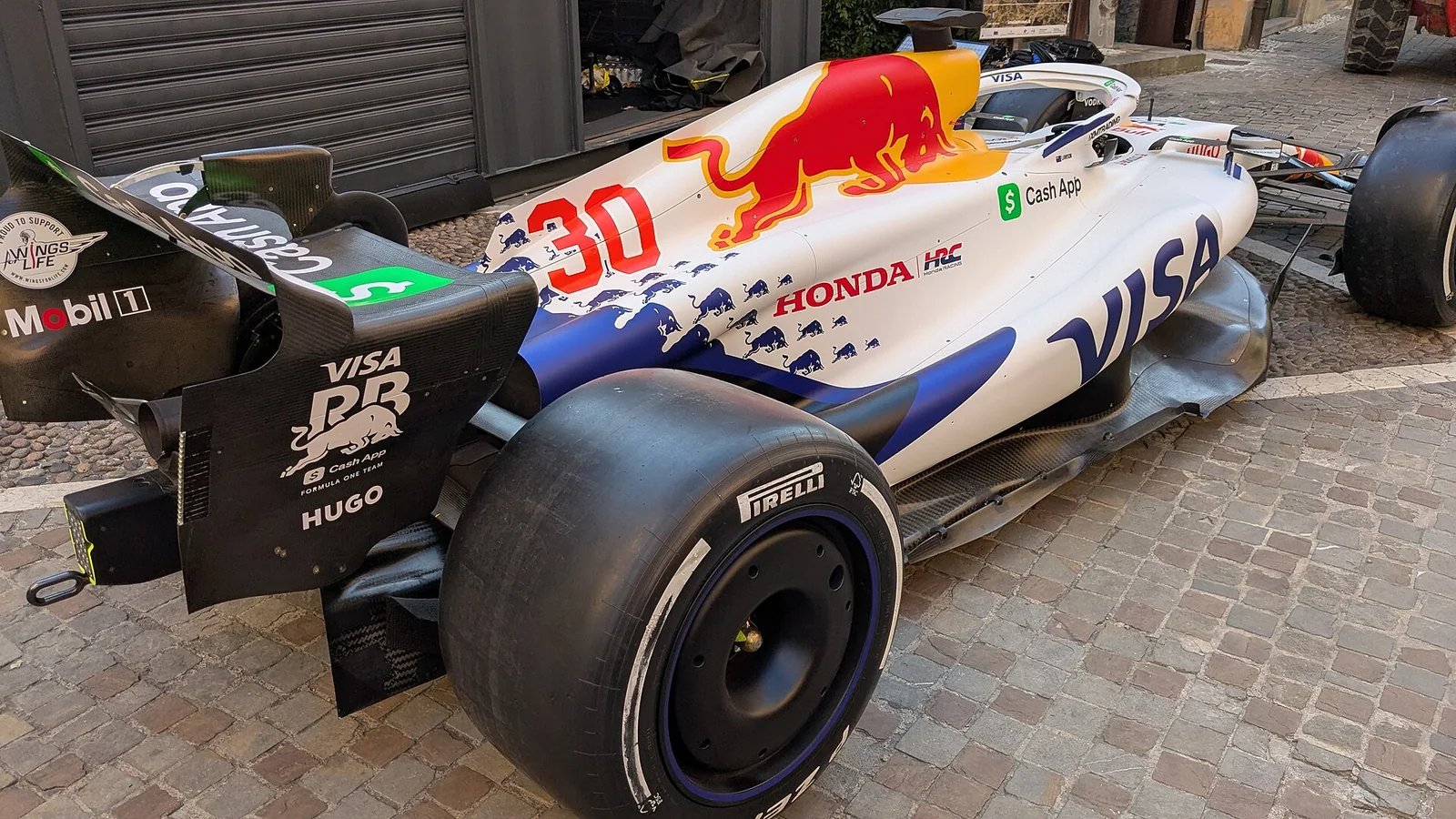
A still photograph does not, by itself, reveal the setup, the car’s conditions or the net effect on lap time. Nor does a single top-speed figure prove that a solution is better: it may fit several explanations, including an aerodynamic choice, a difference in energy use or different conditions. A careful reading separates what is visible from what can be concluded, and avoids claiming a cause without comparable evidence.
The useful question is where energy is used
When considering energy, ask where it is deployed, what it is intended to achieve and what happens afterwards, rather than asking only how much was used. An advantage on a straight may come with a cost elsewhere if the deployment strategy changes the performance available later. That relationship needs verifiable information; a summary that provides no deployment data cannot reconstruct the balance over a lap.
This does not mean that every change in speed can be translated directly into a conclusion about the power unit. The result also relates to aerodynamics, the circuit and the conditions being compared. If a commentary does not say which measurement it is discussing—such as speed at a point, sector time or lap-time difference—ask for that detail before accepting a claim that it identifies an improvement or a problem.
How to check whether two laps are comparable
Start by defining the question: are you comparing a straight, a sector or the whole lap? Then check whether the laps were completed in similar circumstances. Traffic, tyres and race phase can change how a difference should be interpreted; it may also matter whether a qualifying-style lap is being compared with one run under different demands. If those conditions are unknown, describe the result as a limited observation, not a complete explanation.
Next, look for more than one indicator relevant to the claim. To assess an alleged straight-line benefit, for instance, it matters whether it is reflected in lap time and what happens in the following corners. Not every public analysis needs detailed telemetry, but it should distinguish the observed measurement, the available context and the inference. If one link is missing, the conclusion should be more cautious.
A hypothetical example shows the lap-wide trade-off
Imagine, purely as an invented example and not as data from a real car, a setup that gains 0.2 seconds on a straight and loses 0.3 seconds in the following corners. The combined result across those sections would be a loss of 0.1 seconds, before considering any other part of the circuit. The straight-line figure might look favourable, but on its own it would not describe the lap’s performance.
The same reasoning applies to an explanation about energy: a difference observed in one section is not enough to establish the remaining balance or the effect elsewhere. This example does not claim that such a trade-off occurs in 2026 F1; it illustrates why an overall conclusion requires examining the relevant whole. Label examples explicitly as hypothetical so readers do not mistake them for published measurements.
Separate regulations, statements and interpretation
Different sources answer different questions. An FIA document can verify the regulatory framework and its date; a team explanation reflects what that participant says about its approach; an outside analysis offers an interpretation of what has been observed. They are not interchangeable. If a claim concerns what is permitted, the primary reference should be the applicable official text, not a news description of the initial presentation.
The FIA’s announcement of changes on 28 February 2026 makes it especially important to check the date of any summary. If the linked source is only a general announcement, do not assume that it settles a specific technical detail: consult the relevant regulation text and revisions. This article explains how to structure a reading; it does not certify that a design complies or predict which team will gain an advantage.
Source: FIA · Presentación del marco técnico F1 2026 ↗ · FIA · Amendments to 2026 F1 Regulations ↗
A short method for assessing a technical claim
When you read that an aerodynamic change makes a car faster or that an energy decision explains a speed difference, use four checks: identify what was measured, where, under which conditions and against which version of the regulations. Then ask what other explanation could fit the same data. This routine does not require choosing a favourite team or having access to private data; it helps separate facts, context and hypotheses.
If an explanation omits the section of the lap, compares non-equivalent laps or mixes an initial rule with a later revision, treat its claim as provisional. Wait for a source to show the link between cause and effect, or narrow the conclusion: state what difference was observed and what cannot be established from the available information. This makes it possible to follow technical developments without turning a striking figure into a complete explanation.
Source: FIA · Presentación del marco técnico F1 2026 ↗ · FIA · Amendments to 2026 F1 Regulations ↗
Questions answered
Does the FIA’s initial presentation by itself describe every 2026 rule?
Not necessarily. On 28 February 2026, the FIA announced modifications following pre-season testing and work with teams and drivers. For a specific detail, check the applicable official text and later revisions rather than relying only on the initial material.
Does a higher top speed prove an aerodynamic or power-unit improvement?
No. It is an observation that can fit several explanations. Attributing it to a cause requires relevant context and comparisons, including the measured section, other parts of the lap and the conditions for both laps.
Can this article establish whether a design complies with the regulations?
No. It explains how to interpret claims about aerodynamics and energy; it does not certify designs or replace the current official regulations. Consult FIA documentation for the specific technical question.
To understand 2026 F1, connect aerodynamics and energy to the section of the lap being assessed, compare equivalent conditions and verify the date of the regulatory document. A striking component or isolated figure can prompt a question, but cannot settle it: a useful explanation shows what was observed, what is inferred and what remains to be confirmed.
Sources & editorial policy
Written by Autohaus Zephyr from the linked sources. Manufacturer figures are attributed claims, not our own tests. The practical comparisons and clearly identified examples are editorial analysis. Market availability and specifications require confirmation for the exact car.
Corrections: info@autohauszephyr.ch
How we work →Keep reading
- Endurance and Hypercar: How to Read a Race Beyond the Fastest Lap
- Hydrogen in motorsport: what Toyota is researching with a combustion engine
- Porsche 911 Turbo S T-Hybrid: what electrification is for in a sports car