
Technology · News & analysis
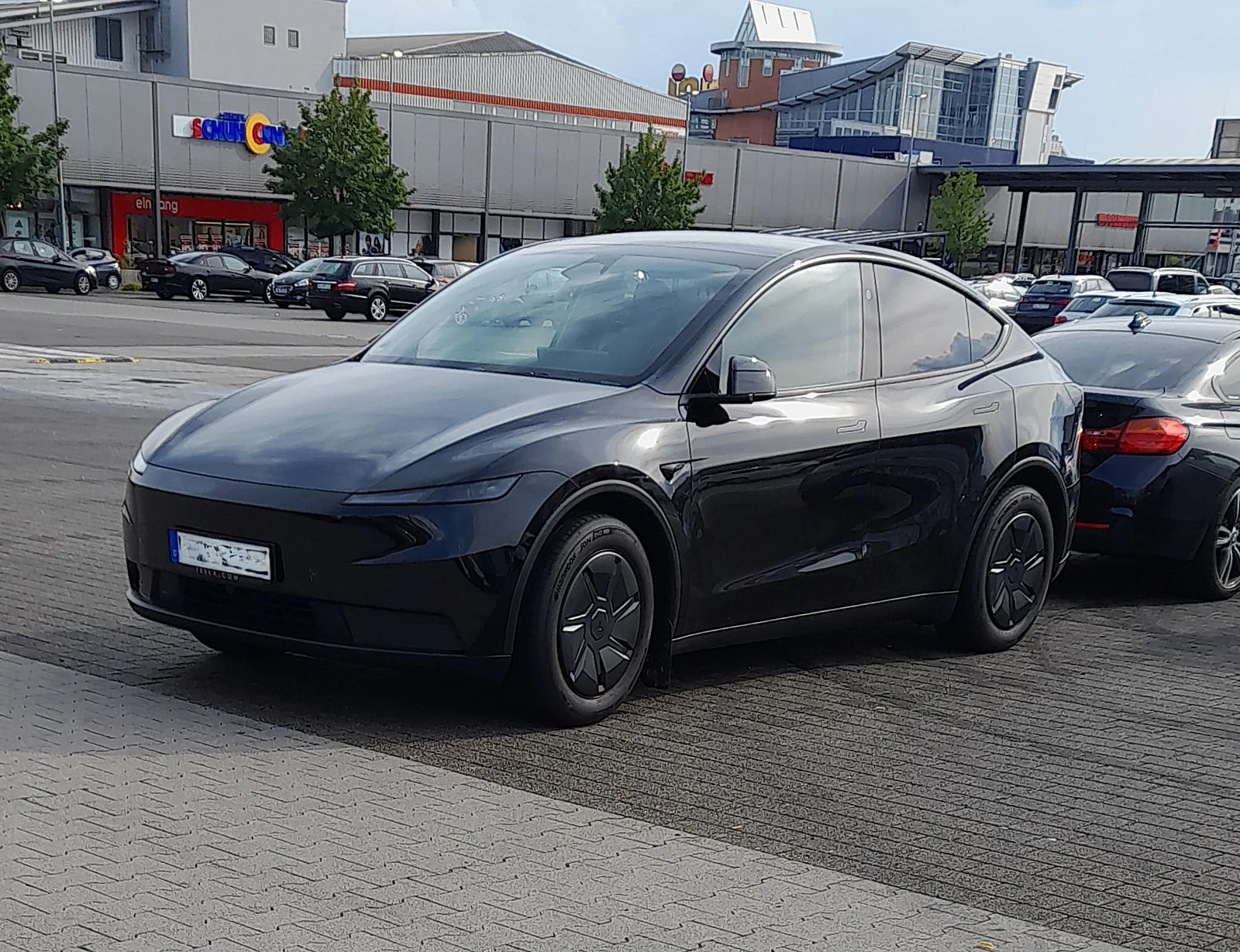
Green NCAP gives the Model Y five sustainability stars: what the result covers
Green NCAP published a new round of sustainability assessments on 29 October. The 62.6 kWh Tesla Model Y RWD earned five stars and 93%; the 43 kWh BYD Dolphin Surf received five stars and 96%. Suzuki’s e Vitara, the diesel Volkswagen Golf and petrol Tayron were also assessed. The significant development is not simply the ranking, but the combination of driving tests and information about vehicle production.
What matters
These are sustainability stars rather than crash-protection ratings. The tested version and the quality of its production data are part of the result.
A lifecycle assessment asks more than a consumption test
The Model Y assessment includes raw materials, manufacturing, distribution and operation. Green NCAP highlights Tesla’s first sharing of verified, vehicle-specific lifecycle assessment data for this exercise. That information increases the detail available for estimating the impact generated before a driver uses the vehicle. It does not mean that production has no emissions, or that environmental impact begins only when a car reaches the road.
For a buyer, trip consumption and the vehicle’s overall impact are different questions. A car can use relatively little energy while driving and still carry a material production footprint. Assessing it across its life requires a common set of assumptions. That is why a tailpipe figure taken from an advertisement cannot be compared directly with a whole-life figure and presented as though both measure the same thing.
Source: Green NCAP — Sustainability Ratings, 29 October 2026 ↗
What the tested Model Y’s 93% actually describes
The assessed vehicle is the rear-wheel-drive Model Y with a 62.6 kWh battery, rather than every Model Y variant. Green NCAP reports a lifecycle footprint of 95 grams of CO2 equivalent per kilometre and a ten-out-of-ten greenhouse-gas score. It also praises efficiency and thermal management, including the retention of cabin heat after shutdown in a test conducted at minus seven degrees Celsius.
The report records a 10–80% rapid charge in 24 minutes and notes the absence of V2L/V2G on the assessed current car. These findings help distinguish priorities: thermal efficiency, stopping time and powering external equipment are different capabilities. The measured charging time is not a promise for every charging station, ambient temperature or initial battery condition a reader might encounter when using their own vehicle.
Source: Green NCAP — Sustainability Ratings, 29 October 2026 ↗
The Dolphin Surf illustrates the role of size and data
The 43 kWh Dolphin Surf achieved 96% and five stars. The organisation points to its relatively low weight, small battery, efficiency and V2L capability; its recorded 10–80% charging time was 33 minutes. It also identifies potentially limiting range for some uses and room to improve rear-cabin heating. A strong overall score does not make those limitations irrelevant to a particular household or journey pattern.
Generic production assumptions were used for the Chinese-built car, rather than verified vehicle-specific manufacturing data. That methodological difference from the Tesla belongs alongside any comparison. It cannot automatically establish a ranking of all Chinese and European factories. The result combines product characteristics with the information available to assess them, so both deserve attention before cars are sorted solely by their headline percentages or number of stars.
Source: Green NCAP — Sustainability Ratings, 29 October 2026 ↗
e Vitara: efficiency and convenience are separate questions
The 60 kWh Suzuki e Vitara received four-and-a-half stars and 87%. Green NCAP highlighted efficiency from the grid to battery output during 11 kW charging. It also recorded a 44-minute 10–80% rapid charge, slow cabin heating and inaccuracies in the trip computer that Suzuki subsequently addressed through a service campaign, according to the organisation. These findings describe different parts of the ownership experience.
A vehicle can waste relatively little energy during home charging while requiring longer stops on a motorway journey. There is no contradiction because the measurements concern different processes. A buyer combining overnight charging with longer trips should inspect both results and check whether the particular car has received the cited campaign. The environmental score cannot replace that vehicle-specific enquiry or establish the condition of a used example.
Source: Green NCAP — Sustainability Ratings, 29 October 2026 ↗
Golf and Tayron discourage a verdict based on fuel alone
The Golf 2.0 TDI earned three-and-a-half stars and 69%, just below the 70% threshold for four stars. Green NCAP praised consumption and emissions treatment. The Tayron 1.5 eTSI DSG received two-and-a-half stars and 41%, with a lifecycle figure of 263 grams of CO2 equivalent per kilometre. These are identified variants, rather than universal ratings for diesel, petrol or mild-hybrid vehicles as categories.
Within this assessment, the difference between the Model Y’s 95 grams and the Tayron’s 263 grams is approximately 64% lower. That percentage is our calculation from the published values, rather than a reduction guaranteed for every driver. Applying it outside the assessment would require understanding the assumptions and use being compared, while also avoiding comparisons that silently substitute vehicles with different capacities, configurations or operating conditions.
Source: Green NCAP — Sustainability Ratings, 29 October 2026 ↗
Using the five assessments in a buying decision
The first step is to identify the version and battery of the vehicle being considered. Then separate the questions: estimated environmental footprint, measured consumption, cold-weather behaviour, charging, space and range requirements. The five results expose trade-offs without resolving the entire purchase. They are also distinct from Euro NCAP stars for occupant protection or the performance of driving-assistance systems, which require their own evidence.
For a used-car purchase, the findings can become specific checks: exact configuration, outstanding campaigns, battery condition and the circumstances in which rapid charging will be used. Sustainability need not become a single slogan to be useful. Its value is in attaching numbers and boundaries to different aspects of a car.
Source: Green NCAP — Sustainability Ratings, 29 October 2026 ↗
Questions answered
Do five Green NCAP stars mean five crash-test stars?
No. This report concerns sustainability and lifecycle impact. Euro NCAP’s safety assessments belong to a different programme and should be checked separately.
Does the 93% score cover every Model Y?
It should not be generalised that way. The release identifies a 62.6 kWh rear-wheel-drive Model Y, with the assessment’s conditions and data forming part of the result.
This round makes several compromises visible: size, manufacturing, heating, charging and energy use. Reading those details turns the stars into the beginning of an assessment rather than a universal recommendation. The complete findings and the exact tested version remain the reference points for each meaningful comparison.
Sources & editorial policy
Written by Autohaus Zephyr from the linked sources. Manufacturer figures are attributed claims, not our own tests. The practical comparisons and clearly identified examples are editorial analysis. Market availability and specifications require confirmation for the exact car.
Corrections: [email protected]
How we work →Keep reading
- Euro NCAP and assisted driving: how to interpret the rating before you buy
- Heat pumps in electric cars: when they matter and how to check before buying