
Motorsport · News & analysis
Antonelli seals the title in Mexico as Verstappen wins the race
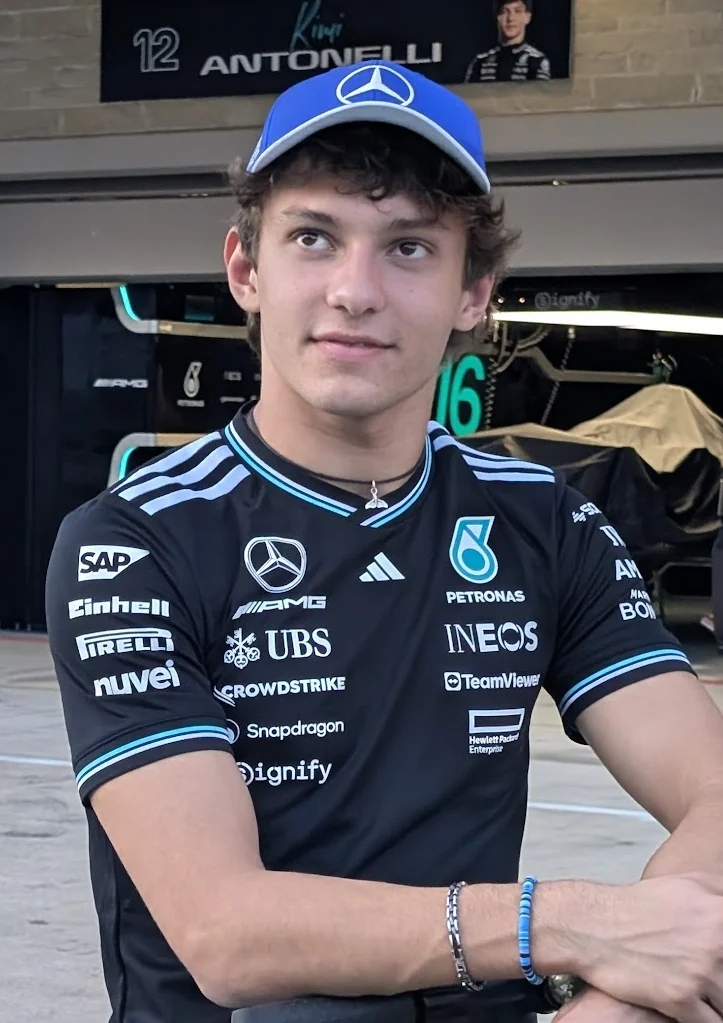
Kimi Antonelli finished third in the Mexico City Grand Prix on 1 November and secured the 2026 Formula 1 drivers’ championship. Max Verstappen won ahead of Lewis Hamilton. Formula 1’s official report identifies the 20-year-old Italian as the youngest champion: ninth place would have been enough to settle the title regardless of his rivals. That starting position makes this a race best understood through two separate sets of results.
What matters
Verstappen’s race win and Antonelli’s championship required different things: extracting the most from one afternoon and protecting an advantage built across a season.
Ninth was the threshold, rather than the whole strategy
Antonelli started fourth and finished third. The important number between those positions is ninth: that was sufficient to secure the championship regardless of Hamilton and George Russell. He therefore did not need to win the contest at the front to achieve Sunday’s principal objective. It was still necessary to complete 71 laps and negotiate interruptions; a favourable championship calculation could not finish the race for him.
Passing Leclerc after the red flag gave Antonelli a podium position without requiring him to catch the two leaders. That was the visible balance on Sunday: he improved his track position while retaining a substantial cushion over the ninth place he needed. The different objectives explain why the finish gave both the Grand Prix winner and the new champion their own reason to celebrate.
Verstappen converted somebody else’s difficulty into an opportunity
The winner started fifth on medium tyres, while other leading contenders began on softs. The opening-lap Ferrari battle helped him reach second. Charles Leclerc received a five-second penalty for leaving the circuit and, when he served it during his stop, Verstappen moved ahead of that group. The official report sets out the sequence: track position changed through both racing and a sporting decision.
That opportunity still had to be used. To benefit from another driver’s penalty, a rival must remain close enough, complete his own stop and then sustain the challenge. Two explanations therefore belong together: Ferrari’s dispute created an opening, and Verstappen turned it into a win. Reducing the result to the penalty alone would omit the subsequent restarts and the pressure that continued almost to the flag.
The red flag reset the immediate problem
Valtteri Bottas’s accident brought out the Safety Car and then a red flag because the barriers needed attention. Antonelli had stopped shortly beforehand. The standing restart restored Hamilton to third on the new grid, with Antonelli behind him. The Mercedes driver subsequently passed Leclerc to move into the top three. The final podium position conceals a less straightforward route through the second phase of the race.
An interruption like this makes earlier time gaps a poor standalone explanation of what follows. Restart position, the launch and the tyres for the next stint become immediate priorities. Antonelli’s problem was specific: protect a championship within reach without becoming a passive participant in a contested restart. That is a more informative description than treating third place as an uncomplicated consequence of the qualifying order or the pre-race points situation.
A second restart kept the race victory in play
The collision involving Oscar Piastri and Arvid Lindblad triggered another late neutralisation. Verstappen retained the lead after the Safety Car withdrew and beat Hamilton by 0.7 seconds. Antonelli completed the podium roughly four seconds behind the winner. The championship could be settled while the race win still demanded effective defensive driving and a clean final restart. Neither fact diminishes the other.
The neutralisations compressed the final gaps, so those numbers are not a measurement of relative pace over the entire afternoon. The reverse conclusion would also be misleading: a compressed gap does not make the closing laps unimportant. The leader still had to manage the restart with Hamilton nearby. There are two useful scales here, the trend across a long race and the execution of the laps that remained after its interruptions.
Penalties make the final classification essential
Leclerc finished fourth ahead of Norris and Russell. Russell’s result included a ten-second penalty for contact with Isack Hadjar on the opening lap. The second Mercedes driver’s afternoon was compromised early: he lost places before the first braking zone and later served the penalty at his pit stop.
Further back, Liam Lawson recovered from a pit-lane start to seventh. Gabriel Bortoleto, Hadjar and Ryo Hirakawa completed the points, the Haas driver scoring on his Formula 1 debut after a mid-weekend call-up. Their results show other consequences of an afternoon shaped by recoveries, penalties and interruptions as well as the championship outcome.
What Mexico changes for the next race
Formula 1 lists São Paulo on 6–8 November as the next event. Antonelli will arrive with the drivers’ championship settled, while Verstappen comes from his third win of the season. Mexico separated two scales of performance: Red Bull exploited the opportunities of one race and Mercedes converted an accumulated advantage into the title.
The contrast with Austin is sporting: Antonelli won there on a one-stop strategy while the championship remained open; third in Mexico was sufficient to close it. He did not need another victory, but still had to negotiate a standing restart after the red flag, pass Leclerc and survive a final neutralisation. The podium came through those phases rather than the pre-race calculation alone.
Questions answered
Did Antonelli win the Mexico City Grand Prix?
No. Verstappen won, Hamilton finished second and Antonelli was third. That podium secured the Italian’s 2026 drivers’ championship.
Why was ninth enough?
His accumulated advantage made ninth place sufficient regardless of Hamilton’s and Russell’s results, according to Formula 1’s official race report.
Mexico combined a hard-earned race victory with a well-managed championship conclusion. Reading the two results together recognises Verstappen’s work without overlooking the significance of Antonelli’s third place. The sporting interest lies in those different objectives sharing the same afternoon, rather than forcing one explanation onto every part of the result.
Sources & editorial policy
Written by Autohaus Zephyr from the linked sources. Manufacturer figures are attributed claims, not our own tests. The practical comparisons and clearly identified examples are editorial analysis. Market availability and specifications require confirmation for the exact car.
Corrections: [email protected]
How we work →Keep reading
- Austin 2026: Antonelli wins on one stop, but the title remains open
- Formula 1 2026: How to Read the Relationship Between Aerodynamics and Energy