
Transport · Practical guide
Collecting and delivering an imported car: how to choose transport and check each stage
Choosing between transporting a car and driving it requires comparing the complete service, not just the price. Confirm responsibilities, cover, documents, driving conditions and delivery point in writing; taking delivery does not necessarily mean the car is ready to use or register.
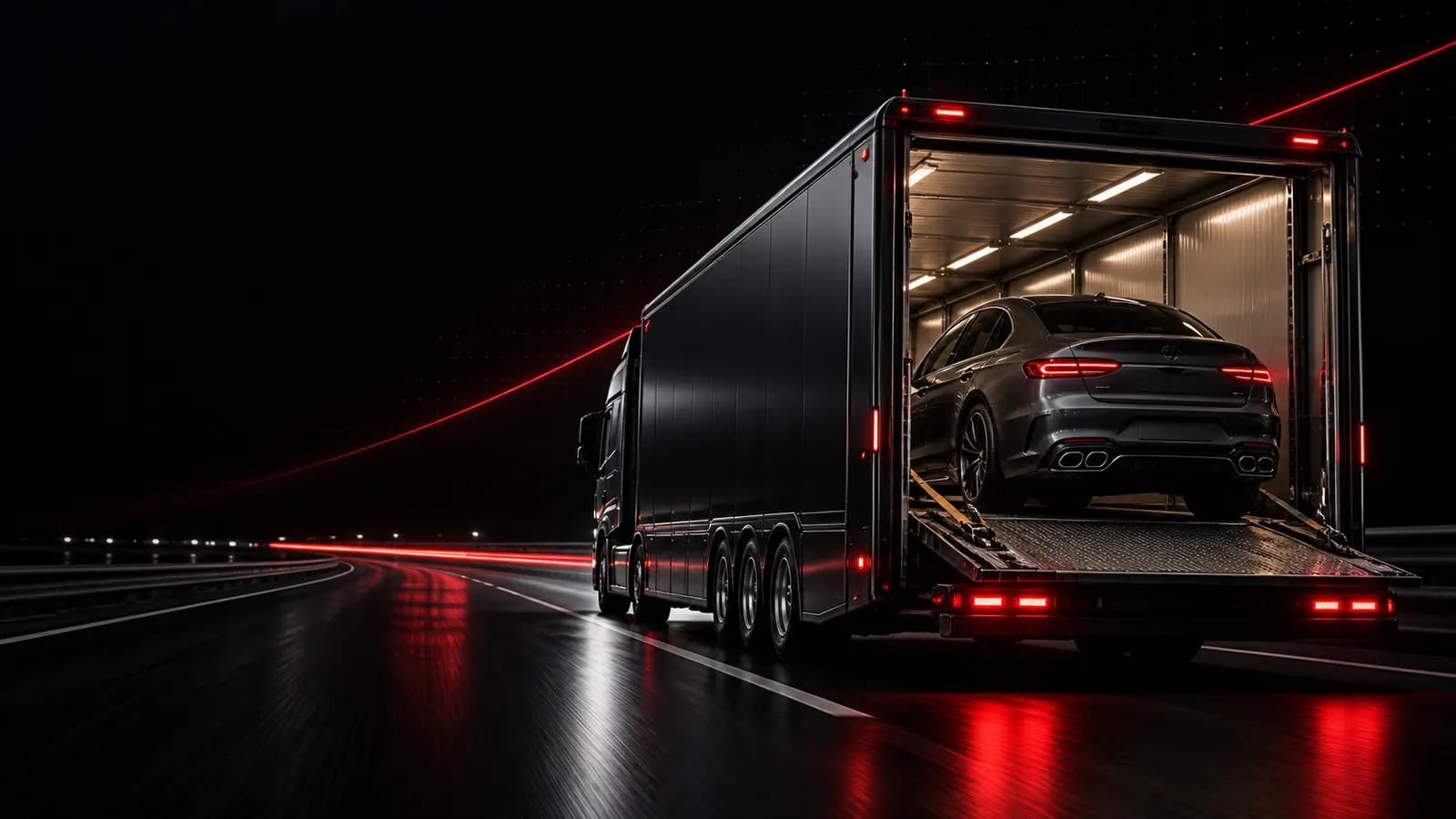
What matters
Before booking or paying, identify and verify the seller and payment beneficiary. Then confirm the method, route, cover, condition records, documents and recipient in writing.
Choose based on the car’s condition and status
The first question is not which option looks cheaper, but which one is legally and practically workable for this particular car. A car that will not start, is damaged, lacks documents needed for road use or has an unclear administrative status may need to travel by transporter. An engine that starts does not prove that the car is authorised, insured or ready for a long journey. Explain any known fault or limitation before requesting a quote.
Driving can offer flexibility over route and timing, but it also makes the buyer responsible for preparation and exposure to roadside problems. A transporter reduces the need for the car to be driven during the journey, but introduces loading, unloading, access and custody arrangements. For example, hypothetically, a car that runs but whose plates and insurance have not been confirmed for the intended dates is not yet a ready-to-drive option: first obtain confirmation from the relevant parties.
Compare the alternatives only once both are feasible. Spain’s DGT explains registration of vehicles from the EU, but later registration does not by itself establish whether plates or insurance are valid for a particular journey. For a car leaving the Netherlands, RDW provides export information; check with the competent authority for the specific case and do not automatically apply that procedure to another country.
Source: DGT: matricular un vehículo procedente de la UE ↗ · RDW: exportar un vehículo de Países Bajos ↗
Compare the full journey, not an isolated figure
Ask each provider to identify the exact collection and delivery locations, transport method, included service and estimated time windows. Clarify whether the quote covers loading, unloading, collection at a particular address, home delivery or delivery only at an accessible point. Narrow streets, access restrictions or insufficient manoeuvring space may require a different meeting point. Agreeing this before booking avoids discovering that “delivery” means somewhere other than expected.
Request written details of exclusions, possible additional charges and who must approve them before they arise. Do not assume that storage, a second delivery attempt, waiting time, handling a non-running car or the final leg from a depot is included. If driving, add fuel, tolls, travel to the collection point, accommodation if needed and the practical value of your time. These are costs to estimate for your own route, not amounts that can be inferred from a universal tariff.
Compare offers with the same origin, destination, vehicle condition and service level. A lower quote may not include the same door-to-door service, schedule or incident handling. In a hypothetical example, an offer to a depot and another to an accessible address in Spain are not equivalent: ask for the final-leg cost and terms before choosing. Keep the accepted quote and any later changes together.
Identify the seller and payment beneficiary before paying
Before making a reservation or payment, confirm who is selling the car and who will receive each amount. Verify the parties’ identities and authority using documentation consistent with the transaction, and check that the named payment beneficiary matches what has been explained and documented. Do not pay first on a promise that the beneficiary will be identified or validated later. If the seller, account holder, intermediary and vehicle recipient are different people, require their relationship to be clarified and supported before transferring funds.
Separate the vehicle price from intermediary fees and logistics costs. Ask for each item, its recipient and applicable terms to be set out clearly in the paperwork. Autohaus Zephyr is a sourcing and intermediation service, not necessarily the seller, importer or guarantor of every car. Each participant’s role must be identified in the case file; coordination does not amount to a universal guarantee of payment, transport, condition or administrative outcome.
Also confirm who can authorise changes to collection and whom to contact about a delay or damage. Do not accept changed payment instructions in a standalone message: verify them with a known contact through an independent channel. If you cannot reconcile identity, documents and payment recipient, pause the transaction and request clarification before booking, handing over originals or paying.
Record condition and keep track of keys and originals
Before the car leaves, agree how its condition will be recorded and who will carry out that check. A handover record should make the vehicle identifiable and describe visible damage, accessories and any observed issue. Dated photos may add context, but do not by themselves replace agreed terms or a technical inspection. Ask who creates the record, who signs it, how you will receive a copy and what happens if you are not present at collection.
Repeat the check on arrival before accepting the recorded condition without qualification. Examine visible areas such as the exterior, glass, wheels and other accessible features, and compare them with the initial photos or record. If you cannot inspect something, record that limitation rather than stating that it is in good condition. A visual check does not reveal internal mechanical condition or certify that the car is safe to drive.
Make an inventory of keys, accessories and documents accompanying the car. Before handing over originals, ask why they are needed, who will hold them and how they will be returned or transferred; record exactly what you hand over and keep legible copies where possible. Confirm the contact responsible during transit. This record helps trace missing items and prevents disagreement about what was handed over at each stage.
If driving, verify authorisation, cover and readiness
A registration plate alone is not enough. Before starting the journey, confirm with the authorities or professionals responsible for those arrangements that the administrative status, plates and insurance are valid for that vehicle, route and dates. Check what documents the driver must carry and what assistance is available if the car breaks down. DGT information on EU vehicles concerns registration in Spain; do not treat it as confirmation that a vehicle may be driven in another country or at every stage of its journey.
Export or deregistration and their effects may depend on the country of origin and the particular circumstances. RDW describes the Dutch export process, but it is not a general rule for every country. If the car comes from the Netherlands, check its guidance and confirm what applies to your case; for another origin, identify the relevant authority. Verify documents and insurance before travel rather than relying on a seller’s assurance that “everything is in order.”
Arrange a basic readiness check with a competent person: known faults, tyres, lights, fluid levels and warning signs merit attention, but an informal check does not guarantee reliability or safety. If in doubt, request an appropriate inspection before driving or choose transport. Plan rest stops, the route and what to do if there is a breakdown; an estimated journey time is not a delivery guarantee. General advice cannot certify that a particular car is safe to drive.
Source: DGT: matricular un vehículo procedente de la UE ↗ · RDW: exportar un vehículo de Países Bajos ↗
Plan receipt and distinguish delivery from readiness for use
Agree who will receive the car, at what address or accessible point, and with which working contact number. If the buyer will not be present, appoint and authorise someone in advance and explain how they can verify identity, condition and paperwork. Confirm whether the transporter needs a suitable unloading area and what alternative applies if it cannot reach the planned destination. For an urban delivery, check relevant access conditions at the location beforehand; do not assume a foreign plate permits entry to every zone.
Make a list of what remains after unloading: document transfer, administrative steps, inspections or further movements. Physical receipt does not itself mean the car is registered in Spain, ready for regular use or authorised to be driven. DGT is a reference for information on registering a vehicle from the EU, but the documents and handling of a particular case must be confirmed for that vehicle. For taxes or other obligations, ask the competent authority or a professional to assess the actual documents; do not assume a particular tax outcome.
Make sure the logistics agreement says who coordinates any later movements and who pays for each service. Autohaus arrangements are agreed for each case and should appear in the relevant quote; do not assume that administrative work, onward transport or a guaranteed result is included. If the car needs to go elsewhere, clarify whether that leg will be by transporter or road and verify the conditions for that new stage again.
Set a clear process for damage, delays and completion
Before booking, ask what to do if damage or delay occurs: whom to notify, which channel to use, what contractual deadline applies and what evidence to keep. Request written transport terms and a description of the cover. The word “covered” does not explain which risks, limits, exclusions, excesses or claim steps apply. Do not assume comprehensive cover exists or that a seller’s policy extends to transit; cover and responsibility depend on the service and agreed documents.
If you notice a discrepancy on arrival, photograph the damage and its context, compare it with the collection record and report it promptly under the agreed procedure. Describe specific observations and avoid altering or repairing the item before documenting it, unless necessary to address an urgent issue. Keep proof of the notification, along with the quote, contract, records, messages and receipts. Acceptance, signatures and written reservations can have consequences under the applicable terms; ask what you are acknowledging before signing if it is unclear.
Before closing, confirm receipt of the car, keys and listed documents, and assign an owner and next step to every open issue. Final checklist: parties and beneficiary verified before payment; method and route defined; cover and exclusions understood; condition recorded at collection and delivery; plates and insurance confirmed if driving; destination accessible; originals and pending steps identified. Resolve gaps before committing to the next payment or movement.
| Factor | Transporter | Driving by road |
|---|---|---|
| Feasibility | Confirm loading, vehicle condition and access at collection and delivery. | Confirm plates, insurance and administrative status for the route and dates. |
| Costs to compare | Service scope, collection and delivery, exclusions and possible extras. | Travel to collection, fuel, tolls, accommodation and time. |
| Evidence and coordination | Condition records, keys, documents, responsible contact and damage process. | Documents for road use, readiness, assistance and roadside contingencies. |
Questions answered
Which is better: a transporter or driving the car?
It depends on the car’s condition, whether it can legally be driven, the route, access at loading and delivery, and total cost. Compare equivalent quotes and do not choose to drive until plates and insurance have been verified for the journey and dates.
Does delivery in Spain mean I can already use or register the car?
Not necessarily. Delivery confirms a logistics stage, not completion of the steps or checks required for ordinary use. Consult DGT information and confirm the requirements for your vehicle’s documents and status.
What should I do if I find damage at delivery?
Photograph what you find, compare it with the collection record and report it promptly under the contractual procedure. Keep a copy of the notification and ask what the delivery terms or any reservation you wish to make mean.
First resolve the identity of the seller and payment beneficiary. Then compare door-to-door transport with the real cost of driving, verify cover in writing, and record condition and documents at each handover. If you want help coordinating a search and import from Germany, Autohaus Zephyr can review the case and set out its service in writing; the seller, transport, paperwork and payments are confirmed case by case.
Turn the research into a buying plan
Tell us the vehicle, total budget and destination in Spain. We can assess the search or an existing advert. The initial enquiry is free; inspection and coordination require an agreed quote.
Discuss my car search ↗Sources & editorial policy
Written by Autohaus Zephyr from the linked sources. Manufacturer figures are attributed claims, not our own tests. The practical comparisons and clearly identified examples are editorial analysis. Market availability and specifications require confirmation for the exact car.
Corrections: info@autohauszephyr.ch
How we work →Keep reading
- How to compare car-import quotes without overlooking costs
- Imported Cars and Low-Emission Zones: What to Check Before Choosing