
Industry · News & analysis
Woodruff opens: what BMW’s new battery plant actually makes
BMW opened its Woodruff plant in South Carolina on 13 November 2026 and began series assembly of Gen6 high-voltage batteries there. The facility supplies Spartanburg, around 24 kilometres away, for the iX5 and future electric vehicles. This is a specific industrial step: battery-pack assembly moves close to vehicle production. It does not make Woodruff a cell factory or establish when an iX5 will be delivered to a customer in Spain.
What matters
Series battery assembly is now confirmed; buying a vehicle still requires its own specification, market and delivery information.
From a purchased cell to an integrated battery
Woodruff takes cells supplied by specialist manufacturers and assembles them into high-voltage batteries. BMW describes a cell-to-pack architecture, integrating cylindrical cells directly into the battery pack. These are separate levels of manufacturing. Making a cell and building the complete assembly installed in a vehicle require different equipment, checks and responsibilities, even when both are routinely described as battery production.
A pack’s value includes how its components are connected and housed, how temperature is managed and how the completed assembly is checked before leaving the line. A cell-supply agreement cannot establish that those operations are running. The opening confirms that additional link in the chain. Our coverage of the Gen6 agreements with Samsung SDI and LG addresses the preceding stage and retains its own date and scope.
Source: BMW Group · 2026-11-13 ↗
Why proximity to Spartanburg matters
BMW puts the distance between Woodruff and Spartanburg at 15 miles. The industrial logic is to establish a regional flow between battery assembly and vehicle production. Assessing how well it works requires questions about keeping pace with the vehicle line, responding to a supply interruption and switching battery variants without disrupting operations. Distance is a useful starting point rather than the entire explanation.
A short journey does not remove transport, warehousing or reliance on materials arriving from elsewhere. Nor can it establish an emissions saving without comparing routes, loads and energy inputs. The useful distinction is which process has been localised and which inputs still originate outside the region. Describing the whole chain as local simply because two plants share a state would conceal those remaining dependencies.
Source: BMW Group · 2026-11-13 ↗
The iX5 is the first named application
BMW identifies the iX5 as its first fully electric vehicle assembled in the United States and positions Woodruff as support for that industrial launch. It also retains the ambition to assemble at least six electric models at Spartanburg by 2030. The first statement names the battery’s intended application; the second is a multiyear portfolio and capacity objective that still depends on subsequent execution.
For a European buyer, the next useful document is the market-specific product offer. It should identify the version, equipment, approval status and expected delivery date. The assembly country alone also cannot determine the cost of importing an individual vehicle. This release provides neither a Spanish price list nor a stock allocation that can be passed on to readers as an immediately available purchase.
Source: BMW Group · 2026-11-13 ↗
Automation needs evidence of outcomes
According to BMW, the plant combines more than 300 employees with around 250 robots. It describes continuous process monitoring, artificial-intelligence data analysis and a final check of every battery. Checking every assembly is a statement about inspection coverage. It does not mean every battery is defect-free, nor does it establish an in-service failure rate for vehicles that will use the packs.
The industrial assessment should go beyond counting robots. Process records are valuable when they link an assembly to component batches, identify a deviation and support containment before it spreads. Outcome measures would include rejection rates, rework and yield over an identified period, using a stated method. The opening announcement explains the intended control system but does not publish a comparable history of those operating indicators.
Source: BMW Group · 2026-11-13 ↗
Virtual training meets the physical production line
BMW describes training in a virtual copy of the factory and using digital twins to prepare operations. Their practical role is to rehearse a sequence and become familiar with equipment before working on real parts. This can help during a ramp-up in which a facility, its workforce and its processes all need to reach a stable operating rhythm at the same time.
Our assessment is that effectiveness should be checked at the real workstation: recognising hazards, completing a task correctly and responding when an operation falls out of sequence. Finishing a virtual exercise does not replace those checks. Likewise, having a digital twin cannot establish that every software, tooling or component change has been validated under every condition. These are preparation tools rather than universal product certification.
Source: BMW Group · 2026-11-13 ↗
Vehicle range remains a model-specific question
The percentage improvements BMW associates with Gen6 compare technology generations. They should not automatically become guaranteed miles or charging minutes for every vehicle using the cells. Pack specification, the complete vehicle and charging conditions all influence the result. A manufacturing report can explain the architecture without assigning a commercial specification to an unidentified configuration or an unconfirmed market version.
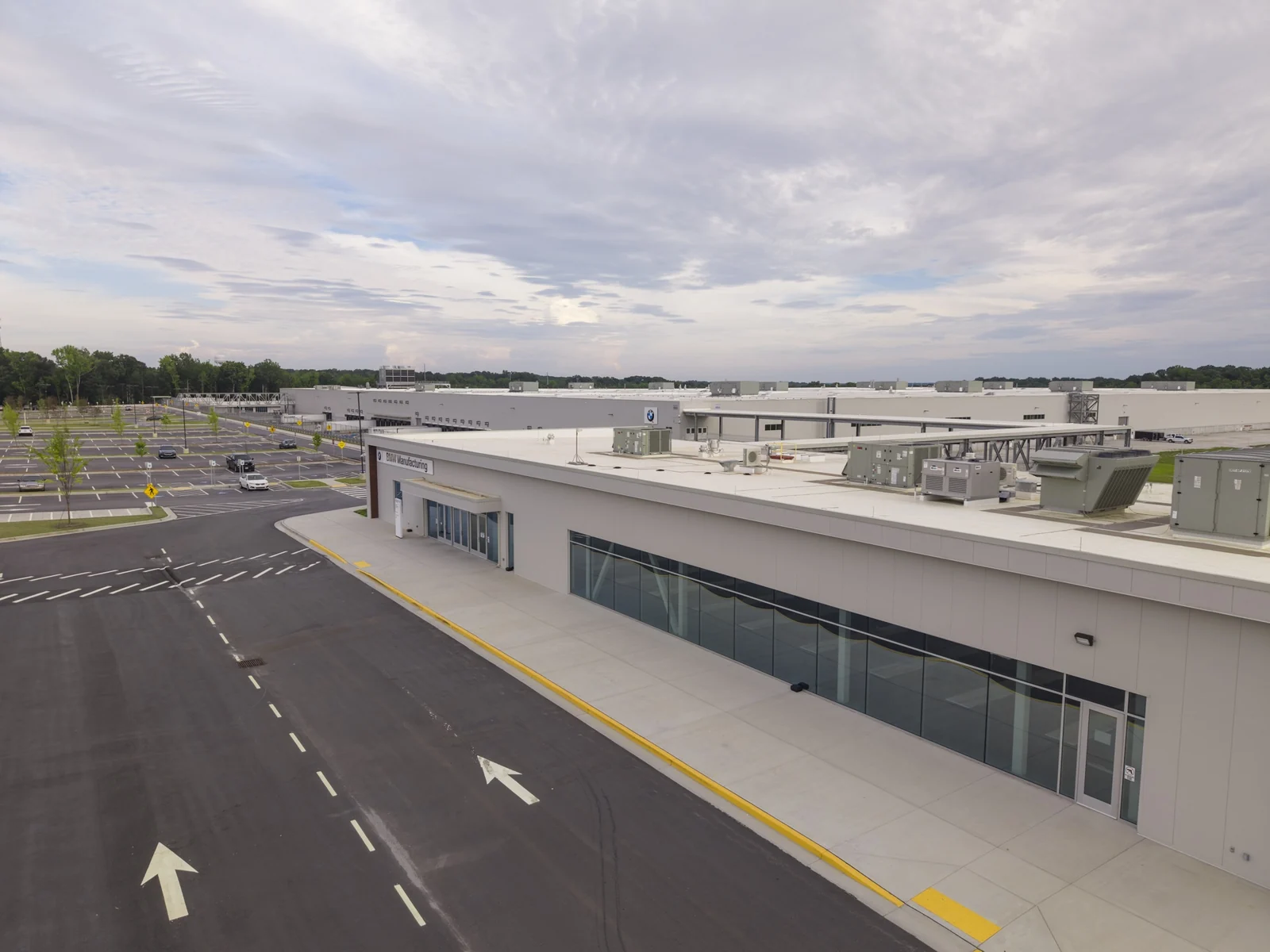
Our analysis of the BMW i3 journey from Nordkapp to Tarifa shows how the question changes when moving from technology to a particular route. Here, the verified development is series battery assembly at Woodruff from 13 November. The official archive photograph was distributed with the opening announcement. It records neither our attendance nor a production rate that can be inferred from the parking spaces visible outside.
Source: BMW Group · 2026-11-13 ↗
Woodruff adds Gen6 pack assembly to BMW’s US production chain. It supports the industrial case for the iX5; vehicle performance, availability and customer deliveries require their own model-specific and market-specific evidence.
Sources & editorial policy
Written by Autohaus Zephyr from the linked sources. Manufacturer figures are attributed claims, not our own tests. The practical comparisons and clearly identified examples are editorial analysis. Market availability and specifications require confirmation for the exact car.
Corrections: [email protected]
How we work →Keep reading
- BMW adds Samsung SDI and LG to Gen6: contracts now, supply later this decade
- BMW i3 from North Cape to Tarifa: what 2h 46m of charging tells us
- BMW starts 3 Series production in Dingolfing ahead of a 2027 launch