
Technology · News & analysis
BMW i3 from North Cape to Tarifa: what 2h 46m of charging tells us
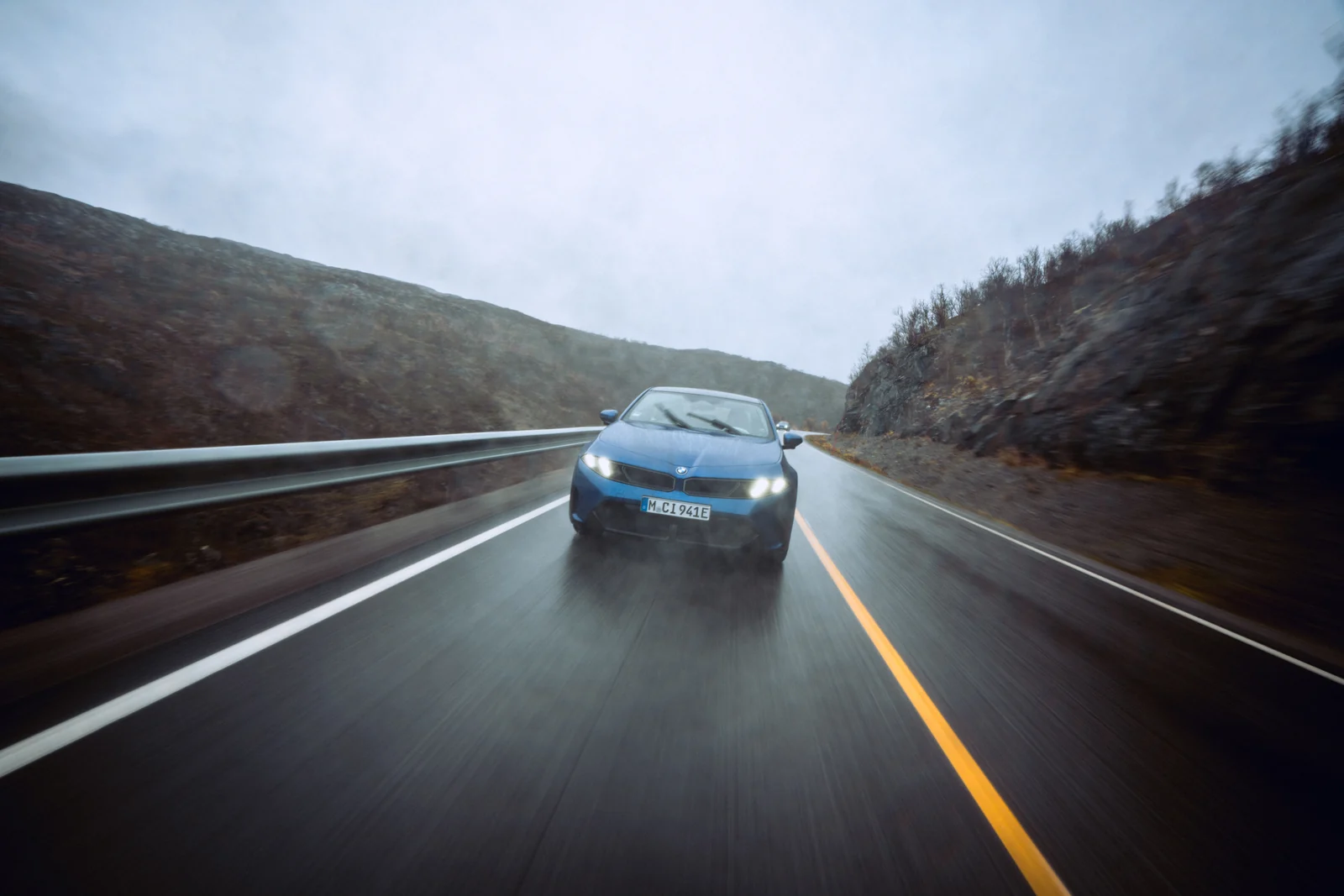
BMW has reported a 5,886.7-kilometre journey from North Cape to Tarifa in an i3 50 xDrive, with 2 hours, 45 minutes and 54 seconds of charging en route. Published on 10 November, that figure is the manufacturer’s accumulated charging time. It is not the duration of an entire journey across Europe. Its practical value depends on understanding what the team optimised, the difference between average and peak charging power, and what remains unknown before applying the result to a family trip.
What matters
Fast charging can shorten stops; an optimised manufacturer demonstration does not determine every driver’s journey time.
The stopwatch covers charging, not the whole crossing
The rounded figure of 2 hours and 46 minutes adds together the rapid-charging sessions BMW attributes to the participating car. The release separately gives driving time as three days, two hours and 41 minutes. It does not describe that second figure as total door-to-door travel time. Rest, meals, waiting and other interruptions are separate categories, and including or excluding them changes the question a stopwatch answers.
This matters when comparing an electric journey with one in a combustion car. A short charging session may overlap with a break the occupants needed anyway. Alternatively, the shortest sessions may require a stopping pattern that does not fit children, accommodation or arrival times. The announcement offers a technical result on a particular route, rather than a complete answer to that personal comparison.
Source: BMW Group · 2026-11-10 ↗
Fixed checkpoints still leave charging choices open
BMW describes the Paneuropeana as a route with prescribed checkpoints but no prescribed charging stations. The team could choose stops around infrastructure and conditions encountered along the way. The manufacturer reports travelling through eight countries and using publicly accessible stations within their national networks. That does not constitute repeated testing of every charger in those networks.
Our reading is that station choice forms part of the result alongside vehicle capability. A powerful charger requiring a substantial detour can reduce plugged-in time while increasing driving time. For an ordinary traveller, minimising charging time and reaching the destination earliest are not always the same task. Keeping both measurements makes comparisons more useful and prevents a striking charging headline from becoming an unsupported arrival promise.
Source: BMW Group · 2026-11-10 ↗
A 400 kW peak is different from a 275 kW average
The specifications quoted by BMW include DC charging at up to 400 kW; the account of the journey reports an average charging power of 275 kW. A maximum describes a capability under particular conditions. An average summarises what happened across the sessions being counted. Neither means that every station or every battery charge level can sustain the same power.
The charging interval and thermal conditions therefore matter alongside the headline peak, as our guide to voltage and charging curves explains. The trip release does not provide a complete session log listing energy, temperature, arrival and departure charge levels, and waiting times. It would be inappropriate to reconstruct a precise electricity bill from the published summary or imply that an ideal charger eliminates every delay.
Source: BMW Group · 2026-11-10 ↗
Route consumption does not replace a WLTP figure
BMW reports an average consumption of 12.5 kWh per 100 kilometres for the journey. The same release quotes combined WLTP consumption ranging from 13.4 to 18 kWh/100 km for the model. A chosen road route and a homologation procedure operate under different conditions. A favourable route result is neither a universal consumption figure nor a change to the car’s official certification.
The manufacturer also specifies 108.7 kWh of usable battery energy and a maximum WLTP range of 912 kilometres. Those figures do not establish that every stage exhausted the quoted range. Simply dividing usable battery energy by the reported trip consumption would not justify a guaranteed distance. Starting and finishing battery energy, conditions and the particular vehicle configuration are all relevant to a meaningful energy balance.
Source: BMW Group · 2026-11-10 ↗
A production specification and a supported team
The car is identified as a twin-motor i3 50 xDrive with a system output of 345 kW and 645 Nm. BMW says its hardware and software matched the production specification available to customers. It describes an engineer aboard the participating car, accompanied by another i3 and an iX3 as support vehicles. We did not drive any of these cars or conduct this measurement ourselves.
A production specification should be distinguished from the organisation surrounding it. Technical staff and support vehicles can assist planning and logistics without modifying the car. The release does not quantify the contribution of each organisational element or provide independent certification of the record. This article reports BMW’s demonstration and figures with explicit attribution; it does not turn the exercise into a test result from Autohaus.
Source: BMW Group · 2026-11-10 ↗
Using the result when planning your own route
For a personal trip, start with the actual distances between acceptable stopping places and a fallback if the preferred charger is busy or unavailable. Check connectors, access, tariffs and the intended arrival reserve. There is no need to reproduce a development team’s decisions: useful planning should tolerate a change of station while preserving the breaks required by the people travelling.
Winter conditions and equipment deserve a separate check, covered in our heat-pump guide. BMW’s additional Gen6 cell-supply agreements are a different industrial development and do not establish an automatic upgrade to this car. The practical conclusion is to compare a complete route and charging session, rather than treat three hours as a promise for crossing Europe.
Source: BMW Group · 2026-11-10 ↗
The journey illustrates the potential BMW attributes to the combination of efficiency, battery capacity and rapid charging. It becomes more informative when the stopwatch’s definition is retained: plugged-in time, driving time and total journey time are three different results.
Sources & editorial policy
Written by Autohaus Zephyr from the linked sources. Manufacturer figures are attributed claims, not our own tests. The practical comparisons and clearly identified examples are editorial analysis. Market availability and specifications require confirmation for the exact car.
Corrections: [email protected]
How we work →Keep reading
- 800-Volt Charging: How to Tell Whether It Will Really Save Time
- BMW adds Samsung SDI and LG to Gen6: contracts now, supply later this decade
- Heat pumps in electric cars: when they matter and how to check before buying