
Industry · News & analysis
BMW starts 3 Series production in Dingolfing ahead of a 2027 launch
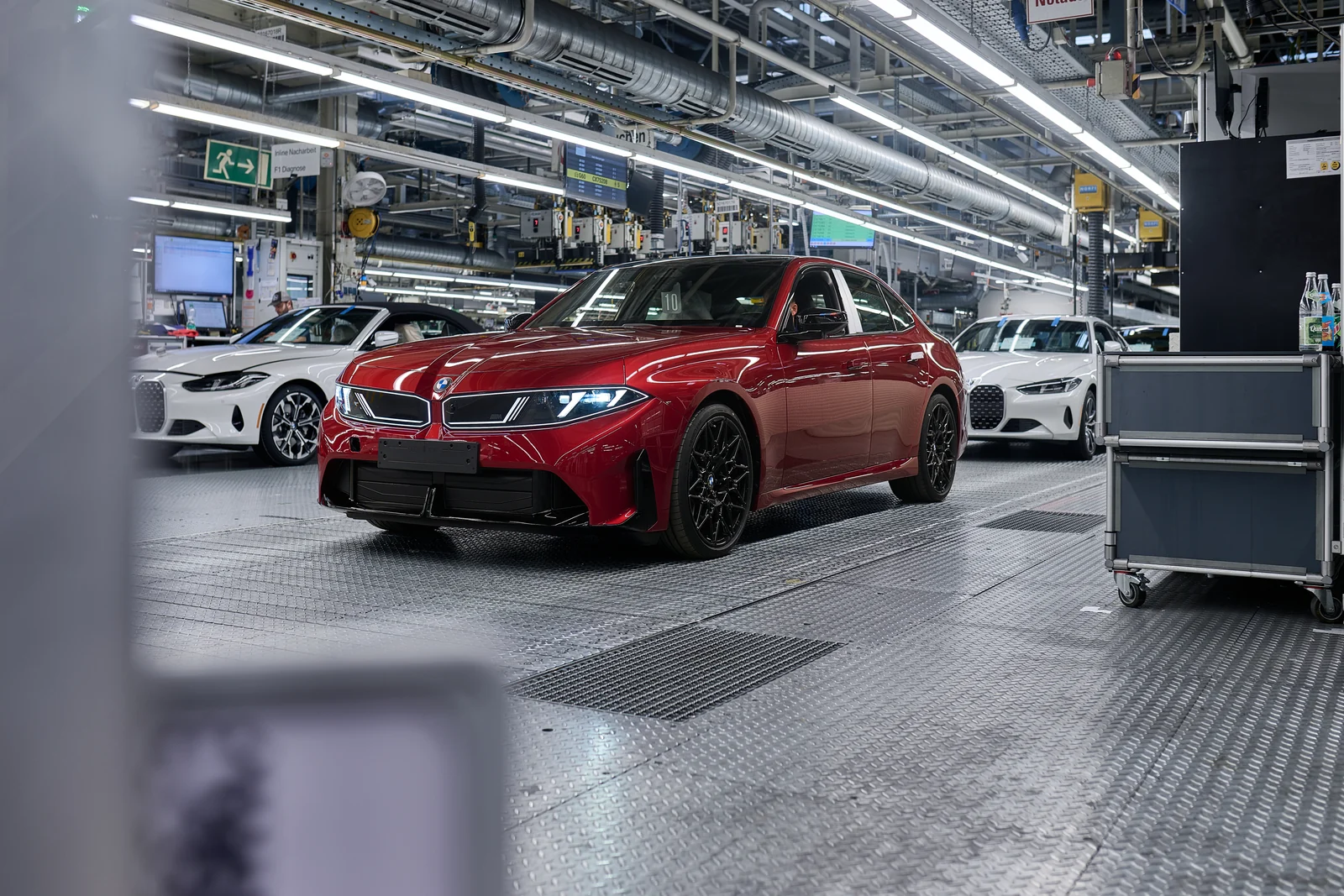
BMW says production of the eighth-generation 3 Series began in Dingolfing during the week starting 2 November 2026. The combustion-engined saloon returns to a plant with a long history of building this model family, while Munich is responsible for the electric i3. Market introduction will be phased from the first quarter of 2027; plug-in hybrid production in Dingolfing follows in 2027. The useful story is how the manufacturing allocation and shared technology fit together, rather than treating a factory start as the arrival of every version in showrooms.
What matters
The new generation is entering an adaptable manufacturing system. Production, market introduction and the availability of individual powertrains follow separate milestones.
Two plants with different powertrain responsibilities
Munich builds the all-electric BMW i3. Dingolfing is responsible for combustion-engined 3 Series saloons and, subsequently, plug-in hybrids. BMW’s 3 November release places the production start within that week but does not identify the exact day of the first series car. It puts the combined investment in developing the two factories for this allocation at around one billion euros.
The split allows facilities and suppliers to be organised around different requirements. An electric drivetrain has a different component chain from an internal-combustion engine, while a plug-in hybrid brings systems from both together. For a prospective owner, the practical task is to identify the precise powertrain and its timetable. The 3 Series family name alone cannot explain where every related model is built or when a particular configuration will become available.
Source: BMW Group · 2026-11-03 ↗
Neue Klasse technology reaches another type of car
BMW highlights Panoramic iDrive, a new electrical and electronic architecture and new driver-assistance systems in the saloon. These are the connections it makes with Neue Klasse. Energy supply and the driver interface occupy different layers of a vehicle: a control system or electronics architecture can spread across cars with different propulsion systems.
That calls for two comparisons when choosing a car. One concerns the powertrain, intended journeys and access to fuel or charging. The other concerns controls, screens, assistance and the actual equipment fitted to the selected version. A shared technology family does not establish an identical specification across every trim. Nor does it make an electric i3 range or charging figure applicable to the combustion-engined saloon. The details of the order still matter.
Source: BMW Group · 2026-11-03 ↗
New body production, established assembly infrastructure
The 3 Series shares an assembly line in hall 50 with 4 Series and 5 Series models. BMW says existing paint and assembly facilities can largely be retained, with changes to cockpit pre-assembly for innovations such as Panoramic iDrive. A new powertrain-neutral body-production line has been installed within an existing building.
Around a third of its approximately 750 robots comes from previous production facilities. This is a specific example of equipment reuse during a model change. The engineering task is to retain machinery that remains suitable while changing operations where the product demands it. Automated surface inspection and best-fit adjustment of doors and closures address another part of that task: maintaining consistent dimensions and finish when different cars pass through an adaptable production system.
Source: BMW Group · 2026-11-03 ↗
Landshut supplies more than engine components
BMW’s Landshut plant supplies crankcases and cylinder heads for four- and six-cylinder engines, along with the propeller shaft and interior components. The latter include the instrument panel and glove compartment. BMW also describes an integrated light box that illuminates surface materials in the cabin, developed through pre-development, industrialisation and series production in Landshut.
This illustrates why a production announcement involves more than final assembly. Casting, transmission components, interior finishes and electronics must arrive with compatible specifications. A visible dashboard change may require a different process at another factory. Understanding that coordination is more useful than assigning every aspect of a finished car to the site where it leaves the line. It also explains why a model transition has to be managed across a network of facilities.
Source: BMW Group · 2026-11-03 ↗
Match a purchase decision to the actual launch sequence
Market introduction begins in stages in the first quarter of 2027. Dingolfing’s plug-in hybrid production is also scheduled for 2027, with the release leaving individual market and version dates unspecified. Anyone comparing offers should obtain the exact powertrain, identified equipment and contractual delivery date, together with the planned production timing of the vehicle being offered.
During a generation change, outgoing cars, demonstration vehicles and orders for the replacement can coexist. Type identification, vehicle documents and configuration therefore provide a better basis for comparison than the year printed in an advertisement. A useful example would be weighing an available outgoing model against a 2027 order, allowing for the real waiting period and the functions included in each. The factory announcement supplies context for that choice; a predicted future discount would add an unsupported assumption.
Source: BMW Group · 2026-11-03 ↗
Read the factory figures at the right scale
Dingolfing has around 18,000 employees and approximately 950 apprentices. BMW gives output of roughly 1,350 vehicles a day for the plant as a whole. Its portfolio includes other saloons, the iX and BMW M and Protection vehicles. That figure describes total site activity, rather than a daily allocation for the new 3 Series.
The historical connection also has distinct periods. E21 production started there in 1980, several saloon generations followed until 2004, and the 3 Series Gran Turismo was built from 2013 to 2021. BMW says more than 1.15 million 3 Series vehicles have left Dingolfing in total. The latest return combines that experience with a changed technical organisation. Its commercial impact will become clearer as individual versions reach their markets through 2027.
Source: BMW Group · 2026-11-03 ↗
This establishes a specific industrial milestone and a manufacturing plan for different powertrains. A useful buying decision then connects those facts with the exact specification, timing and delivery terms of a real offer.
Sources & editorial policy
Written by Autohaus Zephyr from the linked sources. Manufacturer figures are attributed claims, not our own tests. The practical comparisons and clearly identified examples are editorial analysis. Market availability and specifications require confirmation for the exact car.
Corrections: [email protected]
How we work →Keep reading
- BMW iX3 Neue Klasse: what changes beyond range
- Documents for a German car: what to check before buying
- What to ask a car seller in Germany: decide what to verify before reserving