
Performance · News & analysis
BMW M 1000 RS: 160 kW, two weight figures and a 1,000-bike run
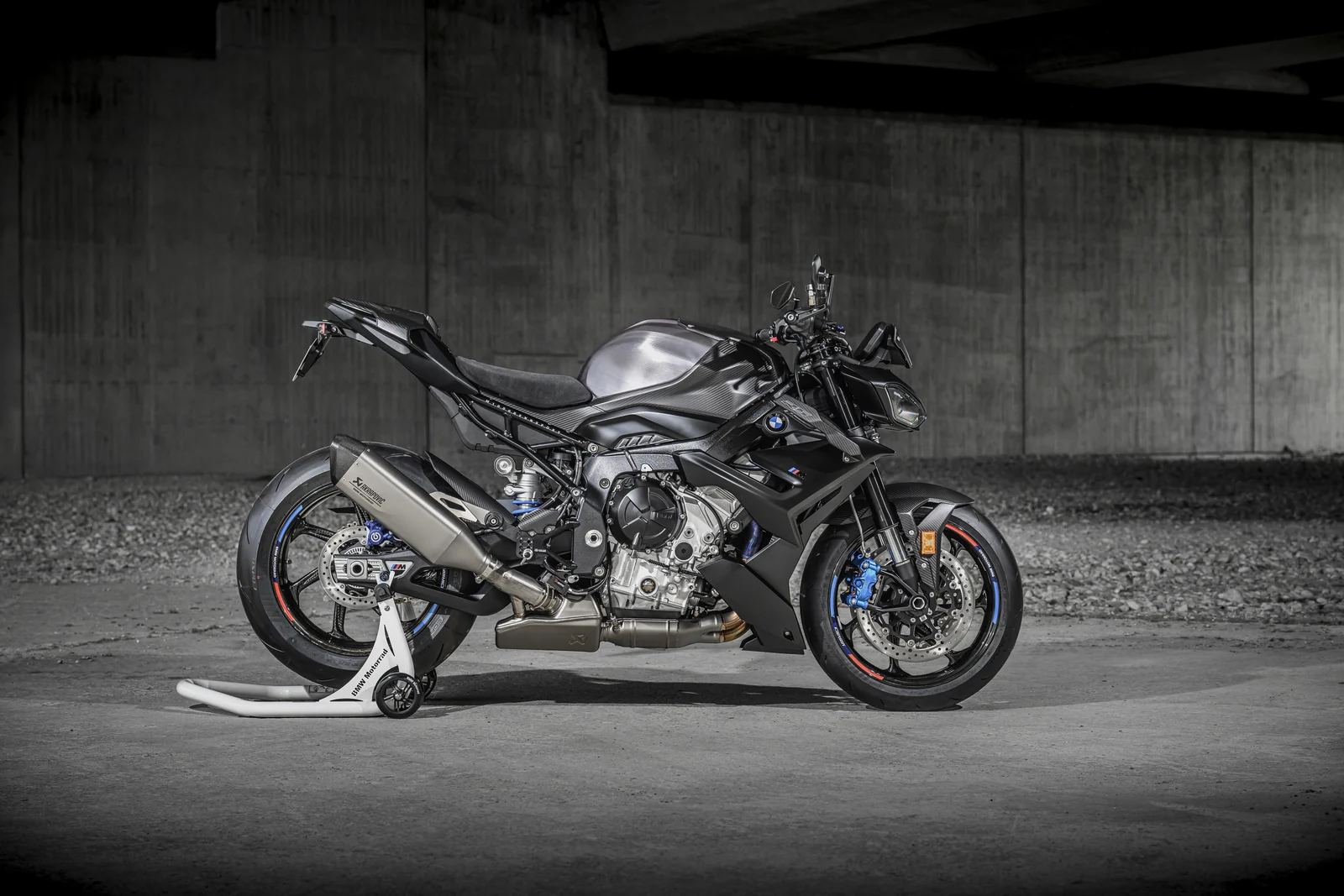
BMW Motorrad has unveiled the M 1000 RS as a hyper naked limited to 1,000 motorcycles worldwide. It announces 160 kW, approximately 218 metric horsepower, and dealer availability from March 2027. Two figures in the specification deserve equal attention: 185 kg ready for use without fuel, and 196 kg under its DIN fully fuelled description. Reading them together provides a better starting point for understanding a motorcycle built around superbike engine technology, a particular riding position and an extensive equipment package.
What matters
Use equivalent weight definitions when comparing motorcycles, then examine power delivery, riding position and the actual specification before turning to exclusivity.
Two weights for two stated conditions
BMW’s technical table gives 185 kg without fuel and 196 kg under its DIN road-ready, fully fuelled description. Tank capacity is 16.5 litres. Both figures concern the same motorcycle and the release distinguishes their conditions. Setting the 185 kg figure against a rival’s fully fuelled weight would introduce an inconsistent comparison before considering any of the engineering.
Weight matters at low speed too. Putting a motorcycle on a stand, manoeuvring in a garage and stopping on an incline demand different things from acceleration on a straight. When assessing a bike, record which fluids, fuel and accessories a quoted mass includes. Weight distribution, height and the rider’s ability to reach the ground complete the picture. A single number cannot explain how manageable it will feel to every rider in those situations.
Source: BMW Motorrad · 2026-11-03 ↗
The engine’s operating range gives the power context
The 999 cc inline four comes from the M 1000 RR. BMW specifies 160 kW at 14,500 rpm and 113 Nm at 11,000 rpm. It includes ShiftCam intake control and states that rated output is achieved with 98 RON petrol, within a 95–98 RON fuel specification supported by knock control.
These engine speeds say more about the intended character than a peak-power headline alone. To exploit that delivery, the rider has to relate engine response to the selected gear and revs. It does not follow that every road journey requires maximum engine speed. The six-speed transmission, shift assistant and short-stroke throttle form part of the way the announced performance is requested and managed. Assessing how those controls suit a rider is a separate task from reading the output figure.
Source: BMW Motorrad · 2026-11-03 ↗
A riding position shaped around the front end
The technical starting point is the M 1000 R with the M Competition Package. The RS adds the M 1000 RR footrest system and a seat raised by 20 mm compared with the M 1000 R. BMW describes a more front-wheel-oriented position; the table gives a seat height of 850 mm. A handlebar and the absence of full bodywork retain the naked-bike layout.
Before choosing that combination, check reach to the controls, knee bend, foot support and low-speed manoeuvring while wearing normal riding equipment. A position that offers room to move on a circuit may be demanding over a long journey. BMW’s accessories include seat alternatives, handlebar risers and a passenger package. The content and compatibility of those options should be established when configuring the bike rather than assumed from a photograph.
Source: BMW Motorrad · 2026-11-03 ↗
Suspension, wheels and brakes work as a system
The announced equipment includes M Carbon wheels, a complete M titanium exhaust, electronically controlled DDC damping and M brakes. The technical specification describes 320 mm front discs with radial four-piston calipers, ABS Pro and DTC traction control. Suspension travel is 120 mm at the front and 117 mm at the rear; preload and damping adjustments are identified in BMW’s description of the suspension.
The point of the package is to coordinate tyre contact, braking and response to rider inputs. Wheels influence the masses the suspension has to control, while settings need to suit intended use and load. The components provide a useful basis for a technical comparison. Assigning a particular braking-distance improvement or lap-time reduction would require measurements that this announcement does not supply. This is a specification analysis rather than the outcome of a riding test.
Source: BMW Motorrad · 2026-11-03 ↗
Aerodynamic detail alongside everyday equipment
The matt-carbon M winglets carry RS identification. Other features include carbon components, a brushed-aluminium fuel tank and a rear end derived from the M 1000 RR. They define the edition’s construction and appearance. The aerodynamic function BMW describes needs to be considered with speed and rider position; a precise downforce figure cannot be inferred from its presence alone.
The equipment list also includes heated grips, cruise control, keyless access and tyre-pressure monitoring. Those features bring a different set of questions into everyday use: operation with gloves, access to pressure readings and the navigation or luggage options compatible with the chosen configuration. Even a motorcycle focused this strongly on performance deserves to be assessed against ordinary journeys as well as circuit sessions. The best specification is the one that addresses the intended use.
Source: BMW Motorrad · 2026-11-03 ↗
Availability and pricing remain market-specific
BMW announces a worldwide production limit of 1,000 bikes, dealer availability from March 2027 and a German retail price of €40,000 including 19% VAT. That is a German release price, rather than a quotation for Spain or confirmation of a particular buyer’s allocation. The information reviewed does not set out the distribution of motorcycles between countries.
A purchase offer should identify configuration, accessories, estimated timing and reservation terms. A limited production run also does not establish that a bike is available now. If the intention is to combine road and circuit use, first decide which ergonomics, support and conditions of use are needed, then consider exclusivity. The 1,000-unit figure describes the edition’s industrial scale; it cannot establish whether the motorcycle suits an individual rider.
Source: BMW Motorrad · 2026-11-03 ↗
| BMW figure | Value | Condition |
|---|---|---|
| Mass without fuel | 185 kg | Ready for use, no petrol |
| Stated DIN mass | 196 kg | Road-ready, fully fuelled |
| Fuel tank | 16.5 l | Declared capacity |
The M 1000 RS brings high-performance components together in a limited-run naked motorcycle. A useful comparison starts with equivalent masses, engine delivery and riding position, while keeping price and timing attached to their stated market.
Sources & editorial policy
Written by Autohaus Zephyr from the linked sources. Manufacturer figures are attributed claims, not our own tests. The practical comparisons and clearly identified examples are editorial analysis. Market availability and specifications require confirmation for the exact car.
Corrections: [email protected]
How we work →Keep reading
- BMW M 1000 RR for 2027: why the new frame is designed to flex
- MotoGP 2027: from the first engine-bench test to a racing motorcycle
- Formula 1 2026: How to Read the Relationship Between Aerodynamics and Energy