
Safety · Practical guide
Aquaplaning: how to reduce the risk and respond if the car loses grip
Aquaplaning occurs when a tyre cannot clear enough water and loses contact with the road. Prevention combines tyres in good condition, appropriate pressure and a speed suited to actual conditions; no check removes the risk entirely.
What matters
There is no universal speed that guarantees protection from aquaplaning. Check the tyres according to the vehicle’s requirements and slow down when water, standing puddles or limited visibility demand it.
What happens when a tyre loses contact with the road
Aquaplaning describes a loss of contact between a tyre and the road when a layer of water gets between them and the tyre cannot clear it sufficiently. In practical terms, the tyre may no longer respond as expected to steering, acceleration or braking. It is not a fixed characteristic of the car: it depends on the interaction between tyre, water, road surface and speed.
That is why rain does not create one uniform set of conditions. A road may be damp in one stretch and have standing water in another; drainage and surface conditions can also differ. Keeping the same pace because the journey began without incident does not prove that grip remains unchanged. The useful decision is to watch the conditions and leave room to adjust your plan.
Why there is no safe speed for every puddle
Water depth and distribution, tread condition, tyre pressure, the surface and speed all affect the ability to maintain contact. Drivers generally cannot measure these variables as they travel, and they can change within a short distance. An isolated speed figure therefore cannot be a guarantee for every car, road or rainstorm.
Nor should a tyre comparison be treated as permission to drive faster. A test reports results under particular conditions and a defined protocol; if the vehicle, amount of water or road changes, the context changes too. Use comparisons to inform a choice, not to infer a supposed threshold that the test did not establish.
How to check tyres before setting off
Start by consulting the vehicle information and checking that tyre pressure matches the recommendation for its load and use. Do not substitute a remembered figure from another car or change pressure to compensate for wear. If you cannot identify the correct specification or measure pressure reliably, ask a professional to verify it. Note when the check was made so the decision does not rely only on memory.
Then visually inspect all four tyres for apparent damage, uneven wear and conspicuous differences between wheels. Look at the tread as well; an acceptable appearance to the naked eye does not by itself prove that a tyre is in suitable condition for the intended use. If anything concerns you, arrange an assessment before a demanding journey. A visual check does not replace a professional inspection or diagnose every problem.
What tread can tell you—and what it cannot
Tread helps clear water from the contact area, but it is not a promise of consistent grip. Its condition matters alongside pressure and driving conditions, so assess the whole tyre rather than relying only on whether the grooves are still visible. If you notice uneven wear, consider that there may be another issue worth checking instead of comparing tread depth at just one point.
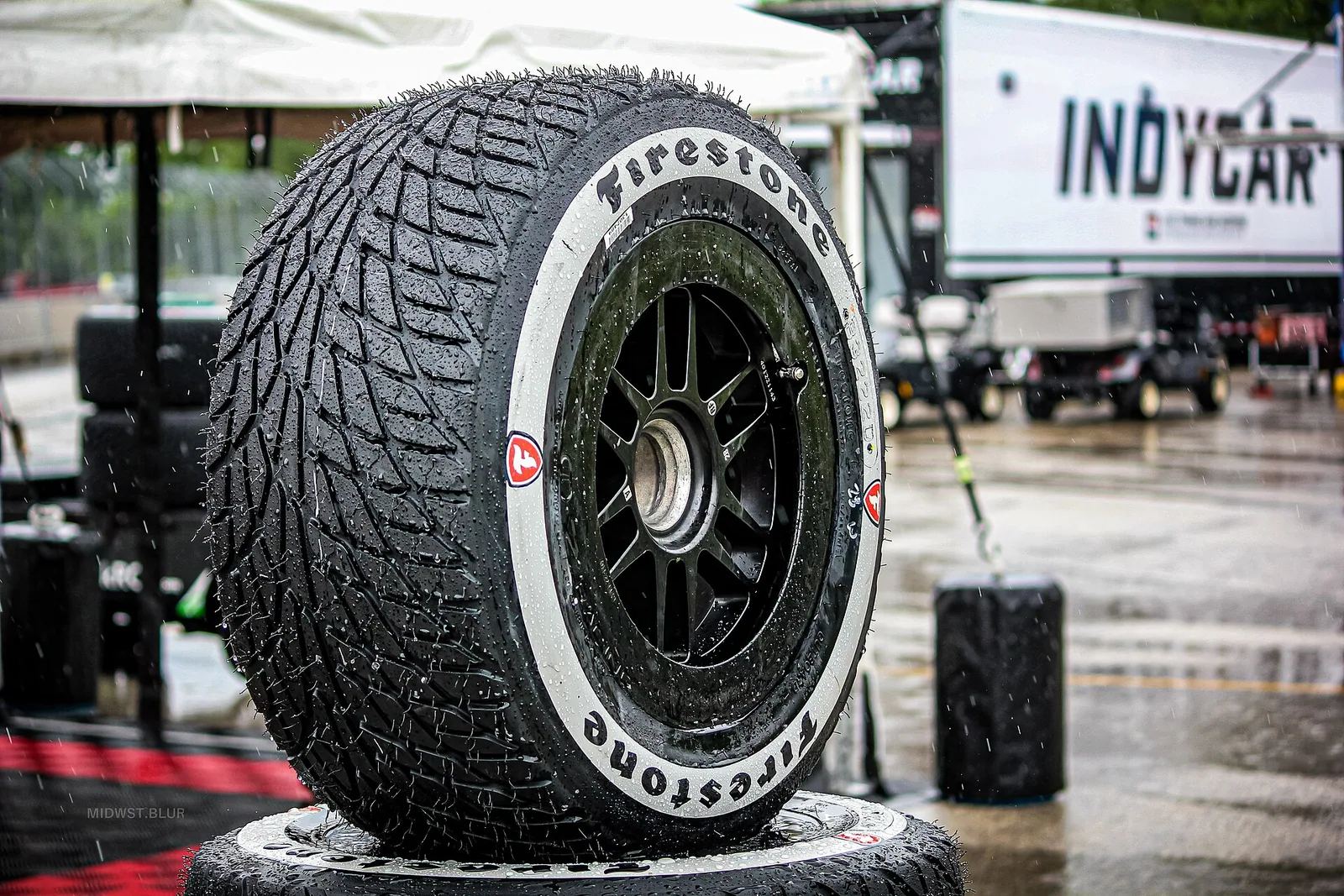
Do not transfer the image of a competition rain tyre directly to a passenger car. Its channels may illustrate the principle of clearing water, but the product, intended use and conditions differ. When choosing road tyres, check specifications suitable for your vehicle and compare information relevant to that use. A striking image cannot tell you how a particular car will behave on a wet road.
How to adapt a journey in the rain
Before leaving, check the route conditions and allow enough time that your expected arrival does not become an obligation. In rain, reduce speed prudently and increase the distance from the vehicle ahead. Continental recommends these preventive steps alongside checking pressure and tread; they do not eliminate risk, but they avoid driving as though the ideal margin of a dry road still applies.
During the journey, pay attention to visible water and changing conditions. If you cannot properly assess a stretch, the sensible response is to slow further and find a suitable safe place to stop if necessary, rather than crossing it to see what happens. Do not try to recreate aquaplaning or test the car’s limits on a public road. A journey can be delayed; grip should not be tested through improvisation.
If the car stops responding normally
If the vehicle seems to float or the steering responds less than usual on water, avoid abrupt inputs. Ease off the accelerator progressively, keep the steering as steady as possible and do not make a sudden correction to recover your line. The aim is to allow contact to return without adding abrupt changes in speed or direction; circumstances vary, and this advice cannot guarantee a safe outcome.
Once the response returns, continue smoothly and reduce speed for the rest of the journey. Find an appropriate place to stop if you need to check the car or regain composure. If the behaviour recurs, there is visible damage or you are unsure about tyre condition, do not treat it as an isolated event: arrange a professional inspection. No manoeuvre can make up for a deteriorated tyre or conditions beyond the available margin.
Turning prevention into a practical decision
Prevention works best as a sequence: check pressure and condition, consider the journey conditions, then adapt your driving to what you actually encounter. If any part is uncertain—for example, you do not know a tyre’s condition or can see standing water—resolve that uncertainty before relying on routine. Continental’s advice to check pressure and tread and reduce speed in rain is a useful basis, not certification that a vehicle is immune.
Keep a simple note of the inspection date and any issue that needs follow-up; share it with a workshop if you request an assessment. Do not decide solely by brand, a recent purchase or a speed that worked on another occasion. Water and road conditions change, and this article cannot diagnose a particular car. If you have doubts about the vehicle, a professional can inspect it; meanwhile, do not turn uncertainty into a road test.
Questions answered
Does a new tyre eliminate aquaplaning risk?
No. Tyre condition is one factor, but water, the road surface and speed matter too. A recently fitted tyre does not guarantee contact in every puddle or replace correct pressure and prudent driving.
Can I use a reference speed to know when aquaplaning will happen?
Not as a universal guarantee. Water depth, road conditions and tyre condition vary, even during one journey. Adapt your speed to what you encounter and do not treat a test figure as permission to drive faster.
What should I do if the car seems less responsive on water?
Avoid abrupt inputs, ease off the accelerator progressively and keep the steering steady. Once the response returns, slow down; if the problem recurs or you see damage, stop somewhere suitable and arrange an inspection.
Aquaplaning cannot be prevented by a magic number or a single purchase. Check tyre pressure and condition, adapt your journey to the rain and leave room to change pace. If you are unsure about the car, a professional inspection is more useful than testing its limits on the road.
Turn the research into a buying plan
Tell us the vehicle, total budget and destination in Spain. We can assess the search or an existing advert. The initial enquiry is free; inspection and coordination require an agreed quote.
Discuss my car search ↗Sources & editorial policy
Written by Autohaus Zephyr from the linked sources. Manufacturer figures are attributed claims, not our own tests. The practical comparisons and clearly identified examples are editorial analysis. Market availability and specifications require confirmation for the exact car.
Corrections: info@autohauszephyr.ch
How we work →Keep reading
- Tire labels: how to compare grip, noise and efficiency without a false shortcut
- Euro NCAP and assisted driving: how to interpret the rating before you buy
- ADAS Calibration: What Should Be Clear After a Repair