
New cars · News & analysis
Toyota Woodland at SEMA: five prototypes rather than an accessory catalogue
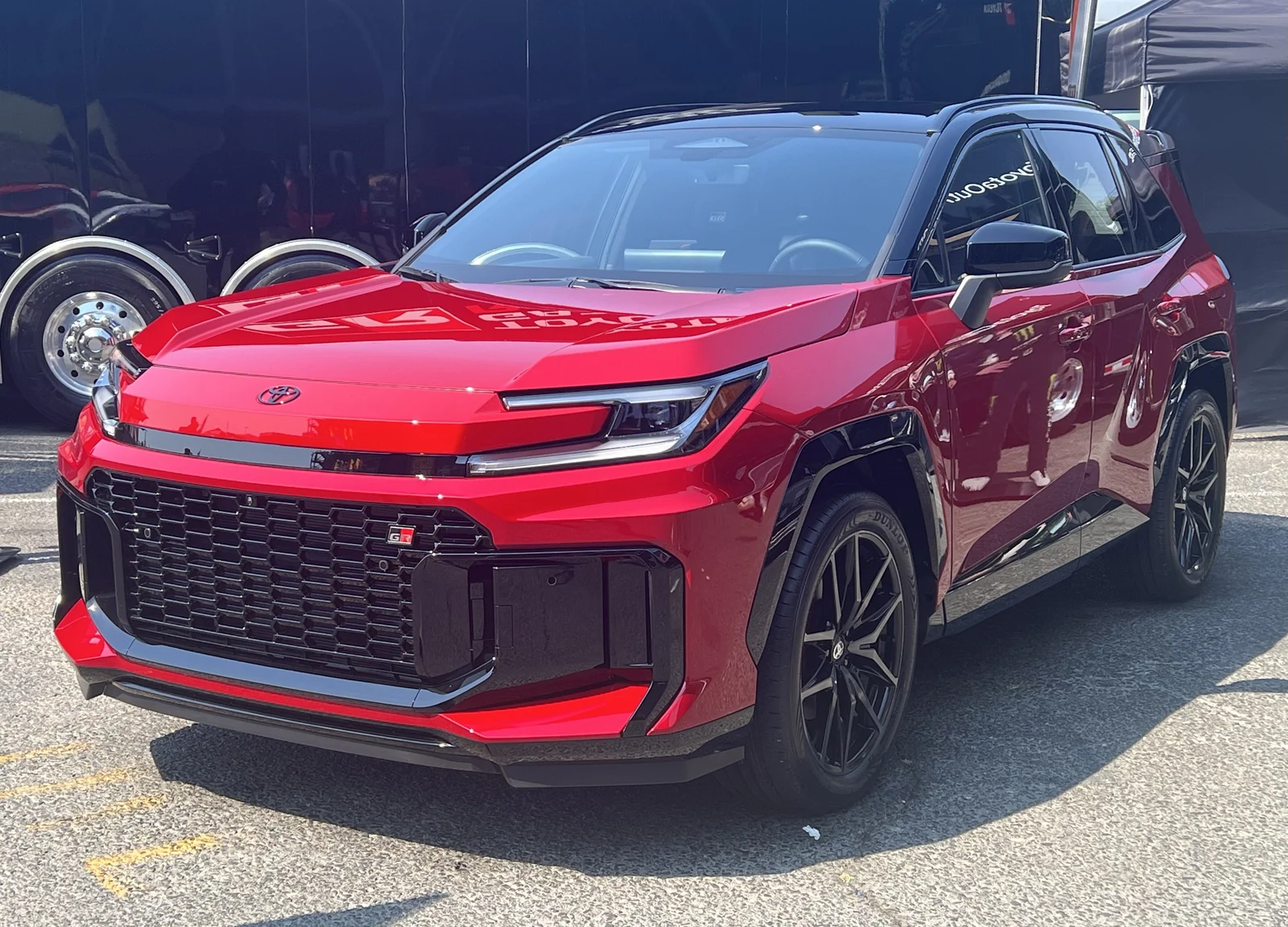
Toyota announced five Woodland concepts for SEMA 2026 on 30 October. RAV4, Sienna, Grand Highlander, bZ and Crown Signia provide the bases for a shared adventure identity. The company explicitly identifies them as specially modified prototype projects using parts that may not be available from Toyota. Their interest lies in adapting different vehicles; the presentation is not an accessory catalogue or confirmation that these configurations will become series-production versions customers can order.
What matters
The five Woodland vehicles are show projects. Toyota warns that modifications may affect warranty, performance, safety and whether the vehicles can legally be driven on public roads.
Five bases carry a common design language
CALTY Design Research developed a shared identity for the concepts. Toyota identifies lift kits, wide over-fenders, satin-black wheels, All-Terrain tyres, two-tone roofs and bonnets, roof racks and crossbars. All five use Horizon Blue, which the company connects with its 1960s palette for Stout, Crown and Corona. Visual continuity is central to the presentation rather than an assertion that every underlying vehicle offers identical capability.
Different bases mean that a shared identity does not automatically create the same car. A Sienna-based proposal starts with a different body and space arrangement from the bZ. The interesting question is what each modification contributes to that base and which compromises it creates. Colour can unify the appearance, but it cannot determine usable space, luggage capacity or behaviour on a particular surface or type of journey.
Electrification does not define one specification
The announcement separately identifies the RAV4 Woodland Plug-in Hybrid Concept and Woodland bZ Concept, extending the theme to a plug-in hybrid and a battery-electric vehicle. Sienna, Grand Highlander and Crown Signia complete the family. Toyota describes the collection as spanning hybrid, plug-in hybrid and electric proposals. It does not publish a battery, range, output or towing-capacity table for each modified prototype in this release.
The bases suggest different uses: a family trip requiring several seats in a Sienna is a different task from carrying equipment in the battery-electric bZ. This compares needs rather than claiming tested cargo solutions for the prototypes. Five body styles make it possible to consider how one visual theme adapts to different sizes and powertrains.
Roof equipment raises load and energy questions
Crossbars and roof platforms suggest additional travel equipment. Turning that image into a usable configuration requires permissible mass, attachment details, access and dimensions. The release does not supply those values for the prototypes. It also does not announce measured range with luggage or durability testing of the complete arrangement. Accessories visible in a photograph cannot complete those engineering checks or establish that the same setup suits another car.
There is also a physical relationship to assess: adding mass and external equipment can change consumption and behaviour. Its magnitude depends on the configuration and conditions, so no universal penalty is assigned to all five concepts. Useful analysis begins by asking what a piece of equipment accomplishes and what it costs in other respects, rather than treating every visible addition as an improvement without a corresponding compromise or operating consideration.
A lift kit and tyres are not a capability test
Lift kits and All-Terrain tyres form part of Toyota’s stated Woodland identity, combining an adventurous appearance with everyday utility. The release supplies no grip, durability or off-road tests comparing the effects of those modifications across the five vehicles.
Toyota’s own warning is specific: the projects include parts or accessories unavailable from Toyota that may affect warranty, performance and safety, and the vehicles may not be street legal. This statement belongs in the story rather than being treated as a minor administrative detail. It prevents SEMA imagery becoming an automatic prescription for an owner to reproduce or a fitment assumed to be accepted in their country.
Questions answered
Can these five Woodland configurations be ordered?
The source presents special prototype projects, rather than a complete ordering programme for these configurations. They should remain distinct from commercial vehicles that share the Woodland name.
Are the displayed components approved for my car?
The announcement does not establish that. Toyota warns about non-catalogue parts and possible effects on warranty, performance, safety and road legality. Each intended installation would need its own specific verification.
The Woodland family shows how one visual identity can change five types of vehicle. Its most useful reading combines design with concrete questions about load, space and energy. Preserving the boundary between prototype and offer keeps the show’s creativity from becoming commercial information that the announcement does not contain.
Sources & editorial policy
Written by Autohaus Zephyr from the linked sources. Manufacturer figures are attributed claims, not our own tests. The practical comparisons and clearly identified examples are editorial analysis. Market availability and specifications require confirmation for the exact car.
Corrections: [email protected]
How we work →Keep reading
- Toyota GR GT and GR GT3: how to read two prototypes with different goals
- How to Arrange a Car Inspection in Germany: A Buyer’s Checklist