
Performance · Practical guide
Toyota GR GT and GR GT3: how to read two prototypes with different goals
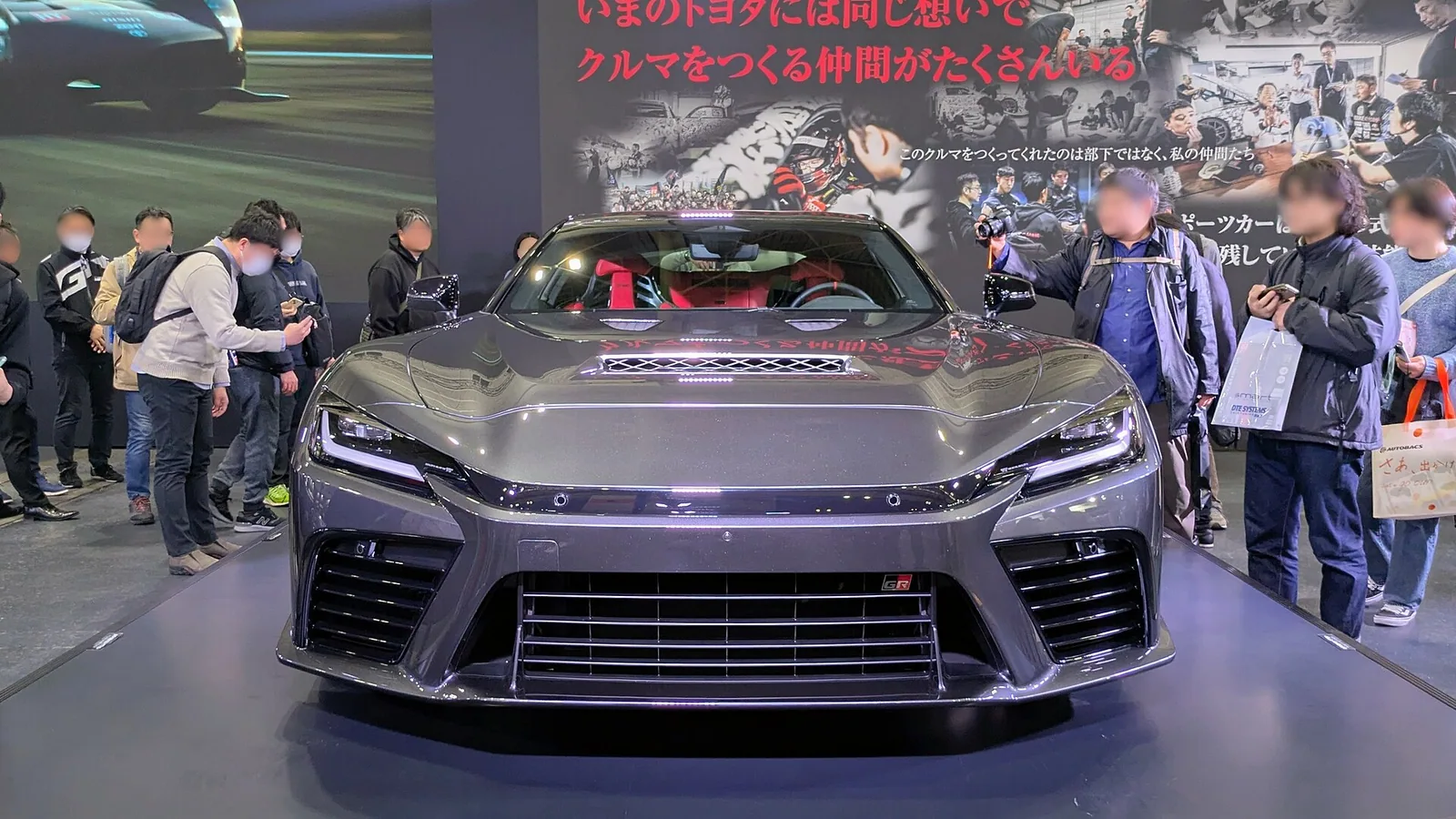
The GR GT is presented as a road car, while the GR GT3 is a competition car derived from that project. Sharing a presentation and development basis does not mean sharing specifications, homologation status or a commercial timetable.
What matters
The December 5, 2025 presentation confirms two prototypes in development and outlines some technical goals. It does not establish final specifications, completed homologation, a price or a delivery date.
What Toyota announced—and what the presentation establishes
On December 5, 2025, Toyota Gazoo Racing presented the GR GT and GR GT3 prototypes. It described the GR GT as its new flagship sports car and the GR GT3 as a competition car based on it, intended for FIA GT3 specification. The announcement highlighted center of gravity, rigidity, weight and aerodynamics as priorities, and mentioned a 4.0-liter twin-turbo V8. These are details given for a program in development, not a final production-vehicle specification.
That distinction matters because a presentation can establish which projects the company showed and how it described them at that point; it cannot, by itself, prove that every cited component will remain in a final version. Nor is it equivalent to an independent test, completed homologation, a commercial offer or confirmation of a competing team. To assess any update accurately, separate what the company states, what the document shows and what it leaves unspecified.
Source: Toyota Gazoo Racing · World Premieres GR GT & GR GT3 ↗
Road and racing applications pose different design problems
A road sports car must address its intended use and the requirements that apply in markets where it may be offered. A competition car, by contrast, is developed for a particular category and operating environment. That changes the priorities and the meaning of a specification: a solution that makes sense under a racing rulebook and during an event may not suit road driving, and the reverse may also be true. The presentation identifies the two roles, but does not provide a complete list that would allow their configurations to be compared.
That is why “based on” should not be read as “identical apart from a few changes.” It can describe a development relationship or a conceptual reference without explaining how much the eventual vehicles share. As a hypothetical example, even if both programs explored a related architecture, their structures, systems and individual configurations would still need to be documented before anyone could say which parts were common. Readers gain more by asking what is confirmed for each project than by automatically transferring a feature from one to the other.
Source: Toyota Gazoo Racing · World Premieres GR GT & GR GT3 ↗
How to assess a specification sheet when one appears
When an update arrives, first identify which vehicle each claim concerns: the GR GT prototype, the GR GT3 prototype or a different future version. Then note whether the information is a design goal, a stated specification, a validation result or a figure for a particular vehicle. Those categories are not interchangeable. For instance, citing a weight-reduction goal does not provide a measured vehicle mass; highlighting aerodynamics does not reveal values, settings or track performance.
Apply the same care to the 4.0-liter twin-turbo V8 mentioned in the presentation. The source supports that it was part of the development program’s description, but that announcement does not provide a complete specification sheet with which to assess output, fuel consumption, transmission or final market configuration. If figures appear later, check their units, the model they describe and whether they are definitive or provisional. Without those details, a numerical comparison may look precise while comparing different versions or development stages.
Source: Toyota Gazoo Racing · World Premieres GR GT & GR GT3 ↗
What evidence is needed before drawing conclusions
A useful development update should clarify how far each project has progressed and what question is being validated. A prototype image establishes that a vehicle was presented; it does not, on its own, establish a test result, durability, regulatory compliance or the configuration that might be sold. Similarly, a joint announcement can explain the relationship between two programs, but cannot prove that they are progressing at the same pace or have equivalent milestones.
When assessing future reports, look for details that can be verified: specifications explicitly assigned to each vehicle, a description of its development stage, confirmation of homologation where relevant and, for possible racing activity, the named championship, team and entered car. Do not treat those milestones as confirmed merely because the GR GT3 is described as intended for FIA GT3. The available announcement states that purpose, but does not establish completed homologation or a specific entry.
Source: Toyota Gazoo Racing · World Premieres GR GT & GR GT3 ↗
A practical method for separating facts from expectations
Keep two project records, one for the GR GT and one for the GR GT3. For each claim, record the date and document; distinguish stated details, goals, confirmed milestones and unanswered questions. If a report repeats an earlier figure, retain it as information from that date rather than automatically presenting it as the current specification. This simple timeline helps prevent prototypes, hypothetical versions and later changes from being conflated.
It also helps to ask specific questions before sharing an update: does the figure describe a vehicle or a target? Does it apply to the road car or the competition car? Does the company confirm a result or merely announce ongoing work? As a hypothetical example, a future report showing a GR GT3 test could be evidence that a test took place, but would not by itself prove that customer cars were being delivered. The conclusion should match the exact scope of the published evidence.
Source: Toyota Gazoo Racing · World Premieres GR GT & GR GT3 ↗
What a prospective buyer should check in the future
The presentation does not establish that a vehicle is available to reserve or buy, and it provides no price, delivery schedule or warranty terms. It would therefore be unreasonable to treat the prototypes as commercial offers or make a financial decision based on incomplete specifications. If a sale is announced later, confirm that the vehicle offered is the version and market you are considering, and request written details of the seller’s identity, configuration, applicable homologation status, payment terms, delivery and warranty.
The seller and the beneficiary of any funds must be identified and verified before any reservation or payment; that check should not be postponed. A manufacturer presentation, informal discussion or intermediary’s involvement is not a substitute for transaction documents. For a competition car, also verify what use, rulebook compliance and support are expressly included. Inspection, tax obligations and any coverage depend on the specific case and must be confirmed with the responsible party and, where appropriate, the competent authority; they cannot be inferred from this presentation.
Source: Toyota Gazoo Racing · World Premieres GR GT & GR GT3 ↗
The right conclusion is provisional, not speculative
The GR GT and GR GT3 pairing is interesting because it shows how a manufacturer presents related projects for different purposes. The available information supports a stated development connection and broad technical goals, but does not justify filling the gaps with invented figures, racing results or dates. Keeping the two vehicles distinct will make future comparisons more useful and reduce the risk of treating a development ambition as a confirmed feature.
The reader’s next step is to compare each new report with the original announcement and add it to the record for the project it actually concerns. Until further milestones are documented, the precise description is prototypes in development—not a sports car ready for delivery or a GT3 car already homologated. That caution does not make the programs less interesting; it clarifies what is known and what would need to be published next.
Source: Toyota Gazoo Racing · World Premieres GR GT & GR GT3 ↗
Questions answered
Are the GR GT and GR GT3 the same car?
No. Toyota presented the GR GT as a road-focused flagship sports car and described the GR GT3 as a competition car based on that project. The presentation does not specify that they share every component or their final configurations.
Does the presentation confirm that the GR GT3 is already homologated for FIA GT3?
No. The source says the project is intended for FIA GT3 specification, but that does not establish that homologation is complete. A specific confirmation of that milestone would be needed.
Are the GR GT’s price and delivery date known?
The cited presentation confirms neither a price nor a delivery schedule or commercial availability. Those details need to be checked in a commercial announcement applicable to the specific version and market.
The GR GT and GR GT3 should be understood as related projects with different purposes, still in development according to the presentation. To follow their progress, record which vehicle each detail concerns and look for specific confirmation before turning goals or announcements into conclusions.
Sources & editorial policy
Written by Autohaus Zephyr from the linked sources. Manufacturer figures are attributed claims, not our own tests. The practical comparisons and clearly identified examples are editorial analysis. Market availability and specifications require confirmation for the exact car.
Corrections: info@autohauszephyr.ch
How we work →Keep reading
- Endurance and Hypercar: How to Read a Race Beyond the Fastest Lap
- Hydrogen in motorsport: what Toyota is researching with a combustion engine
- Porsche Mission X: what the concept proposes—and what it does not confirm