
Performance · Practical guide
Porsche Mission X: what the concept proposes—and what it does not confirm
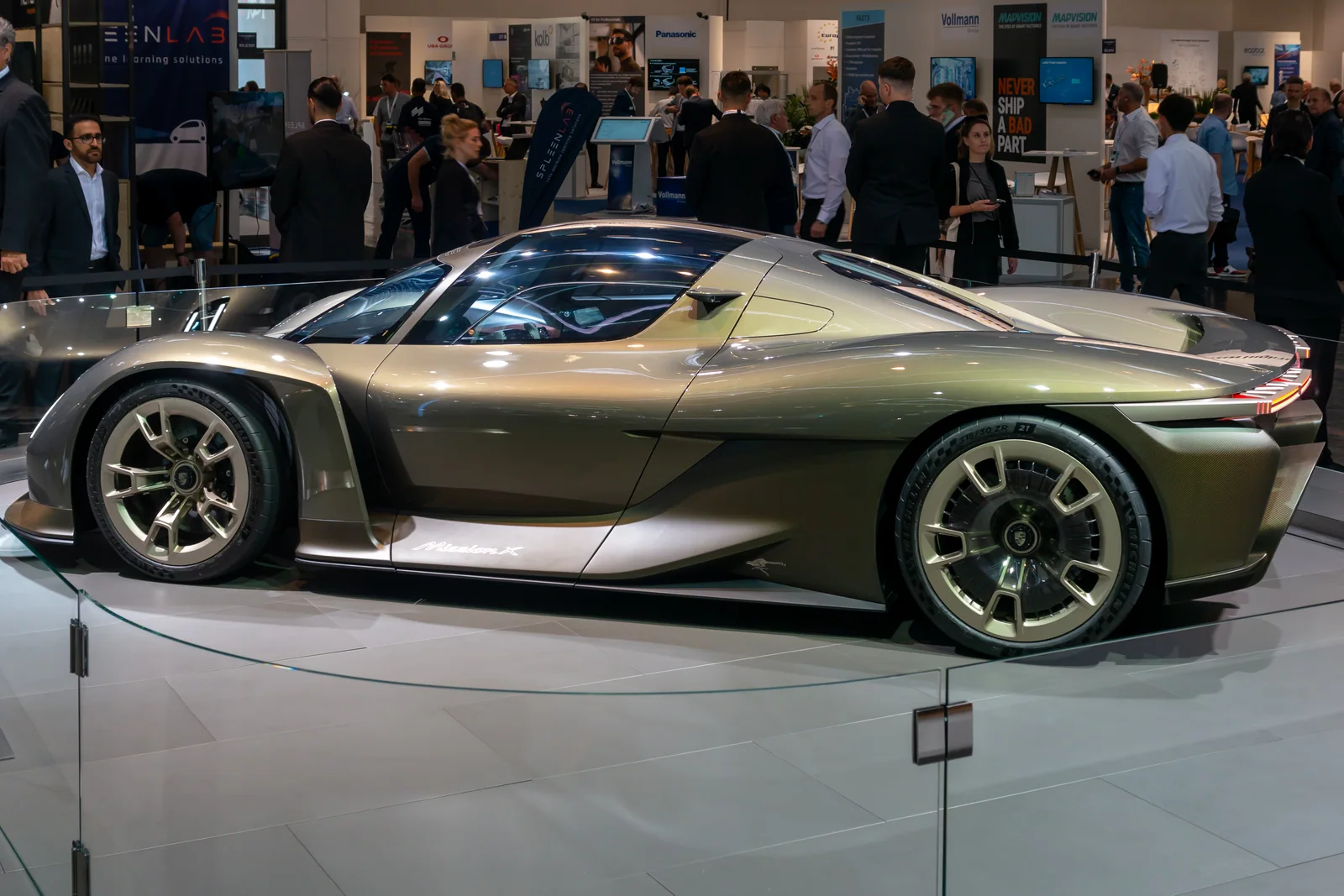
Mission X is a two-seat electric study presented in 2023, not a 911 variant or a confirmed car for sale. Its engineering targets invite analysis of trade-offs, not assumptions about proven performance or timing.
What matters
Mission X was presented on June 8, 2023. To assess any later claim, distinguish what Porsche described as a concept from what a potential production car would have to demonstrate.
What Porsche presented, and when
Porsche presented Mission X on June 8, 2023, as a design study for a two-seat electric hypercar. The distinction between a study and a commercial model matters: the company described a proposal and its targets, and said the concept was not for sale. It should therefore not be treated as a production car available to buy, nor should that presentation be used to infer a delivery schedule, price, or number of vehicles.
The date also helps put later coverage in context. An article published now can validly examine a 2023 idea, but that does not make the analysis a new announcement. Before sharing a claim, check whether it describes the original presentation, an identifiable later statement, or editorial interpretation. The available source supports the concept’s existence and its stated direction; by itself, it does not confirm subsequent industrial decisions.
Source: Porsche Newsroom · Mission X: a vivid dream of incredible performance ↗
The battery behind the seats: a design choice, not proven performance
Porsche placed the study’s battery behind the seats. That arrangement makes architecture central to the proposal: it affects the two-seat car’s proportions and raises questions about how components are organized around the occupants. It is a fact about the concept, not a guarantee that a potential production car would retain the same layout. The source also does not, by itself, establish the battery’s size, the car’s range, or a production vehicle’s weight distribution.
To understand the trade-offs, ask what would need to be resolved beyond packaging. A battery must be integrated with structures, electrical systems, and thermal management; the precise solution would depend on the final design. In general, more energy may help sustain demanding use, but it also raises questions about mass and heat management. That is why a studio image or an isolated figure cannot establish performance. These are useful engineering questions, not confirmed Mission X specifications.
Source: Porsche Newsroom · Mission X: a vivid dream of incredible performance ↗
How to tell targets from measured results
The published proposal included, conditional on possible production, a 900-volt architecture and ambitious targets involving power-to-weight ratio, charging, and circuit performance. The words “target” and “conditional” matter: they are not measurements from a production car, a homologation, or a promise that every figure will be realized. The announcement describes a study, not a set of results from a commercial vehicle test.
When you encounter a technical figure, look for four details: which vehicle or development phase it refers to, whether it is a target or a result, the conditions under which it was obtained, and who supports the claim. For example, in a hypothetical case, a headline might repeat a charging target as if it were a recorded time in a production car. The right questions would be which version was measured, under what conditions, and in which document. Without those details, a figure may describe an intention but cannot support a comparison of verified performance.
Source: Porsche Newsroom · Mission X: a vivid dream of incredible performance ↗
Why Mission X is not an electric 911
A useful comparison with the 911 is not a search for a direct equivalent. Mission X was presented as a study for a two-seat electric hypercar; the 911 is a family of production cars. Their categories, uses, and development stages differ. Sharing the Porsche name does not turn the concept into a variant, a future 911 generation, or confirmation that one project’s solutions will be transferred to the other.
This distinction also helps when reading product news. A development linked to a specific model—for example, technology announced for a 911 version—can be attributed to Mission X only if an identifiable statement explicitly says so. The fact that both projects share a brand or sporting ambitions is not enough. If an article does not distinguish the model, development phase, and date, return to the original source before concluding that a technical or commercial connection exists.
What evidence to look for before claiming production
A credible production claim should clearly identify the program and come from a later announcement confirming that it has advanced to that stage. A claim about timing would also need to attribute the date to the relevant model and market. The concept presentation, its design, and its targets do not establish a price, markets, production volume, or schedule. Nor does a detailed image prove that a defined commercial vehicle exists.
As a practical check, look for direct answers: Is the report discussing a concept, prototype, presented model, or commercial version? Does it identify who made the statement and when? Does it attribute performance to a built car or to a target? If a report cannot answer those questions, read it as commentary or speculation, not confirmation. The cited source describes the 2023 study and says it was not for sale; it does not provide a production update.
Source: Porsche Newsroom · Mission X: a vivid dream of incredible performance ↗
A useful way to read charging, aerodynamics, and circuit claims
The subjects raised by Mission X help organize technical questions without attributing unpublished results to it. For charging, distinguish the electrical architecture from the charging power a vehicle can sustain through a session. For circuit use, an isolated figure does not reveal whether performance is repeatable, how conditions affect it, or what thermal limits apply. In aerodynamics, a solution that increases downforce also raises questions about drag and the balance between different requirements.
A hypothetical example: if a future announcement claimed improved charging, a reader should check whether it specifies starting and ending state of charge, measurement conditions, and the vehicle involved. If it announced a circuit target, ask whether that is a design goal or a measured result, and under what conditions. These checks do not reject a proposal; they prevent a technical intention from becoming a real-world promise. The available announcement does not provide those production-car results.
Source: Porsche Newsroom · Mission X: a vivid dream of incredible performance ↗
What the concept can teach us, and how to follow it
Mission X is interesting as a framework for considering the trade-offs of an electric hypercar: battery placement, energy, mass, cooling, charging, and circuit behavior. A study can explore combinations that may later change when manufacturing, servicing, costs, and applicable requirements are considered. It is therefore reasonable to discuss its ideas, but not to infer range, price, reliability, ease of maintenance, or availability. The cited documentation supplies none of those details and does not confirm that the concept will be produced.
To follow the project carefully, keep three references for every report: the date of the claim, the vehicle’s development phase, and the source supporting it. Compare the exact terms—“study,” “target,” “prototype,” or “commercial model”—and return to the announcement if a publication blurs them. If a later announcement appears, check what new fact it confirms and what remains unspecified. This lets readers assess the design’s ambition without presenting an unverified development as fact.
Source: Porsche Newsroom · Mission X: a vivid dream of incredible performance ↗
Questions answered
Is the Porsche Mission X confirmed as a production car?
The cited source describes it as a design study and says it was not for sale. It does not confirm production. A later announcement identifying the program and its new stage would be needed to establish that the situation had changed.
What does the concept’s proposed 900-volt architecture mean?
It is part of the concept’s stated technical direction, conditional on possible production. On its own, it does not establish a specific charging power or the charging time of a commercial model.
Is Mission X an electric version of the Porsche 911?
Not according to the cited information: Mission X was presented as a two-seat electric study, while the 911 is a production-car family. That source provides no basis for treating them as the same model or program.
Mission X is worth attention for the engineering questions it raises, not for unconfirmed performance or timing. Keeping concept, target, and product distinct makes it possible to understand the proposal without turning an engineering vision into a commercial promise.
Sources & editorial policy
Written by Autohaus Zephyr from the linked sources. Manufacturer figures are attributed claims, not our own tests. The practical comparisons and clearly identified examples are editorial analysis. Market availability and specifications require confirmation for the exact car.
Corrections: info@autohauszephyr.ch
How we work →Keep reading
- Tesla Roadster: what Tesla is announcing and what remains unproven
- Porsche 911 Turbo S T-Hybrid: what electrification is for in a sports car
- 800-Volt Charging: How to Tell Whether It Will Really Save Time