
Performance · Practical guide
Porsche 911 Turbo S T-Hybrid: what electrification is for in a sports car
The 911 Turbo S T-Hybrid presents an approach to sports-car electrification built around integration with the combustion engine and transmission. Separating confirmed specifications from measurements still needed—and checking the terms for a specific car—helps assess the technology without confusing it with an electric car or assuming unproven benefits.
What matters
The T-Hybrid label alone does not establish fuel consumption, electric driving range, real-world response or ownership costs. Separate published specifications from the measurements and terms you would need to verify for the exact version and car under consideration.
What the Turbo S documentation confirms
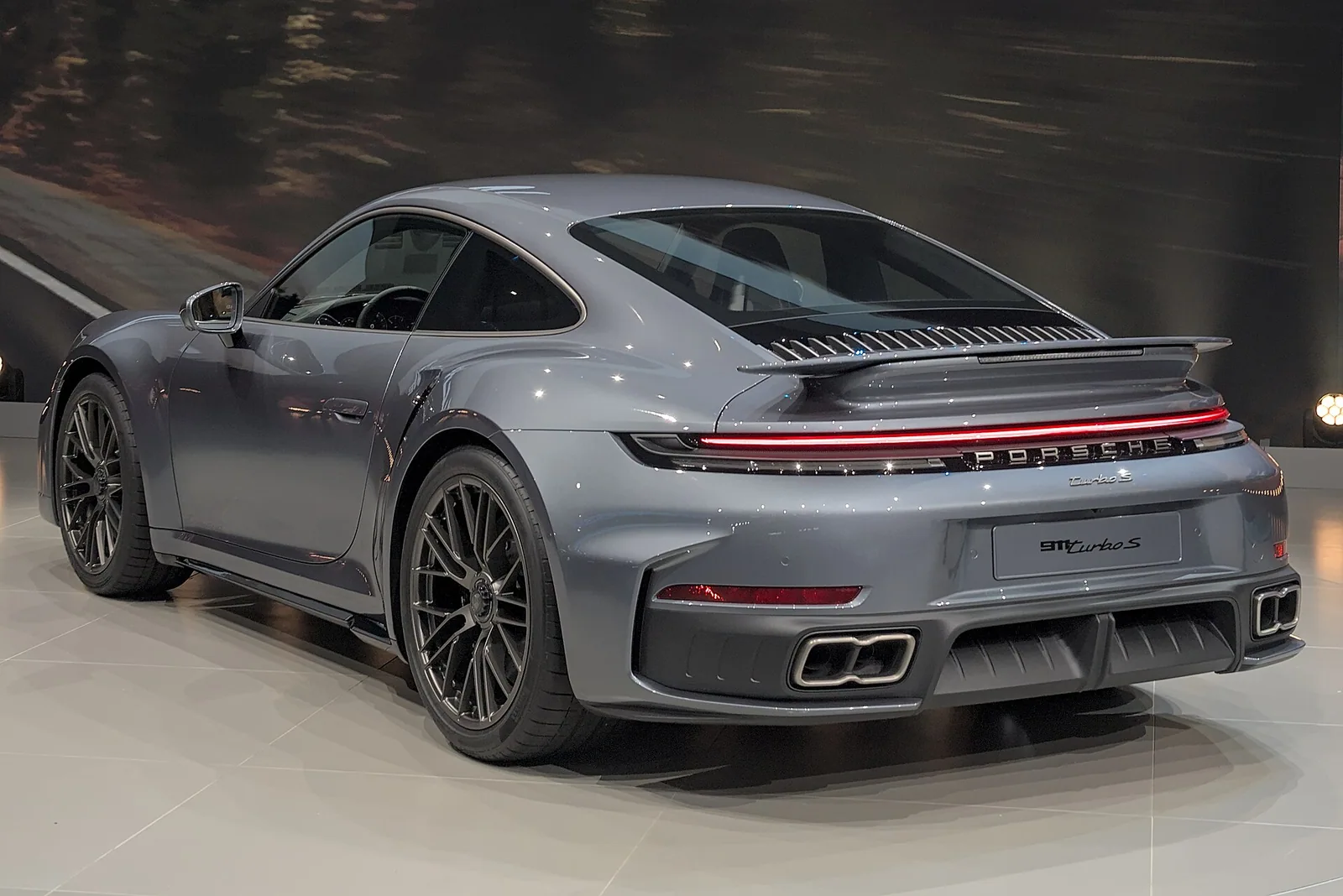
Porsche describes this 911 Turbo S as using a 3.6-litre flat-six within a T-Hybrid system, with two electrically driven turbochargers and an electric motor integrated into the PDK transmission. The company quotes system output of 523 kW. These are manufacturer figures for this specific version, not specifications that can automatically be applied to every 911.
That distinction matters when reading headlines or comparing listings. A hybrid architecture does not, by itself, tell you whether the car can drive on electricity alone, what it consumes, or what role an electric function plays in a particular manoeuvre. The cited material identifies components and system output, but does not answer every such question. Before treating a feature as established, check that the documentation matches the exact model year, version and market you are considering.
Source: Porsche Newsroom · Product Highlights: Porsche 911 Turbo S ↗
Peak power does not describe the whole response
A peak-power figure summarises a quoted maximum, but does not explain how the car feels when acceleration is requested at different speeds. Response time, the continuity of power delivery and coordination between engine and transmission also matter. Porsche’s description makes those aspects of integration worth asking about; without measurements, it does not establish how much a particular acceleration improves or under what conditions.
To assess response properly, look for repeatable comparisons with their conditions clearly identified. For example, a rolling acceleration test is useful only if the start and finish speeds, selected mode, load, surface and procedure are recorded. A hypothetical test comparing two cars on different tyres or under different protocols might produce a persuasive impression, but it would not isolate the hybrid system’s effect. Subjective feel can complement comparable data; it cannot replace it.
Source: Porsche Newsroom · Product Highlights: Porsche 911 Turbo S ↗
How to compare it with another 911 or its predecessor
Start by specifying exactly what is being compared: year, body style, version, transmission, equipment and market. Do not mix Turbo S specifications with those of a Carrera GTS, or treat “hybrid” as if it described the same technical solution throughout the range. For a comparison with an earlier Turbo S, confirm both cars’ specifications and record differences in tyres or configuration that might affect the result.
Then separate the questions. A brief acceleration run is not the same as a rolling acceleration test; initial response is not the same as sustaining performance through repeated use; and none of those measures automatically describes braking, comfort or everyday usability. A well-designed hypothetical comparison would repeat each manoeuvre using a common protocol and publish the conditions alongside the result. If the available material contains only peak-power figures, the honest conclusion is that evidence about real-world response is missing—not that one car has proved superior.
Source: Porsche Newsroom · Product Highlights: Porsche 911 Turbo S ↗
Choose for your use, not for the label
For someone who expects to drive mainly on public roads, the practical question is not simply how much power the car claims. Consider whether its response is easy to meter, whether the seating position and visibility suit you, and whether the particular car has the equipment you need. Those points should be checked on the version being considered; they cannot be inferred from the T-Hybrid system description.
For occasional track use, it may matter more to know how the car behaves after repeated demanding manoeuvres and what verifiable information exists about temperatures and repeatability. This article includes no driving test or independent measurements that can answer those questions. In either case, a suitably arranged and safe test drive can help you judge ergonomics and response, but it does not replace a technical inspection or guarantee the same result in different conditions.
What to request and check before reserving
If you are evaluating a particular car, ask for documents that identify its exact version, year and configuration, then compare them with the relevant specification sheet. Request the applicable maintenance plan and ask what contractual coverage is offered for the hybrid-system and transmission components. Check who is responsible for each form of coverage, what exclusions and conditions apply, and whether the documents refer to that specific car. Do not infer coverage or cost from the published power figure.
It is also sensible to agree in writing on what inspection will be performed, who will perform it and what information you will receive before committing money. Ask whether diagnostic procedures appropriate to that version are available and whether a report will be provided; an electronic scan is not a complete inspection and cannot, by itself, prove the car’s future condition. In a hypothetical example, an advertisement saying “hybrid checked” without identifying the work, date or supporting document leaves important questions unanswered.
Source: Porsche Newsroom · Product Highlights: Porsche 911 Turbo S ↗
Maintenance, consumption and costs: what remains unknown
Technical complexity makes questions about maintenance and diagnosis reasonable, but it does not allow ownership costs to be calculated from a component list. To budget, request documents and terms applicable to the specific car: scheduled work, manufacturer-stated intervals, contractual coverage and any costs the seller can document. The cited source gives no real-world consumption figure, cost comparison or reliability assessment that would justify promising a particular expense or benefit.
Nor should gaps be filled with assumptions about external charging, electric-only driving or energy recuperation: the material cited here does not detail those matters. If they affect your decision, ask for the official explanation for the exact version and confirm which functions its documentation specifies. For tax, registration or transaction treatment, check with the relevant authority and the documents applicable to your case; the hybrid label does not establish a tax rule.
Source: Porsche Newsroom · Product Highlights: Porsche 911 Turbo S ↗
A useful decision separates facts from expectations
The Turbo S T-Hybrid is notable because Porsche documents a specific combination of a flat-six, electrically driven turbochargers and an electric motor integrated into the PDK, alongside quoted system output of 523 kW. That identifies the technical proposition, but it is not an independent test of acceleration, consumption, durability or benefits in every use. Keeping those categories separate prevents a specification from turning into a promise about the driving experience.
Your next step depends on the question you need answered. To understand the engineering, read documentation for the exact version; to compare response, look for measurements using a common protocol; to buy, verify the car’s identity, maintenance, inspection and coverage terms before reserving or paying. This approach lets you assess what electrification is intended to contribute without confusing a hybrid sports car with an electric car or making a decision on a headline alone.
Source: Porsche Newsroom · Product Highlights: Porsche 911 Turbo S ↗
Questions answered
Is the 911 Turbo S T-Hybrid an electric car?
The cited documentation describes a T-Hybrid system paired with a flat-six and PDK transmission. It does not specify electric-only driving or electric range here; confirm those functions in the official documentation for the exact version.
Do the 523 kW figure tell me how much faster it is than another 911?
Not by itself. Porsche quotes that system output for the Turbo S described, but comparing acceleration or response requires identified versions and measurements made under common conditions and protocols.
What should I request before buying a specific car?
Ask for the exact version and configuration, service history and maintenance plan, written coverage terms, and details of any inspection. Verify the seller and the payment recipient before reserving or paying; do not assume mechanical condition or coverage from the hybrid label.
Judge this sports car’s electrification by what can be verified: the published architecture and output, any comparable measurements, and the terms for the particular car. The technology raises useful questions, but does not answer all of them by itself.
Sources & editorial policy
Written by Autohaus Zephyr from the linked sources. Manufacturer figures are attributed claims, not our own tests. The practical comparisons and clearly identified examples are editorial analysis. Market availability and specifications require confirmation for the exact car.
Corrections: info@autohauszephyr.ch
How we work →Keep reading
- Porsche Mission X: what the concept proposes—and what it does not confirm
- Tesla Roadster: what Tesla is announcing and what remains unproven
- Modern diagnostics: connecting a scan tool no longer guarantees full access