
Motorsport · News & analysis
Peugeot 9X8 at Monza: drivers, timetable and the 2026 finale
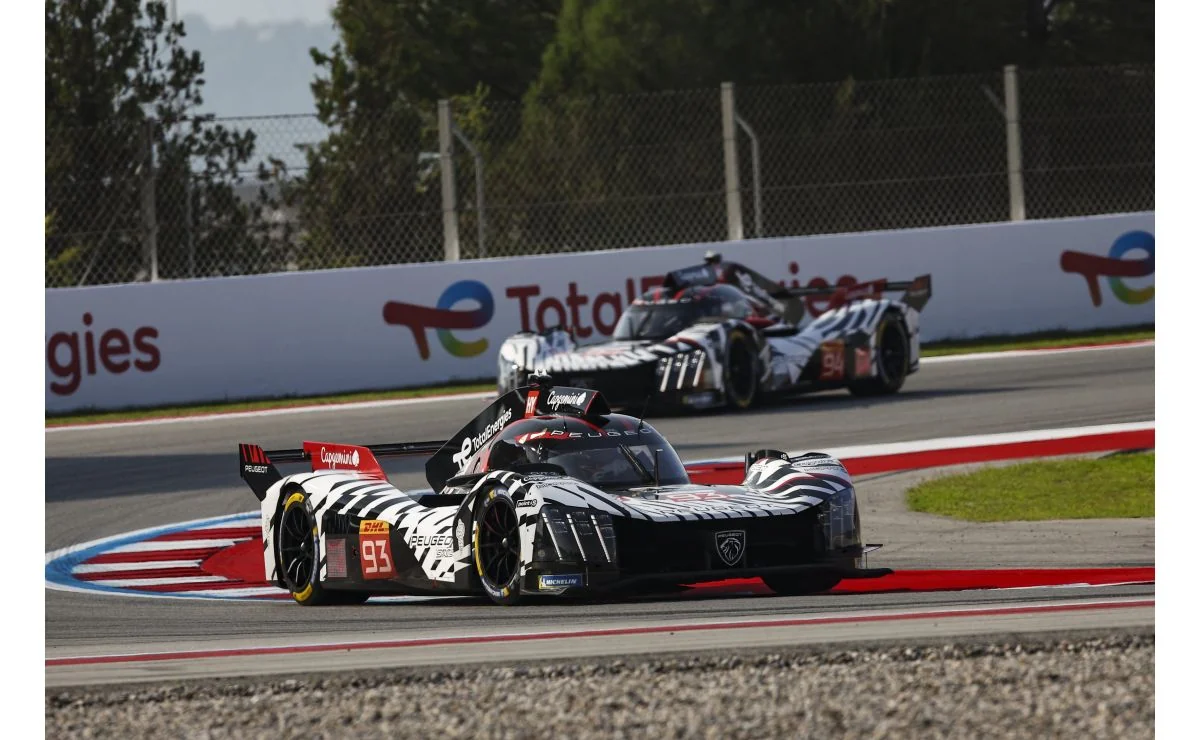
The Peugeot 9X8 returns to Monza for the World Endurance Championship finale on 8 November. The team is targeting points on a circuit resurfaced since its previous visit. Alex Quinn stays in the number 93, while Malthe Jakobsen makes his final Peugeot appearance in the 94. Running starts on Friday 6 November: here is what to watch through practice and the six-hour race.
What matters
The 2023 podium is a useful reference, but both car and circuit have changed. Judge repeatable braking, traffic management and completed pit cycles when assessing the 9X8.
History provides context, not a prediction
Peugeot Sport’s 2 November release previews the six-hour race on Sunday 8. Monza hosted the 9X8’s WEC debut in July 2022 and the programme’s first podium a year later. Paul Di Resta retains that memory, but stresses in the preview that the present car is very different. The 2023 result supplies history; a useful performance reference for this visit must be established again during practice.
The number 93 brings together Alex Quinn, Nick Cassidy and Di Resta. Quinn continues after his debut with the team in Barcelona. Loïc Duval, Théo Pourchaire and Malthe Jakobsen share the 94. Duval was also involved in Peugeot’s previous Monza visit. Both crews combine knowledge of the programme with the task of adapting their references to this car and the conditions encountered over the weekend.
A fast circuit with a changed surface and kerbs
Peugeot describes a 5.793-kilometre circuit with top speeds approaching 320 km/h and dry-weather average lap speeds above 215 km/h. The track has been fully resurfaced and several kerbs modified since the WEC’s 2023 visit. That makes comparison with old runs less direct: historical references do not necessarily capture the grip or kerb response the 2026 car will encounter.
The technical compromise is to retain straight-line speed while keeping a stable platform for braking and direction changes. Our reading is that consistency through those transitions will be more informative than one maximum-speed number. During practice, compare several laps with similar traffic and run length. An isolated time change can come from different conditions rather than a change to the car.
Traffic makes pace conditional
Peugeot’s preview describes long straights and demanding braking zones. That combination helps explain why passing is more than reaching another car. In an endurance field, a meeting with a different class can occur just before a section where changing line has consequences. Waiting may protect the exit; attempting the pass may save time or disrupt the next sector. For the 9X8, the useful gain is the time retained through the complete sequence, rather than simply reaching the slower car.
Try watching two laps together: the lap containing the encounter and the one immediately afterwards. That separates a temporary interruption from a persistent pace problem. Studying only the first could make a measured overtaking decision look like a loss of performance. Live timing records the time, while the pictures and the cars’ positions help explain its cause. Neither is a complete account on its own, especially when broadcast coverage switches away before the manoeuvre is finished.
Measure the complete pit cycle
A stop involves more than the period for which a car is stationary. Pit entry, approach, the work itself and rejoining all belong to the sequence. A short stop can place a car in awkward traffic; a longer one can prepare a stint that recovers the difference. Ranking pit crews using only the number displayed during a tyre change overlooks the larger decision and may confuse a deliberate choice with poor execution.
As a viewing exercise, compare the gap to a rival before the stop and after both cars have completed their cycles. This is an illustrative method, not a calculation of Peugeot’s plan. Avoid comparing a car that has just stopped with one that still owes a stop. Apply the same restraint to fuel and tyres: without knowing which operations were completed, there is no sound basis for automatically attributing a time loss to a mechanic or a driver.
Jakobsen’s farewell adds another objective
Monza is Jakobsen’s final race with Team Peugeot TotalEnergies. His involvement began at the 2022 Rookie Test; he became a junior driver in 2023, reserve in 2024 and a full-time race driver for the last two seasons. Peugeot also recalls the Dane securing the 9X8’s first pole on 8 May at the Spa six-hour race. His farewell closes a progression through the programme, rather than merely another entry in the season finale.
Peugeot’s stated Monza target remains a points finish. That is a clearer benchmark than automatically expecting a repeat of the 2023 podium. On Sunday, relate the finishing position to stint pace and the incidents that shaped the race. The linked LMH/LMDh guide explains the technical framework, while the Derek Bell retrospective provides context on how endurance performance is shared between drivers and operations.
Monza timetable: Friday 6 to Sunday 8 November
FIA WEC confirms two practice sessions on Friday 6 November, at 10:30 and 14:30. Saturday 7 brings the third practice at 10:30, Hypercar qualifying at 15:00 and Hyperpole at 15:20. The six-hour race is scheduled to start at 11:00 on Sunday 8. All times are local to Monza, CET (UTC+1), also used on those dates in mainland Spain and Switzerland.
The championship guide links to the official FIAWEC+ platform and broadcasters by territory. Practice will support comparisons between Peugeot runs, qualifying supplies another reference and Sunday reveals the complete execution. The official guide is the reference for any timetable changes.
Watch sequences, stints and completed pit cycles to judge the 9X8. Monza will provide the evidence needed to compare preparation with execution; this preview does not predict a win or replace a subsequent race report.
Sources & editorial policy
Written by Autohaus Zephyr from the linked sources. Manufacturer figures are attributed claims, not our own tests. The practical comparisons and clearly identified examples are editorial analysis. Market availability and specifications require confirmation for the exact car.
Corrections: [email protected]
How we work →Keep reading
- Endurance and Hypercar: How to Read a Race Beyond the Fastest Lap
- Derek Bell at 85: speed, teamwork and fuel management in endurance racing