
Industry · News & analysis
Opel and Leapmotor sign: what changes for Zaragoza’s planned C-SUV?
Opel and Leapmotor announced a signed cooperation agreement for a new Opel C-SUV on 20 November. Development involves Rüsselsheim and Hangzhou, with manufacturing assigned to Zaragoza in the announcement. Sales are expected in 2028. Signing does not establish that series production has begun or that customers can reserve a priced vehicle.
What matters
The new milestone is a formal development agreement; production, approval and customer sales require separate evidence.
From evaluating a line to signing the cooperation
The May communication described an intention to deepen the partnership and assess a new Figueruelas line for an Opel electric C-SUV. It included a potential 2028 production start, with timing still under evaluation. November adds another fact: Florian Huettl and Zhu Jiangming have signed the official agreement while development is already under way at the joint project hubs.
These are neither identical announcements nor two separate models. Moving from evaluation to an agreement provides more organisational definition. It does not disclose the full contract, investment, annual capacity, associated employment or a line start date. November’s commercial expectation concerns sales in 2028. It should not be rewritten as a precise industrial start date or as completed customer deliveries.
Source: Opel · 2026-11-20 ↗ · Stellantis · 2026-05-08 ↗
What each partner contributes to the announced car
Opel describes core Leapmotor components combined with its own design, cabin ergonomics, chassis engineering, lighting and seating technology. This allocates responsibilities across the vehicle. It does not identify the car as a particular Leapmotor wearing different badges: the release supplies no complete correspondence between platform, body and final specification.
Integration needs to be assessed at the interfaces: how systems communicate, how the complete vehicle is calibrated and who validates the result. That is a framework for examining the project, rather than a claim that problems exist. Shared components can support scale without establishing identical controls, assistance systems or driving behaviour across every version. Final specifications and approvals will be needed to compare the complete car with segment alternatives. The named areas of Opel involvement are meaningful, but they are not substitutes for those measurements.
Source: Opel · 2026-11-20 ↗
Development hubs and manufacturing are different locations
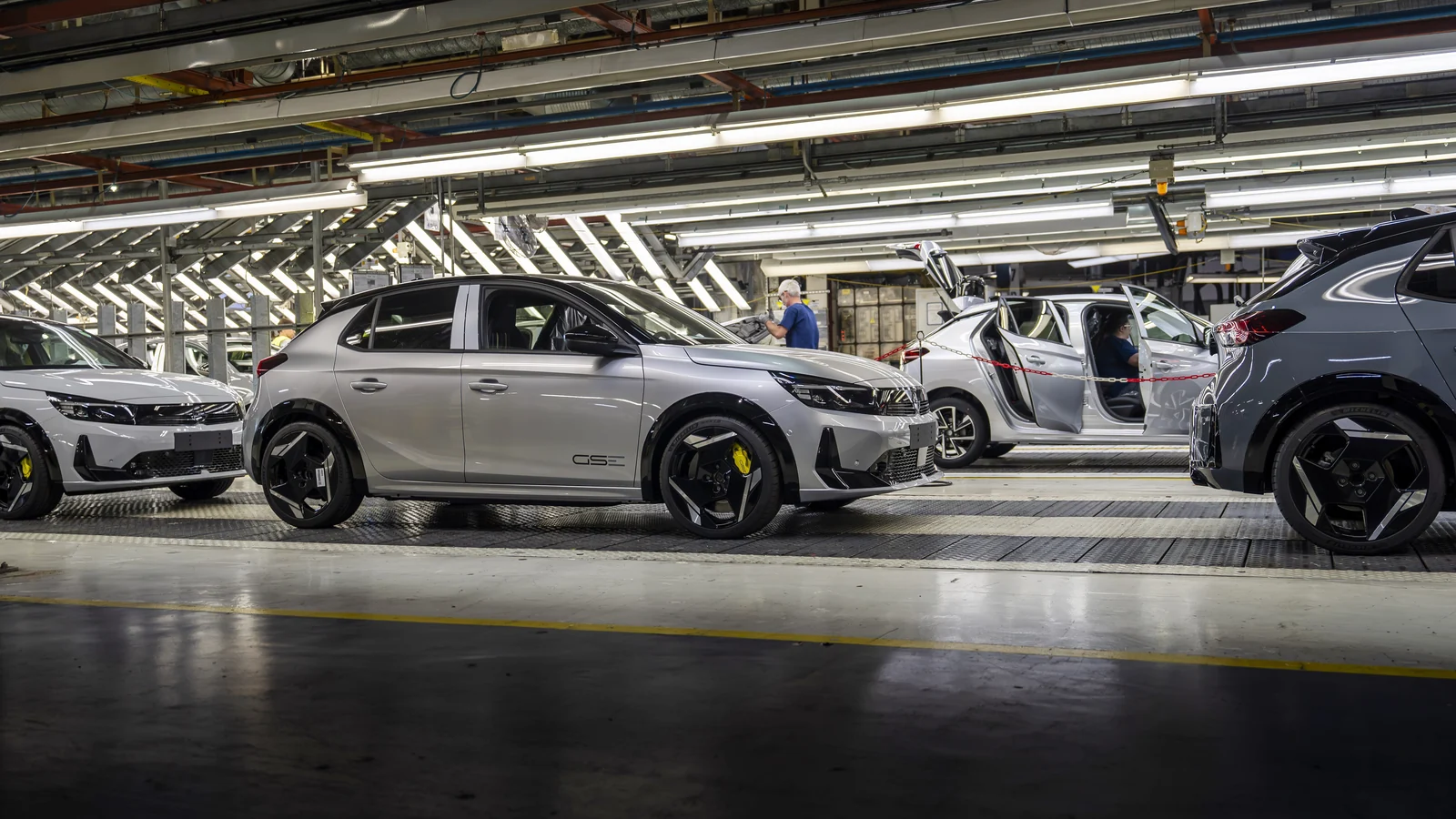
The German and Chinese joint hubs are involved in development. The announced industrial location is Zaragoza, the plant associated with the Corsa. Distinguishing those functions prevents an engineering partnership being interpreted as a transfer of all manufacturing to either country. Technical work, component sourcing and final assembly describe different parts of the chain.
For Spanish readers, the assignment matters as a planned change in Figueruelas’s product mix. The Corsa and a new C-SUV address different sizes and uses. Sharing a factory does not require identical components, processes or production rates. The signed agreement identifies a specific addition to follow, but its contribution to plant workload cannot be calculated without published volumes. The factory’s development will also depend on the schedules of the programmes operating alongside it, rather than simply on the names of the partners developing the new car.
Source: Opel · 2026-11-20 ↗ · Stellantis · 2026-05-08 ↗
A place in the range does not announce a Grandland replacement
Opel says the new C-SUV will complement the current Mokka, Frontera and Grandland range. This does not announce the withdrawal of any of them. Nor does it specify dimensions, luggage space, battery capacity, range, charging time or price. The segment designation helps locate the commercial intention without determining which customer will choose it over an existing model.
The recent Start trim expansion in Germany addresses a different decision: equipment and pricing for current cars. Waiting for a 2028 introduction and evaluating an available offer are different time horizons. Someone needing a car sooner should compare present alternatives on their actual terms, without adding an imagined future range or price to the calculation.
Source: Opel · 2026-11-20 ↗
Which documents will make progress measurable?
The next substantial developments will concern the industrial configuration and timetable, followed by specifications, approval, orders and deliveries. Each answers a different question. A validated prototype does not establish repeatable manufacturing capacity. A prepared line does not prove availability of every version, while opening orders does not mean that customers have received cars.
For the product, relevant details will include the electrical architecture, charging capabilities, warranty terms and software support actually announced. For industrial execution, published sourcing arrangements and quality-validation steps will matter. These are items to follow, rather than features we assign to the future Opel now. The current source establishes partners, broad responsibilities, development hubs and plant, with an expected sales horizon that remains forward-looking. It gives readers a clearer project to track, not a finished specification to configure.
Source: Opel · 2026-11-20 ↗ · Stellantis · 2026-05-08 ↗
A shared factory does not merge separate programmes
The Leapmotor B05 plan for Zaragoza concerns another product at its own stage. It cannot fill gaps in the Opel’s specifications. One location can serve multiple brands and programmes; progress on one does not automatically establish progress on another. Maintaining that distinction makes both reports useful instead of duplicating a generic story about Chinese-linked cars made in Spain.
The 3 Series at Dingolfing provides a useful industrial comparison: manufacturing, launching and delivering are different milestones. Here, the new information supports a signed cooperation and active development. Its success will become assessable when the organisation produces a defined car, manufactured repeatably and delivered under verifiable commercial conditions. Until then, readers can follow concrete responsibilities without treating an intended schedule as a completed outcome.
Source: Opel · 2026-11-20 ↗
The signed agreement gives the project announced in May more definition. Zaragoza is its stated manufacturing destination and 2028 its expected sales horizon; specifications, pricing and execution still require their own confirmations.
Sources & editorial policy
Written by Autohaus Zephyr from the linked sources. Manufacturer figures are attributed claims, not our own tests. The practical comparisons and clearly identified examples are editorial analysis. Market availability and specifications require confirmation for the exact car.
Corrections: [email protected]
How we work →Keep reading
- Leapmotor B05 in Zaragoza: an industrial plan, not a production start
- BMW starts 3 Series production in Dingolfing ahead of a 2027 launch
- Opel expands Start in Germany: the €36,590 Grandland explained