
New cars · Practical guide
Electric Mercedes CLA Shooting Brake: how to check charging and the configuration you need
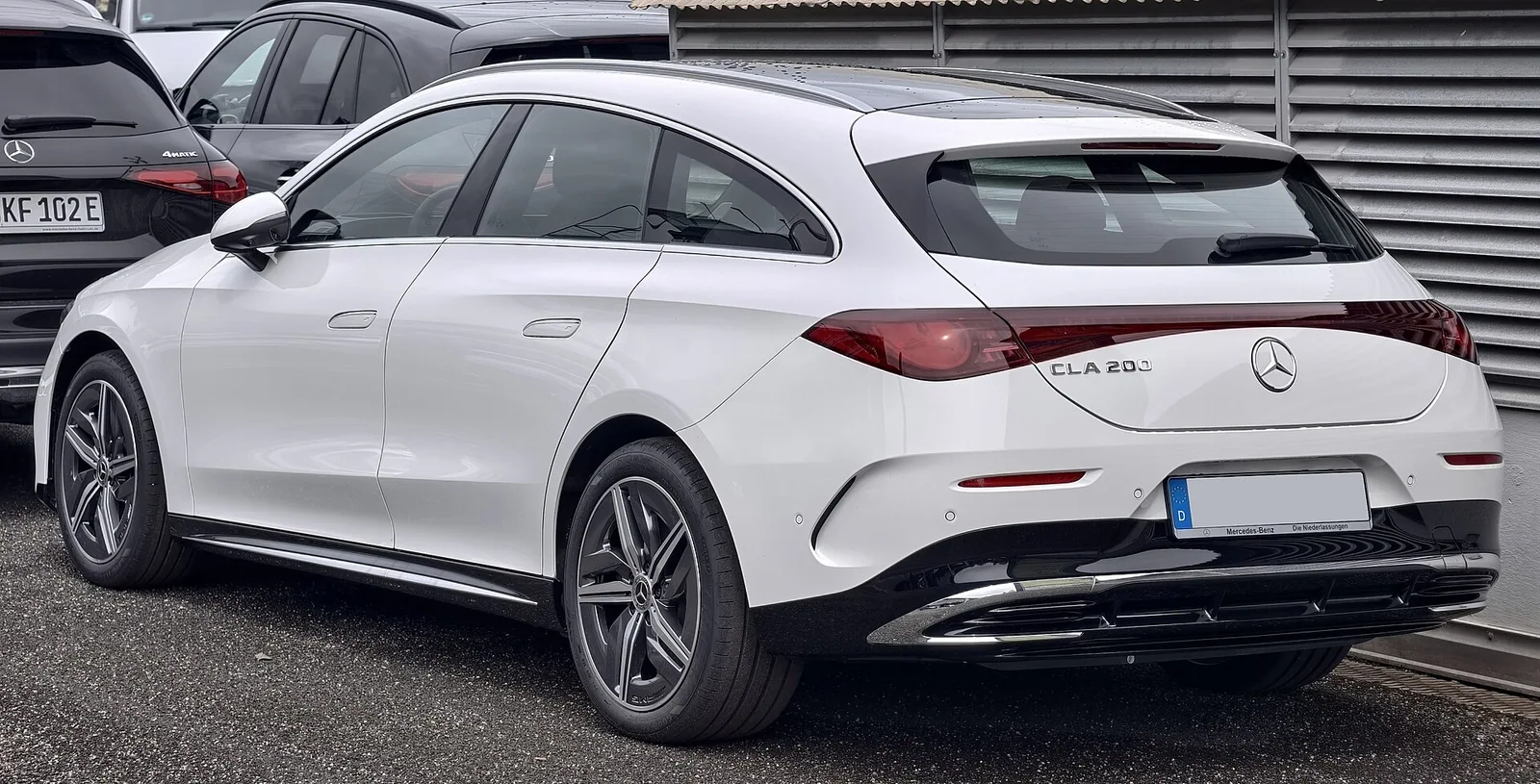
The electric CLA Shooting Brake pairs an estate-style body with an 800 V architecture, according to Mercedes’ European announcement. But compatibility with 400 V fast chargers depends on an optional converter, and AC charging at up to 22 kW is also optional. This guide explains what to verify on the specific configuration and how to judge whether the car suits your routes, cargo and budget.
What matters
Do not assume that the “800 V” label guarantees compatibility with every fast charger. Confirm the 400 V converter, the AC-charging option and the exact equipment on the car you are considering in writing.
What Mercedes announced and what it means for a buyer
Mercedes-Benz’s European announcement of 25 November 2025 introduced the electric CLA 250+ and CLA 350 4MATIC Shooting Brake. For those versions, the document stated outputs of 200 and 260 kW, a battery with 85 kWh usable capacity, an 800 V architecture and a maximum DC charging rate of up to 320 kW. These are figures in the announcement for the versions and market it describes, not independent measurements or a guarantee that every car, charging station or session will reach those figures.
That distinction matters because an impressive figure may describe a maximum condition, while a buying decision depends on the delivered specification and your journeys. Before comparing offers, confirm which version is being offered, in which country and with which options. Ask for a specification or order document that identifies the configuration, rather than a general explanation of the range. If the announcement and the car’s paperwork do not match, get the difference clarified before committing money.
Source: Mercedes-Benz Media · CLA Shooting Brake available to order ↗
The key question: does it include the 400 V converter?
Mercedes said an optional converter enables use of 400 V fast-charging infrastructure. That does not mean the converter is installed on every car. Nor should it be confused with the announced maximum DC charging rate: one describes compatibility that depends on equipment; the other is a maximum figure stated for the specified range.
Start with where you actually charge: at home, at work and at the stops you commonly make on regular routes. You do not need to map every charger; identify the ones that affect your trips. Check what infrastructure they provide and ask whether the specific version can use it with its current equipment.
Ask for the converter to be explicitly listed on the configuration, order or documentation for that car. “It can be ordered” or “the range is compatible” does not establish that the car being offered includes it. Note who confirms the information and request written clarification. The availability and compatibility of an individual charging station must be checked for that charger and situation.
Source: Mercedes-Benz Media · CLA Shooting Brake available to order ↗
Keep AC charging and fast charging separate
The announcement also identifies AC charging at up to 22 kW as optional. This is a separate question from the converter for 400 V fast-charging infrastructure: it concerns another type of charging and another announced limit. Asking only “what charging power does it have?” can therefore produce an incomplete answer.
First decide where you expect to charge regularly and what installation you have or plan to use. Then confirm whether the AC-charging option is included on the car and whether the intended charging equipment suits that installation. The 22 kW figure alone does not mean the car will always charge at that rate: the installation, charging point, vehicle and session conditions all need to be considered.
If you are comparing two cars, list their charging options separately. One may include equipment the other lacks, even if both are described using the same general range figures. Before accepting a configuration, ask for a clear distinction between included items, optional items and anything you would need to arrange separately.
Source: Mercedes-Benz Media · CLA Shooting Brake available to order ↗
Test the estate format with your own cargo, not just litres
The Shooting Brake body may appeal, but its name and shape do not prove that the space suits your needs. The most useful check is to try the most awkward item you regularly carry: for example, a pushchair, pet carrier, sports equipment or a rigid suitcase. Those examples are hypothetical; what matters is testing your own cargo.
Check whether the item passes through the opening, where any edges or raised sections are, and whether you can load it without blocking your view. Try the whole task: open, load, remove and put the item away again. A volume measurement does not necessarily tell you whether a particular object will fit through the opening or can be secured conveniently.
Run the reverse check with passengers aboard. Adjust the driver’s seat as you would for normal use, then assess the space available behind and around the passengers. If you switch between people-carrying and cargo-carrying trips, try both arrangements. Do not infer capacity, dimensions or flexibility from an announcement you have not checked against the actual car.
Compare two configurations, not one brochure figure
Make a short list of must-haves and a second list of preferences. The first should include the version you are genuinely considering, the charging options required for your regular charging points and the cargo arrangement you have just tested. Put items that would improve the experience but would not change the car’s basic suitability on the second list.
Request comparable offers for the same country and date, with the version and options itemised. The announcement discussed here is European and dated 2025; by itself, it cannot establish the price or equipment of a current offer in another market. Compare the full cost of each configuration on the same basis and ask what any unclear item includes.
Do not treat the announced maximum charging rate as a guaranteed journey time. The source does not turn the maximum of up to 320 kW into a fixed result for every session. Base your decision on what you can verify about the specific car and the charging conditions you are likely to encounter, not on a general claim that omits those details.
Source: Mercedes-Benz Media · CLA Shooting Brake available to order ↗
What to confirm before reserving or paying
Request a written description of the specific car: version, included charging equipment, outstanding options and any difference from the announced configuration. Check those details against the order and the paperwork relevant to the transaction. If the car has not yet been configured, distinguish what is confirmed from what is only a possibility.
The seller and the recipient of payment must also be identified and verified before you reserve or transfer money. Autohaus Zephyr is a vehicle-sourcing and intermediation service; it is not necessarily the seller, importer or guarantor of every vehicle. Do not assume that an intermediary relationship replaces checks on the parties, ownership, payment terms or applicable responsibilities.
Inspection, warranty, delivery and tax treatment depend on the car, the parties and the transaction. Do not treat them as settled by a product specification. If a tax or contractual issue affects your decision, confirm the individual case with the competent authority and the relevant documents before committing. Keep responses, offers and attachments together with the agreed specification.
A useful decision rests on three checks
The order of review can prevent wasted comparisons. First, confirm whether the charging infrastructure you use suits the offered configuration, especially if you need the optional converter for 400 V fast chargers. Second, check separately whether AC charging at up to 22 kW is included when it matters for your installation.
Then test the space with your passengers and cargo, and compare equivalent configurations with their options identified. If one of these points remains unanswered, record it as outstanding rather than treating it as included equipment. Mercedes’ published information helps frame the questions, but it does not replace checking the specific car.
The electric CLA Shooting Brake makes sense for you if its configuration meets your real charging and carrying needs and the full cost is clear. If you cannot verify an important item of equipment, request written confirmation before proceeding. The point is not that one range figure settles the decision: version, options, use and purchase conditions all need to align.
Source: Mercedes-Benz Media · CLA Shooting Brake available to order ↗
Questions answered
Can every electric CLA Shooting Brake use 400 V fast chargers?
Mercedes’ announcement says an optional converter enables use of 400 V fast-charging infrastructure. Do not assume it is included on every car: confirm its presence on the specific configuration and check compatibility with the charger you intend to use.
Does AC charging at up to 22 kW come as standard?
The announcement describes it as optional. Check whether it is included on the car you are comparing and ask about compatibility with the intended installation; the announced maximum does not guarantee that rate in every situation.
Can I treat the announced 320 kW as the usual charging rate?
No. Mercedes announced up to 320 kW DC charging for the specified versions, but this is a maximum figure in the announcement, not a measurement of every session or a result guaranteed at every station. Confirm the configuration and account for the actual charging conditions.
The estate-style body and headline figures are only the starting point. Confirm the 400 V converter and AC-charging option in writing when you need them, test the space with your own cargo, and compare offers for the same configuration. Reserve or pay only after verifying who is selling and receiving the money, and clarifying the transaction-specific terms.
Sources & editorial policy
Written by Autohaus Zephyr from the linked sources. Manufacturer figures are attributed claims, not our own tests. The practical comparisons and clearly identified examples are editorial analysis. Market availability and specifications require confirmation for the exact car.
Corrections: info@autohauszephyr.ch
How we work →Keep reading
- BMW iX3 Neue Klasse: what changes beyond range
- 800-Volt Charging: How to Tell Whether It Will Really Save Time
- Euro NCAP and assisted driving: how to interpret the rating before you buy