
Performance · Practical guide
Hyundai IONIQ 6 N: what to ask of an electric sports-car test
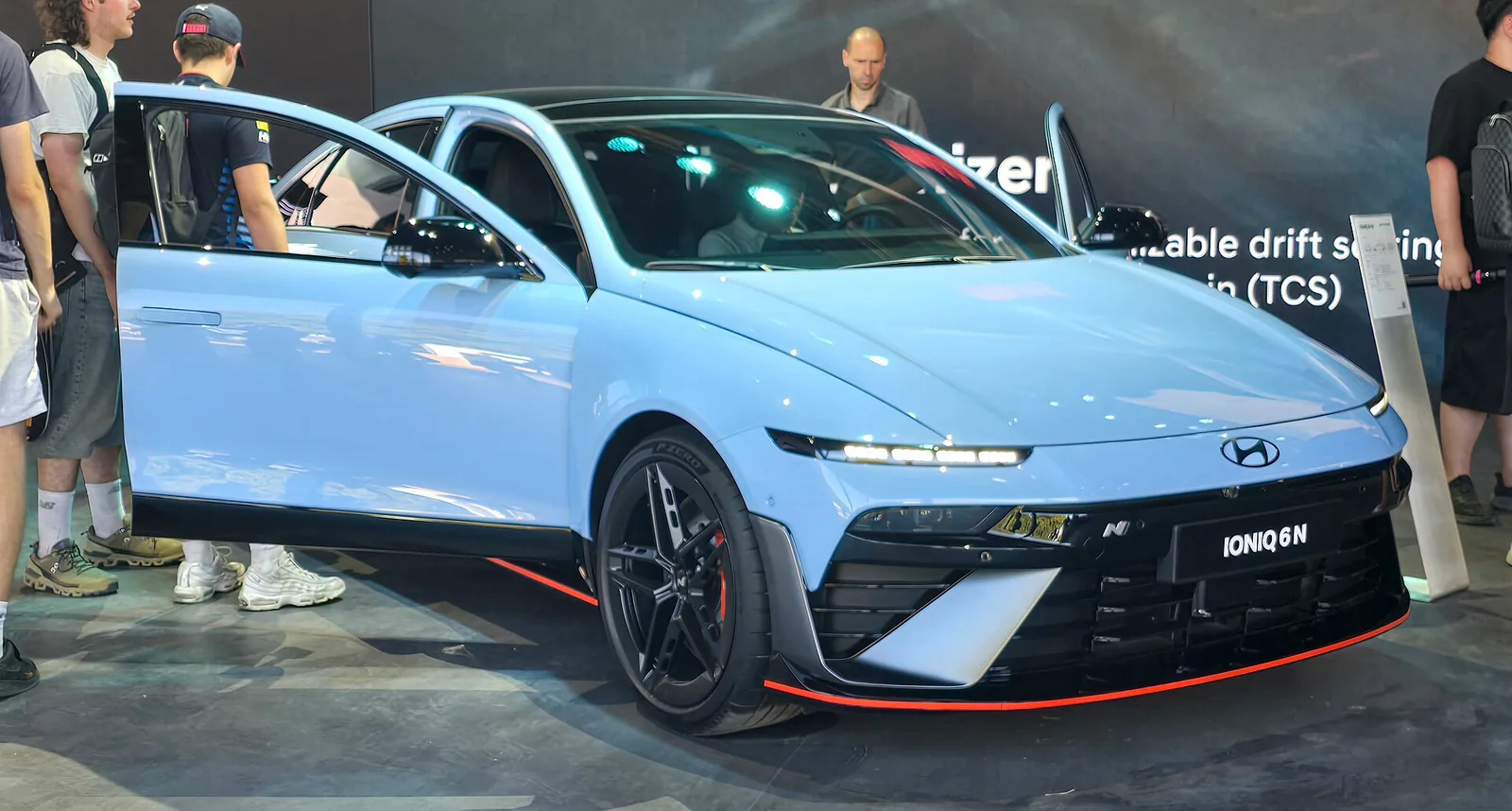
The IONIQ 6 N’s presentation raises a more useful question than how quickly it accelerates once: what should a test measure to explain response, consistency and driver involvement?
What matters
A convincing performance test records its conditions, repeats comparable runs and separates measured results from claims or assumptions.
A presentation, not an independent test
Hyundai presented the IONIQ 6 N at Goodwood on July 10, 2025, as part of its high-performance electric-car program. That presentation establishes the car and the manufacturer’s approach; it is not an independent assessment and does not prove how the vehicle behaves during a long session. This analysis starts with that documented context to explain which questions are worth asking during a test.
The distinction matters because a launch announcement and a test answer different questions. The first can explain the product’s intent; the second should describe conditions, procedure and repeatable observations. We do not attribute lap times, driving impressions, performance figures or thermal endurance to the IONIQ 6 N when we have not measured them. The aim is to provide a practical method for interpreting a future test, whether of this model or another electric sports car.
Change the question: from peak output to consistency
A hard acceleration run can be relevant, but it describes one maneuver under specific conditions. Before comparing results, ask about the battery’s starting state, the selected setup, the surface and the ambient conditions. Also establish whether a figure is an independent measurement, a manufacturer claim or a subjective impression. Without that label, numbers that appear comparable may tell different stories.
Consistency is assessed by repeating the same exercise under a defined procedure, not by selecting each car’s best run while leaving the context unexplained. For example, in a hypothetical closed-track test, a team could record several acceleration runs using the same protocol and note the intervals between them. A difference between the first and later runs would need explanation; by itself, it would not identify the cause. This avoids mistaking a headline figure for a complete account of available performance.
Comparing cars means matching the test scenario
A useful comparison does not require absolutely identical conditions, but it must disclose differences that could affect the result. Relevant factors include starting charge, battery temperature, selected mode, tires and their condition, carried load, driver, surface and weather. It is also useful to record whether the car has just completed another test or has been standing. These variables help readers interpret results; they are not decorative details on a test sheet.
Imagine, purely as an example, two electric sports cars recording different times on one run. If they start with different battery conditions or use different setups, the result cannot show that vehicle design alone caused the gap. A responsible comparison publishes its procedure, identifies unavoidable differences and avoids presenting one observation as a universal verdict. The practical question for readers is simple: could another team reasonably repeat the test and understand what was done?
Distinguish energy, temperature and available power
Peak power and the ability to maintain demanding performance are different questions. A brief acceleration does not reproduce the demands of a long session: the battery, control systems and other components operate for longer and under a different pattern of use. It is therefore worth asking which performance function was activated, how the vehicle was prepared and whether the manufacturer specifies operating conditions. An isolated figure does not, on its own, reveal how response changes after repeated efforts.
In a hypothetical circuit test, a rigorous log would record available battery state and temperatures at the start and finish, as well as the sequence and duration of laps. If a change is observed, the team should describe when it occurred and what else changed rather than automatically attributing it to the battery or a specific thermal cause. If instruments or data are insufficient, the test should say so. There is no basis here for claiming a particular thermal endurance, circuit range or lap time for the IONIQ 6 N.
Assess how drivers request and understand performance
A sports car is defined not only by the energy it can deliver, but also by how clearly the driver can request a response and understand what the vehicle is doing. A test should examine how easy it is to find relevant settings, whether their names and effects are clear, and what information the car provides in use. A long list of modes is not automatically an advantage: the assessment should explain what changes and whether the driver can anticipate it.
Behavior and presentation should also be kept separate. Sounds, graphics or visual signals may be part of the experience, but they do not replace measurements of speed, time or other data. A useful test would describe separately what the driver perceives and what the instruments record. A reviewer should not turn a subjective reaction—for example, that a response feels immediate—into an objective conclusion about power or consistency. We have not tested the IONIQ 6 N; these are evaluation criteria, not impressions attributed to the car.
What to look for in a test report
Before accepting a conclusion, look for a protocol that lets you understand how the result was obtained. It should state the location and type of surface, the car’s condition, its setup, relevant ambient conditions and the order of maneuvers. For a repeated session, it should note breaks and the number of attempts or laps. If a particular function requires preparation, the article should explain what was activated without implying that the result will be identical in everyday use.
As a practical checklist, readers can ask for: a figure with its unit and procedure; starting and ending conditions; a comparison between the first and later repetitions; and a description of measurement limitations. In a hypothetical example, if only one run was completed, the conclusion should be limited to that run rather than presented as a test of sustained performance. High-speed maneuvers should not be reproduced on public roads to complete a review; those measurements belong in a controlled environment with properly prepared staff.
Read results without claiming more than they prove
A good test lets readers distinguish three layers: what the manufacturer claims, what the team observed and what remains unverified. If a test detects no change, that does not prove a change can never occur; if a measurement varies, that does not automatically explain why. Conclusions should reflect the number of repetitions, the quality of the data and the conditions actually observed. If measurements are missing, that absence is part of the result.
For the IONIQ 6 N, the Goodwood presentation is the documented starting point, not an answer to every question raised here. When consulting a future test, check the date, market and configuration: equipment, price and availability can vary and should be confirmed using current information for the relevant location. The useful next step is to compare tests that explain their methods, not to rank cars by an uncontextualized figure. That helps identify what evidence is still needed before forming a view of the car’s sporting performance.
Questions answered
Is peak power enough to tell how a car will perform on track?
No. It describes a condition or operating point, but does not by itself establish what happens after repeated hard use. Look for tests that explain their procedure, starting conditions and results across several repetitions.
What information makes acceleration tests comparable?
At a minimum: setup and procedure, starting battery state, ambient and surface conditions, tires and the number of attempts. If conditions differ, the test should say so rather than presenting a direct comparison as conclusive.
Does this assessment confirm the IONIQ 6 N’s performance?
No. Hyundai presented it at Goodwood in July 2025. This article proposes questions and checks for a test; it does not report our own measurements or validate performance figures for the car.
The IONIQ 6 N deserves an assessment that goes beyond a striking acceleration run. To understand an electric sports car, ask for a clear protocol, comparable conditions, repeated efforts and an honest distinction between data, impressions and open questions.
Sources & editorial policy
Written by Autohaus Zephyr from the linked sources. Manufacturer figures are attributed claims, not our own tests. The practical comparisons and clearly identified examples are editorial analysis. Market availability and specifications require confirmation for the exact car.
Corrections: info@autohauszephyr.ch
How we work →Keep reading
- Porsche 911 Turbo S T-Hybrid: what electrification is for in a sports car
- Tesla Roadster: what Tesla is announcing and what remains unproven
- 800-Volt Charging: How to Tell Whether It Will Really Save Time