
Technology · News & analysis
GM Forward 2026: central computing in 2028, OnStar AI in 2027
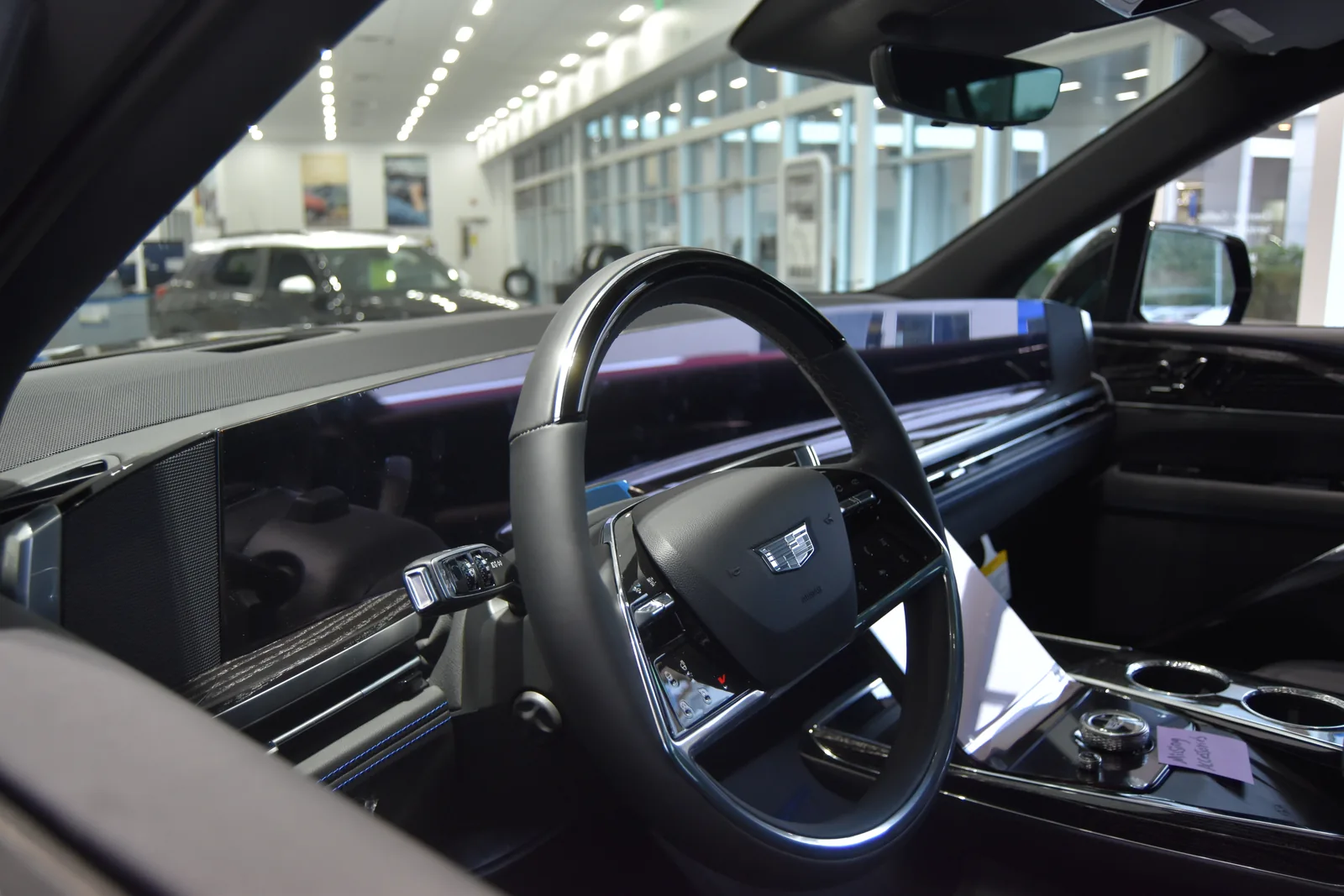
GM announced a central-computing architecture on 21 October, targeting a debut in the 2028 ESCALADE IQ. The programme combines electronics, virtual development and a new EV platform; OnStar AI has an earlier timetable, starting with the 2027 LYRIQ through an update. The industrial opportunity lies in coordinating these layers while distinguishing future targets from available features.
What matters
The announced architecture has a future timetable; compute, validation and availability need separate evidence.
What the company announced
GM described a central-computing architecture intended to debut on the Cadillac ESCALADE IQ in 2028 before expanding to other ranges. The presentation links that foundation with its fourth-generation EV platform, LMR chemistry and virtual development. GM attributes forty times more computing capability and reduced wiring to the new architecture. These are manufacturer comparisons between defined systems, not Autohaus performance tests.
Source: GM, GM Forward 2026 ↗
What the central computing unit changes
The planned central unit brings together perception, propulsion, active safety and chassis functions. GM claims forty times the computing capacity, 30% less wiring length and mass and up to 50% faster cellular connectivity. These are manufacturer comparisons with its reference architecture, rather than improvements every driver will experience equally in every operation.
Combining domains may help different functions share information and software. It also concentrates reliability and recovery requirements: a common foundation must support critical operations alongside updateable services. The relevant milestone is incorporation into production vehicles, initially the 2028 ESCALADE IQ, followed by validation of the functions enabled in each market.
Source: GM, GM Forward 2026 ↗
Centralisation changes engineering and servicing
A common computing foundation can reduce duplication and support coordination. It also makes the response to a component or update failure more important. A design must preserve appropriate behaviour during faults, protect critical functions and allow diagnosis of the cause. Centralisation does not automatically mean simpler operation.
For owners, this produces practical questions: which modules require configuration after repairs, how updates are recorded and how long services are supported. A final workshop manual for this future architecture is not available within this review. Those questions are therefore assessment criteria, rather than benefits that should be assumed.
300,000 virtual batteries are not 300,000 physical prototypes
GM says its team evaluated more than 300,000 virtual LMR battery designs before building a physical prototype. It also describes a one-month interval from concept to formal programme approval. That does not mean developing an entire car in one month: it identifies a particular decision stage supported by simulation.
The company aims to halve development cycles of four or five years. The industrial value would come from rejecting unsuitable options before making hardware and coordinating work that previously happened in sequence. Physical durability, safety and manufacturing validation are still required. The time reduction is a process ambition; the virtual designs illustrate GM’s proposed method for approaching it.
Source: GM, GM Forward 2026 ↗
Battery chemistry, platform and range are different layers
Cell chemistry influences decisions about cost, mass and performance. A complete platform adds thermal integration, structure and controls. Vehicle range depends on further variables. A battery strategy therefore cannot establish how far every model will travel or the charging power it will sustain.
Once production vehicles exist, comparisons should identify the version, measurement cycle, usable capacity and charging conditions. Technology-family targets provide context. They cannot replace a final specification or independent measurement. Maintaining that order prevents a battery acronym becoming an identical promise across different bodies, tyres and climates.
2027 for OnStar; 2028 for the new architecture
The roadmap has several dates. GM plans OnStar AI for the 2027 LYRIQ through a subsequent update and intends to start introducing a unified OnStar app in the same year. The computing architecture begins with the 2028 ESCALADE IQ and would later extend to high-volume electric and combustion vehicles. These are different programmes with different scopes.
The autonomous-highway-driving target for 2028 had already been announced the previous year; the current update also describes closed-course pre-production testing. It is not a newly available customer feature. Buyers need to check model, model year, market and activation conditions: a common platform does not guarantee that every vehicle receives every function discussed at the event.
Source: GM, GM Forward 2026 ↗
Questions answered
Does the whole range already have the new architecture?
No. The announced initial debut is planned for 2028, with subsequent expansion.
Is a simulation an independent road test?
No. Simulation explores a model and needs validation; it does not independently establish final on-road behaviour.
GM proposes a transformation spanning products and industrial processes. The news lies in that direction and its next milestones. When assessing a car, its future architecture should remain separate from the capabilities, terms and support a customer can actually obtain today.
Sources & editorial policy
Written by Autohaus Zephyr from the linked sources. Manufacturer figures are attributed claims, not our own tests. The practical comparisons and clearly identified examples are editorial analysis. Market availability and specifications require confirmation for the exact car.
Corrections: info@autohauszephyr.ch
How we work →