
Maintenance · Practical guide
Electric-car brakes: how to assess corrosion and maintenance
Regenerative braking can reduce how often discs and pads are used, but low mileage or limited use does not prove that they are in good condition. A useful assessment combines history, inspection, and vehicle-specific criteria.
What matters
Do not infer brake condition from regenerative braking, mileage, or a photograph. Ask which components were checked, what criteria were applied, and whether any proposed parts are an exact fit.
Regenerating energy and friction braking do different jobs
During regenerative deceleration, some of the vehicle’s motion energy is converted into electrical energy. Conventional brakes slow the vehicle through friction, dissipating energy as heat. The vehicle coordinates these functions; the driving feel or use of a single pedal does not establish that discs and pads no longer matter.
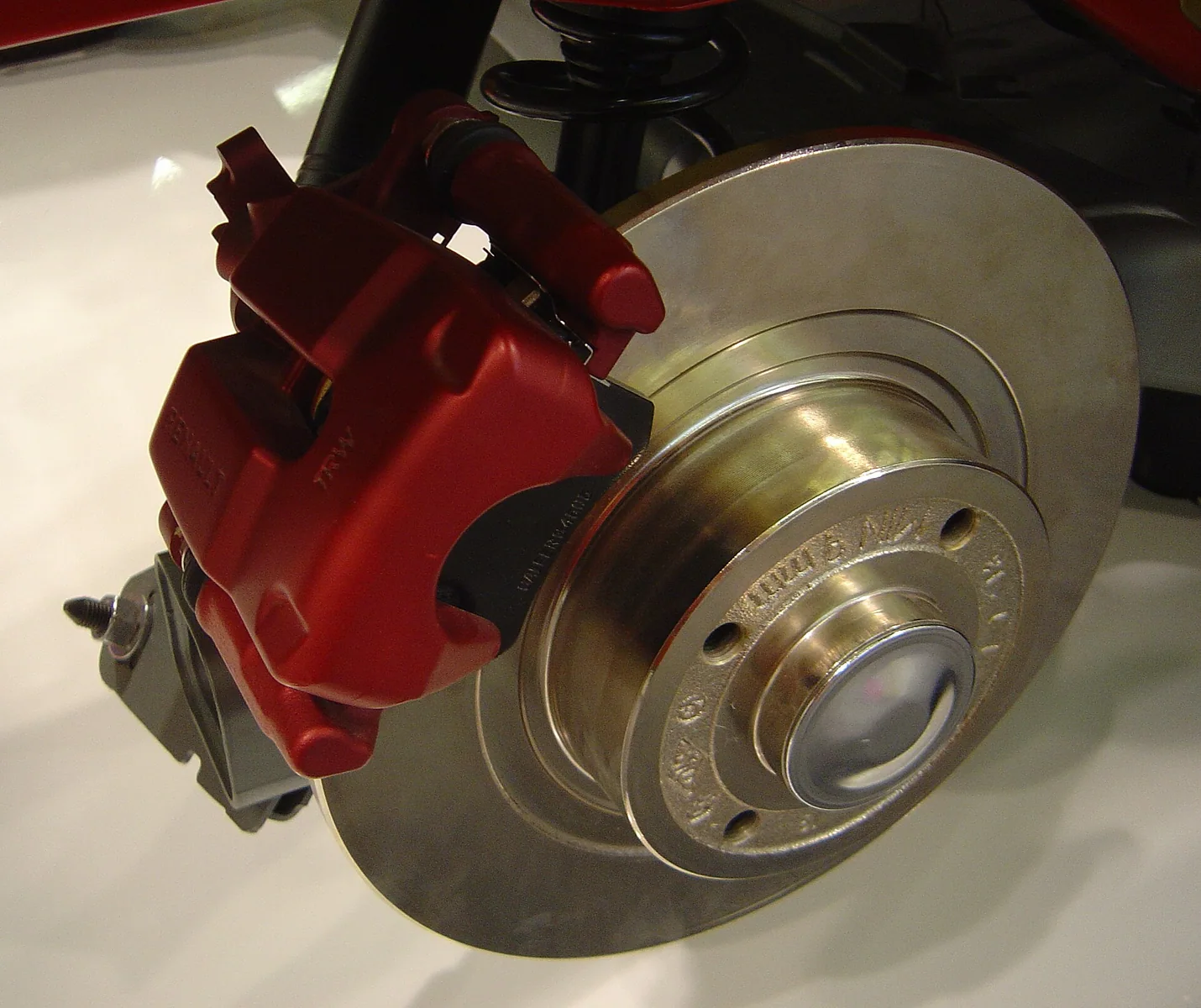
Brembo explains that regeneration can reduce use of the conventional hydraulic system and may contribute to surface corrosion on discs. It also presents an EV Kit of disc and pad components aimed at that issue. This describes a possible condition and a particular product: it does not establish that every electric car develops corrosion or that the kit is necessary or compatible with every model.
Source: Brembo · EV Kit y corrosión en discos de vehículos eléctricos ↗
Mileage is a clue, not a diagnosis
The odometer records distance, not how long a car stood unused, where it was stored, or what maintenance it received. An electric car with low mileage may have been stored for an extended period or exposed to conditions worth investigating; a car with more miles is not automatically problem-free either. These are possibilities to check against the vehicle’s records, not conclusions drawn from the number alone.
When assessing a car, consider mileage alongside dates of use and maintenance, available invoices, and any declared brake work. Ask whether the car was stored and whether both sides and relevant components on each axle were inspected. If the history is incomplete, record that uncertainty rather than treating it as proof of either good condition or a fault.
What a visual check can—and cannot—tell you
A photograph can point to an area worth checking, but it cannot show the full contact surface, hidden components, or how the system operates. A visible mark or change in colour alone is not enough to distinguish a surface condition from an issue requiring attention. Nor does the appearance of one side of a disc establish how much usable material remains or how the assembly functions.
In person, ask a professional to identify the components examined and the findings; to explain whether the check was visual or included additional assessments; and to record the basis for any maintenance recommendation. The method and limits may vary by vehicle. If a wheel or component could not be examined, the report should say so rather than imply that the entire system was verified.
When to stop guessing and ask for an assessment
Persistent noise, vibration during braking, a vehicle warning, or a noticeable change in response are reasons to seek an assessment, not tools for diagnosing the cause yourself. Each symptom may have more than one explanation. Describe when it occurs, whether it recurs, and what warning appears; this helps a workshop investigate without turning an impression into a mechanical conclusion.
It is not possible to establish remotely whether a vehicle with a particular symptom is safe to drive. If braking response changes significantly or a related warning appears, consult the manufacturer’s instructions and seek qualified advice before continuing to use the car; arrange assistance instead of testing the system on the road if needed. Do not deliberately make hard stops to clean discs: general advice is not a substitute for diagnosis or the procedure for that model.
What to request in a pre-purchase inspection
Ask for an inspection that identifies the vehicle and the scope of work: which axles and components were checked, what could be observed, and what remained unchecked. Request the result in writing and an explanation of the criteria behind any repair or replacement recommendation. If measurements were taken, ask for them to be recorded with enough context to interpret them and compared with the specifications applicable to that vehicle, not a generic threshold.
If a disc, pad, or kit is recommended, ask for its exact part reference and compatibility with the specific vehicle version. “For electric cars” is not a complete application. Also confirm whether the estimate includes the proposed parts and work or whether further checks remain outstanding. A clear explanation lets you compare the proposal with another assessment; it does not guarantee that a new component will resolve a symptom whose cause has not been identified.
Source: Brembo · EV Kit y corrosión en discos de vehículos eléctricos ↗
How to interpret findings without overreacting
Separate three things in your notes: observation, diagnosis, and recommended work. “There is a visible mark” is an observation; identifying its cause requires assessment; proposing a part is a repair recommendation that needs to be justified by fitment and findings. Ask the report to make those distinctions clear and explain any uncertainty. A photograph can supplement the record, but it does not certify thickness, operation, or fitness for use.
Hypothetical example: two listings show electric cars with similar mileage, but one has invoices and a documented brake inspection while the other has no records. Do not conclude that the second car has a defect; treat the missing information as an open question and request an inspection before deciding. Another hypothetical example: if a kit is offered, verify its reference for that model before accepting that the recommendation applies. This avoids turning a general possibility into an automatic repair.
A practical sequence for making a decision
Before viewing the car, request the available maintenance history and ask what brake inspection has been carried out. During the inspection, note reported warnings, noises, or vibration, but do not deliberately try to reproduce them. If you are buying remotely, photos can help you prepare questions; they do not replace an in-person check by someone qualified. If information is insufficient, decide whether you need an independent inspection before committing and who will arrange it.
Afterward, request the findings, clarify what needs follow-up, and obtain exact references for any proposed parts. Consult the owner’s manual and the manufacturer or a professional familiar with the application when the procedure or criteria are unclear. There is no universal conclusion based on the type of powertrain: reduced use of conventional brakes may change what deserves attention, but only a vehicle-specific assessment supports an informed decision.
Questions answered
Does regenerative braking remove the need to maintain conventional brakes?
No. Regeneration recovers some energy while slowing, but friction brakes remain part of the system. Their condition should be checked for the particular vehicle; energy recovery does not certify the discs or pads.
Does visible light corrosion mean the discs must be replaced?
You cannot decide from an image or description alone. Ask for an inspection explaining what was checked, what the finding means, and which criteria and specifications apply to that vehicle.
Can I brake hard to clean the discs?
That is not a generally safe recommendation to apply without knowing the car’s condition. Follow the manufacturer’s instructions and consult a professional if there is persistent noise, vibration, a warning, or a change in braking response.
In an electric car, regeneration changes how much friction braking may be used; it does not remove the need to check the brakes. For a purchase or maintenance decision, combine history with a professional inspection, ask what criteria were applied, and require exact fitment before approving a repair.
Turn the research into a buying plan
Tell us the vehicle, total budget and destination in Spain. We can assess the search or an existing advert. The initial enquiry is free; inspection and coordination require an agreed quote.
Discuss my car search ↗Sources & editorial policy
Written by Autohaus Zephyr from the linked sources. Manufacturer figures are attributed claims, not our own tests. The practical comparisons and clearly identified examples are editorial analysis. Market availability and specifications require confirmation for the exact car.
Corrections: info@autohauszephyr.ch
How we work →Keep reading
- Used EV battery health reports: how to interpret the results
- Tire labels: how to compare grip, noise and efficiency without a false shortcut
- ADAS Calibration: What Should Be Clear After a Repair