
Technology · Practical guide
eFuels and Haru Oni: How to Distinguish a Pilot Plant from a Large-Scale Solution
Haru Oni offers a pilot project to follow, but an operating facility alone does not establish mass supply, competitive cost or a particular environmental footprint.
What matters
To assess an eFuel, check actual output, the energy and inputs used, which lifecycle stages are counted, and whether the specific fuel meets your vehicle’s requirements.
What Haru Oni establishes—and what its promoter claims
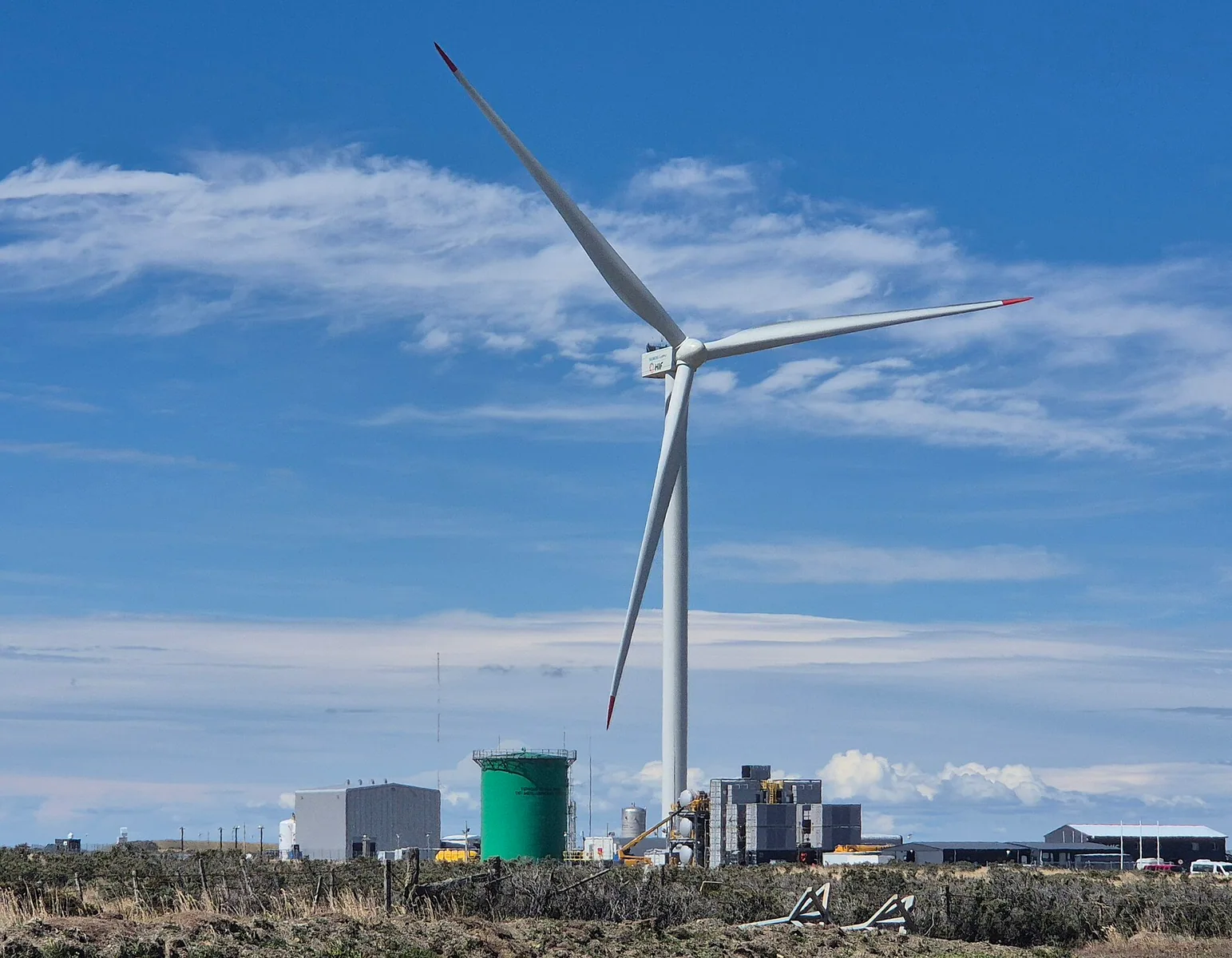
Porsche describes Haru Oni in Chile as a pilot synthetic-fuel project developed with HIF Global and operating since late 2022. Its documentation presents the potential to produce eFuels with a reduced footprint under the project’s conditions. That is a claim attributed to the project’s promoters, not an independent assessment of every synthetic fuel or every way of producing one.
The distinction matters because “eFuel” describes a family of fuels, not a single recipe with identical environmental results. Electricity, feedstocks, processing, transport and use can all vary. When reading about Haru Oni, separate three levels: what the facility has done, what its operators report and what they aim to achieve if the approach is replicated at a larger scale. The first is evidence about the project; the others need context and data before their scope can be assessed.
What a pilot plant can teach
A pilot can demonstrate that particular steps in a production chain have been brought together at a specific facility and reveal what may need to be resolved before expansion. It also gives observers a real project to follow over time. But the fact that a facility operates does not automatically show that it runs continuously, produces large quantities or supplies a broad market. Those questions require separate evidence.
When reviewing an announcement, look for precise verbs and units. “Planned,” “could produce” and “projected capacity” do not mean the same thing as actual output over a stated period. Ask whether the information concerns continuous operation or a particular trial, and where the product went. If those details are absent, the careful conclusion is that the source describes a project stage—not that general commercial supply is already established. Porsche characterizes Haru Oni as a pilot; that description should not be mistaken for proof of mass scale.
Environmental results depend on the boundaries chosen
A useful comparison has to define where its calculation starts and ends. At a minimum, find out whether it includes the energy and inputs used in production, conversion, transport and the use phase. If a figure counts emissions from one stage for one option but leaves out comparable stages for another, the apparent difference may reflect different boundaries rather than an advantage across the complete fuel pathway.
It is also important to ask where the electricity comes from and, where relevant, the source of the carbon used. Calling a fuel synthetic, or describing its footprint as reduced, is not enough. Results depend on assumptions and method: look for a figure with units, a time period, the stages included and an explanation of the data. Without those details, readers cannot reconstruct the balance or apply a project-specific claim to every plant, batch or driver. That does not mean the result must be unfavorable; it means there is not enough information to reach a conclusion.
From demonstrated production to usable supply
Scale raises several distinct questions: how much was actually produced, over what period, how consistently, and what share reached users. Rated capacity or an announced target can help explain a facility’s design, but neither replaces actual production figures. Likewise, making a batch does not prove that fuel will be reliably available in significant quantities across different locations. Look for dated figures and a clear distinction between observed results and future plans.
Cost also needs context. A target cost, a project estimate and the price paid by a driver are different measures; they should not be treated as interchangeable. Assessing competitiveness requires comparable conditions and a clearly stated basis, not an isolated number. The cited information presents Haru Oni as a pilot and does not, by itself, establish a retail price, broad availability or commercial-scale economics. The responsible answer to those questions is “this evidence does not establish it,” rather than an unsupported favorable or unfavorable prediction.
A fuel’s name is not enough to decide whether to use it
Describing a product as an eFuel does not establish that it is suitable for every petrol engine, fuel system or classic car. Compatibility depends on the specifications of the particular product and the vehicle’s requirements. Before using it, compare the fuel’s technical documentation with the owner’s manual and the manufacturer’s information for that model. If the documents leave the question open, ask the manufacturer or a qualified workshop familiar with the vehicle for confirmation in writing; do not infer compatibility from a marketing name.
Also distinguish a general claim about a technology from the specification of the batch being offered. Check the applicable standard, intended use and any stated conditions or limitations. If the seller cannot provide enough information for comparison, postpone the decision rather than using the product as a test. This process does not guarantee a mechanical outcome or replace the manufacturer’s instructions. Nor should a lower lifecycle footprint, if demonstrated in a particular case, be taken to mean that vehicle-use emissions disappear.
A practical way to check a new claim
When a report announces production, price or environmental impact, first write down exactly what is being claimed and who is making the claim. Then look for the period, unit and calculation boundary: is the figure actual or projected? Does it include production and transport? What energy and feedstock sources are stated? Is it a project measurement or an estimate? If answers are not published, record them as unknowns rather than filling gaps with assumptions.
Hypothetical example: an announcement says a facility “could supply” fuel to many vehicles and cites a low footprint. Before repeating the claim, check whether the volume has already been produced or is a target, what period it covers, whether the environmental calculation is explained and whether a sales destination is confirmed. Even with complete facility data, you would still need to check the fuel specification for a particular vehicle. This example does not describe Haru Oni’s results; it shows how to avoid turning a capacity promise into proven availability, or a figure with undefined boundaries into a universal conclusion.
A reasonable conclusion now—and what to track next
The most useful response is neither to declare that eFuels will meet every need nor to dismiss them solely because a facility is a pilot. Haru Oni merits continued attention as an industrial project: Porsche documents it as a pilot initiative operating since late 2022 with HIF Global. That fact alone does not settle how much fuel can be supplied at scale, under what economic conditions, with what complete environmental balance or for which vehicles it is compatible.
For future announcements, keep a short checklist: actual output and the period covered; operating continuity; energy and carbon sources; the method and boundaries of the environmental assessment; product destination and availability; cost stated on a clear basis; and the technical specification relevant to each use. Use project documents for claims attributed to its operators and seek independent documentation when a general environmental conclusion is presented. If any item is missing, say so explicitly. This recognizes what a pilot can contribute without portraying one particular demonstration as a universal solution already deployed.
Questions answered
Does Haru Oni prove that eFuels are already available at large scale?
No, not on its own. The cited source describes it as a pilot project. Claims of broad availability need evidence of actual output, continuity, distribution and where the fuel is supplied.
Does an eFuel necessarily have a low climate footprint?
That cannot be concluded from the name alone. You need to know the energy and feedstock sources, the production process, which stages the assessment includes and what assumptions it makes.
Can I use any eFuel in my car?
Do not assume so. Compare the specific product’s specification with your vehicle’s manual and manufacturer information, and ask for confirmation if the documentation is inconclusive.
Haru Oni is a pilot project worth following, not automatic proof of mass supply, competitiveness or climate neutrality. An informed assessment separates observed results from targets and asks for comparable evidence about the full pathway and the intended use.
Sources & editorial policy
Written by Autohaus Zephyr from the linked sources. Manufacturer figures are attributed claims, not our own tests. The practical comparisons and clearly identified examples are editorial analysis. Market availability and specifications require confirmation for the exact car.
Corrections: info@autohauszephyr.ch
How we work →Keep reading
- Hydrogen in motorsport: what Toyota is researching with a combustion engine
- Formula 1 2026: How to Read the Relationship Between Aerodynamics and Energy
- Sodium batteries and CATL Naxtra: what the announcement does and does not show