
Market · News & analysis
ë-C3 in Germany: 8,555 registrations and a precisely defined segment lead
Citroën reported on 16 November that the ë-C3 recorded 8,555 German registrations between January and October 2026, compared with 2,863 a year earlier. Citing Statnet for every figure, it places the car first among battery-electric B-segment models with a 6.8% share. The development concerns a specific market boundary: it does not identify Germany’s best-selling car overall or establish a Spanish or European ranking.
What matters
Volume almost triples, while the 6.8% share concerns Germany’s B-BEV segment rather than every electric registration in the country.
Almost three times the previous volume
Subtracting the two totals gives 5,692 additional registrations. Dividing that increase by the previous period’s 2,863 produces growth of approximately 198.8%. In other words, the final volume approaches three times the initial figure; the increase is not 300%. These are our calculations from Citroën’s two published totals for comparable ten-month periods, rather than an additional official data series.
The cumulative figure shows development over much of the year, but cannot establish October’s individual trend. It also says nothing about outstanding orders, worldwide deliveries or how many private buyers retain their vehicles. Studying monthly acceleration would require monthly observations. Treating January–October registrations as October alone would change the statistic’s meaning and create an apparent short-term result the source has not reported.
The denominator determines the meaning of first place
The source places ë-C3 within Germany’s B-BEV category: fully electric B-segment vehicles under Statnet’s classification. It assigns a 6.8% share, against 4.6% in January–October 2025, and a move from eighth to first. The share improves by 2.2 percentage points. Calling that 2.2% growth would confuse a change in share with a relative growth rate; the units matter as much as the headline number.
Citroën does not reproduce the complete model list or Statnet’s detailed classification rules in the release. We therefore retain the category as identified rather than reconstructing a missing competitor table. Leading this category does not mean leading all electric cars, all SUVs or all passenger vehicles. Another ranking becomes comparable only after its territory, period and denominator have been aligned with the figures discussed here.
The complete C3 range includes other powertrains
For C3 across all powertrains, Citroën reports 13,327 registrations over the ten months, approximately 37% above the equivalent earlier period. Its B-segment ranking moves from 22nd to 13th, while share rises from 1.7% to 2.3%. This second set of figures concerns the complete range and a different comparison universe. It should not replace the ë-C3’s battery-electric totals or be labelled an electric-only result.
As a descriptive calculation, 8,555 divided by 13,327 puts the electric contribution at around 64.2% of the reported C3 volume. This does not establish the same proportion for every retailer, month or customer type. It does help explain the electric version’s importance within the C3 nameplate’s expansion in these German figures. It is a relationship between published totals rather than a newly released official breakdown by sales channel.
Aircross grows but remains a separate vehicle
The ë-C3 Aircross records 4,040 units, compared with 1,122, an increase of approximately 260% according to Citroën. That corresponds to about 3.6 times the previous volume. The company places it 15th in its B-BEV model ranking with a 3.2% share. Those figures belong to Aircross and should not be added to ë-C3 to claim that one individual model achieved the combined registrations.
For a buyer, this distinction matters more than the shared family name. Identify the body style, battery, approved seating configuration and exact advertisement rather than transferring capacities between families. A ranking can suggest vehicles worth investigating, but cannot decide which fits a garage or charging routine. Nor does it replace confirming the version actually present in a particular used-car offer, whose specification may differ from another car sharing part of its name.
What the result can tell a Spanish buyer
German growth can help direct a search: it indicates a larger ë-C3 presence in that market than during the comparison period. It does not guarantee how many cars will become available used, or when. The source also provides no transaction prices, discounts, residual values or repair lead times from which an import saving or easy subsequent resale could responsibly be calculated.
If an attractive car appears, the next checks concern that individual vehicle: documentation, equipment, charging and condition. For a used EV, a battery-health report with a stated method and date is useful alongside the service history. Rising registrations cannot establish the condition of its battery pack. Those documents add information that even a large market total cannot contain, and keep the purchase decision tied to the car being offered.
Compare headlines without changing their boundaries
The Leapmotor BEV brand ranking in Germany concerns another classification, combining a brand, a month or cumulative period and a different comparison group. It does not automatically contradict ë-C3 leading B-BEV models. Before comparing headlines, write down what is being counted: model or brand, powertrain, segment, country and period. Only then is it possible to determine whether they claim the same first place.
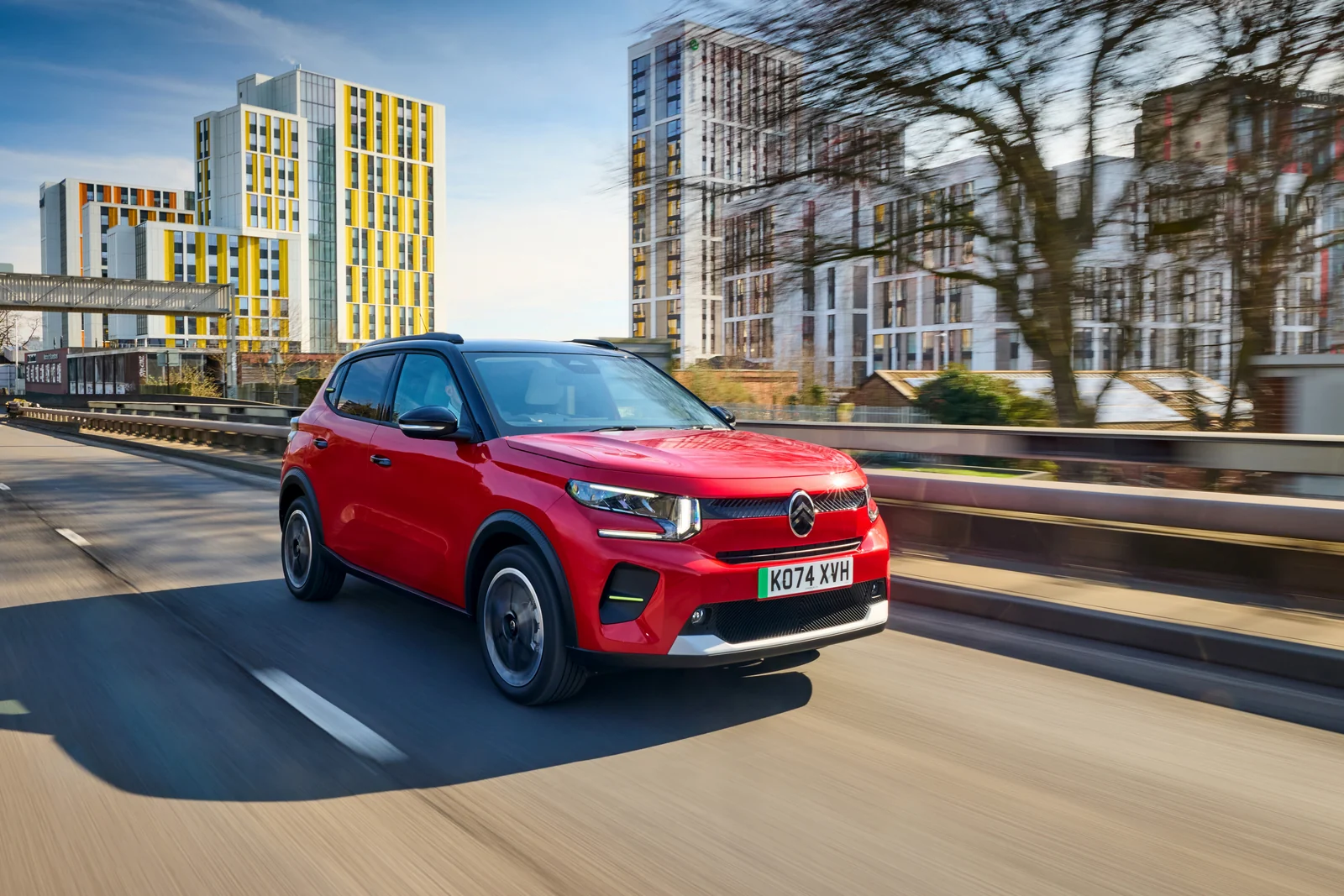
Our coverage of ACEA’s EU electric-market figures provides wider territorial context, but its percentages do not replace this release’s category. The photograph is a real UK archive image of an ë-C3 from 2025, with explicit credit and context. It illustrates the correct European model rather than a particular vehicle counted in Germany, a car inspected by Autohaus or stock available for sale.
The ë-C3 almost triples its German volume and gains weight within the electric B-segment, according to Citroën’s cited source. That merits commercial attention with territory and denominator intact, without turning market presence into evidence of an individual car’s condition or value.
Sources & editorial policy
Written by Autohaus Zephyr from the linked sources. Manufacturer figures are attributed claims, not our own tests. The practical comparisons and clearly identified examples are editorial analysis. Market availability and specifications require confirmation for the exact car.
Corrections: [email protected]
How we work →Keep reading
- Leapmotor in Germany: 3,661 registrations and the scope of its BEV lead
- EU electric-car share reaches 22.7% as four markets lead the shift
- Used EV battery health reports: how to interpret the results