
New cars · News & analysis
Škoda Octavia full hybrid: what it means and what to check before choosing
The full-hybrid label alone is not enough to assess a car. Learn to distinguish the technologies, relate them to your journeys, and verify the version and documents before deciding.
What matters
Do not choose by the marketing label alone: confirm the exact powertrain, assess whether it suits your journeys, and verify registration or emissions-label details from documents.
What Škoda announced, and what still needs confirmation
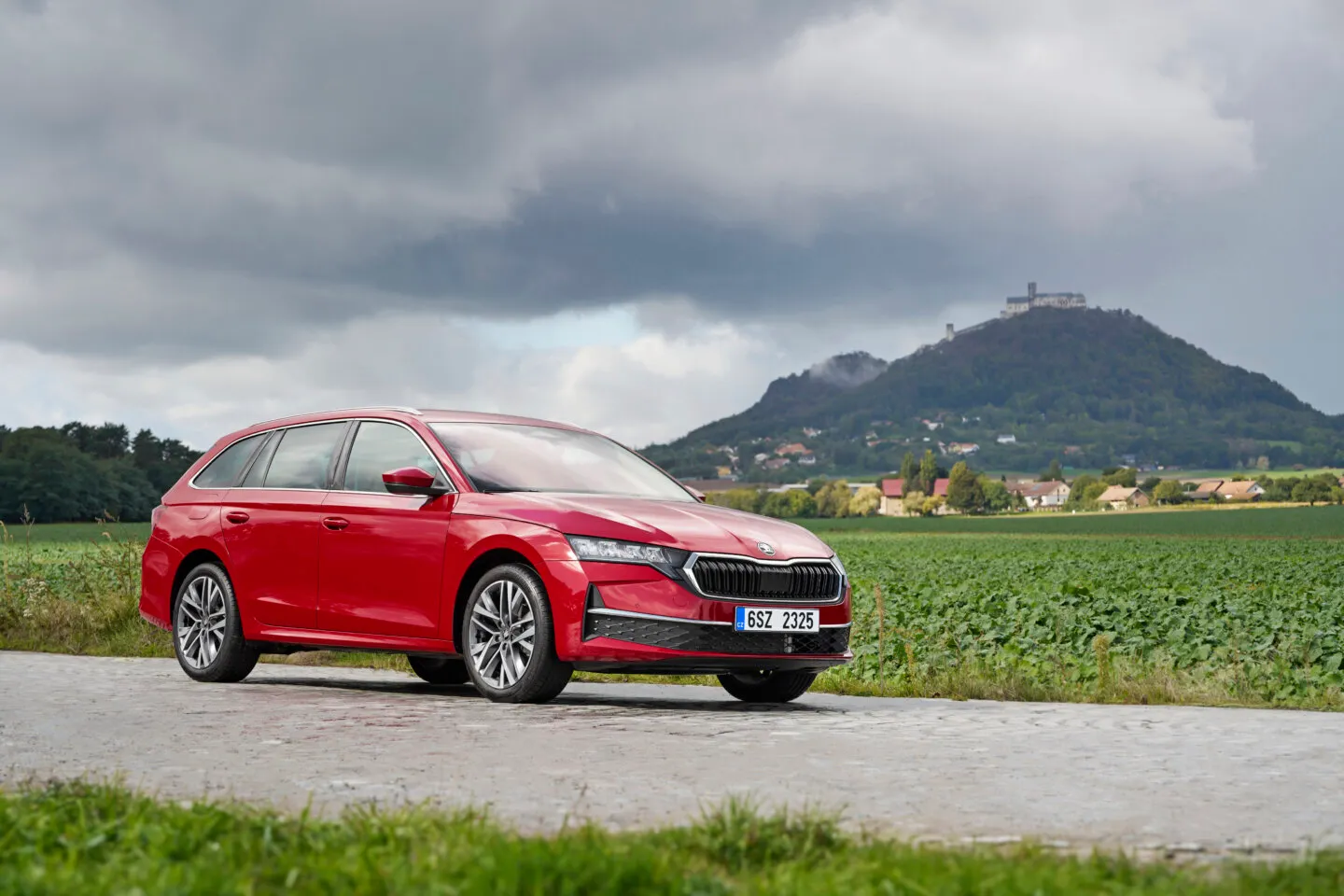
Škoda announced the Octavia full hybrid in hatchback and estate body styles, with system outputs of 100 or 125 kW. The company says it needs no external charging; orders are scheduled for October and first customer deliveries for December 2026. Selection and Sportline trims are announced. These are details from the announcement, not confirmation that every combination will be available in every country.
The news matters chiefly because it adds a hybrid option distinct from mild-hybrid and plug-in-hybrid naming. It does not establish the fuel consumption of a particular car, its final price, or its Spanish environmental label. Before comparing offers, find out whether the vehicle you are considering has a domestic-market specification, is an import, or is simply an advert using a broad description.
HEV, mild hybrid and PHEV: useful distinctions when reading adverts
Full hybrid usually corresponds to the HEV category: it combines a combustion engine with an electric system that is not charged by plugging the car into the mains. It can recover energy while driving and, in certain conditions, use electricity to move the vehicle. That does not make it a long-range electric car or mean it will always run without the combustion engine. Behaviour depends on the specific design and operating conditions.
A mild hybrid includes electric assistance, but should not be confused with a hybrid intended to travel in electric mode. A PHEV, or plug-in hybrid, has an external charging connection, and its electric usefulness depends, among other things, on charging it and having energy available in the battery. The advert's wording is not enough: check the version's specification, whether it has a charging port, and how its system is identified. If a seller uses terms interchangeably, ask for clarification in writing before comparing.
City or motorway: assess your journeys, not a fuel-consumption promise
If you make many urban journeys with frequent stops, a hybrid system may have opportunities to recover energy and support the combustion engine. But that description does not predict an individual driver's fuel use: traffic, temperature, distance, load and driving style all matter. To decide, map out a normal week: how many journeys you make, what proportion is urban, and how much time you spend on faster roads. A real routine is more useful than an imagined ideal one.
On long, steady motorway journeys, do not assume the same urban advantage will continue unchanged. Nor should you turn that observation into an automatic disadvantage: the comparison between equivalent versions and your own use matter. As a hypothetical example, someone who mostly drives short distances in congestion could consider whether an HEV suits them, but should not assign it a specific saving without comparable data. Someone who regularly travels farther might prioritise comfort, practical range, luggage and total cost as well as the hybrid system.
How to check that an advertised car is the version you want
Ask the seller for documents identifying the vehicle and its powertrain, not just a screenshot of the advert's headline. Cross-check the body style, trim, stated output and model designation against the documents and technical specification for that particular car. If it is an import, also confirm that its configuration matches the specification being advertised; sharing a model name across markets does not in itself prove that every detail is identical.
Ask explicitly whether the car has an external charging port and request clear images of the area where it would be, as well as a written answer about the technology. An answer such as “it's a hybrid” does not establish whether it is mild, full or plug-in. If the advert, documents and seller's explanation conflict, pause the comparison and ask for corrections. Do not pay a reservation fee to obtain an essential clarification later about which vehicle is being offered.
Compare offers by cost and specification, not by one label
A useful comparison starts by matching the vehicles: the same body style, technology, trim and document status, as far as the offers allow you to verify. Then separate the advertised amount from additional costs that may apply to the case: transport, paperwork, inspection, preparation or other items that need confirmation. Do not assume a foreign offer is cheaper because its initial price is lower, or that a trim name guarantees the same equipment in every market.
As a hypothetical example, two adverts using the word “hybrid” could describe cars that require different habits: one does not need external charging, while the other's electric use depends on plugging it in. Before deciding, make your own comparison table with documented total price, verifiable mileage and history, exact technology, confirmed equipment and outstanding questions. If a cost item is not broken down, mark it as unknown rather than inventing a figure. That discipline stops an attractive label from disguising an incomplete comparison.
Spanish environmental labels and registration: verify the individual case
Do not infer a Spanish environmental label solely from the words full hybrid, the output or the model year. A marketing label is not a substitute for the vehicle's technical and administrative identification. If the label affects your decision, confirm the result for the particular vehicle with the competent authority and using the documents that authority requires or recognises. Do not treat an estimate based on another Octavia or an advert website's description as definitive confirmation.
For an imported vehicle, request the documents that identify it in good time and ask which procedures and treatment apply to that specific case. Required documents and obligations may depend on the vehicle and the buyer's circumstances; this announcement alone cannot settle a tax or registration question. Note which authority must answer each issue, which document it will need and who will provide it. If an important official or documentary answer is still missing, treat it as pending rather than as fact.
| Term | Key question | What to check |
|---|---|---|
| Mild hybrid | Does the system only assist the combustion engine? | Technical specification and exact designation |
| Full hybrid / HEV | Does it operate without plugging into the mains? | Documented system and absence of a charging port |
| Plug-in hybrid / PHEV | Does it have external charging? | Port, documents and charging conditions |
Questions answered
Does the announced Octavia full hybrid need to be plugged in?
According to Škoda's announcement, it does not require external charging. Still check the exact version of any individual car; do not assume the same feature applies to another Octavia hybrid advertised under different wording.
Can I determine its Spanish environmental label from the words full hybrid?
It is not sensible to infer the label from the marketing name alone. Verify the particular vehicle using the required documents and the competent authority before making the label a basis for purchase.
Is a full hybrid always better for my use than a mild hybrid or PHEV?
There is no universal answer. Compare your actual journeys, whether you would charge a PHEV, the exact specification and the total cost of equivalent cars; do not assume a specific saving without comparable data.
The announcement introduces another option, but a sound purchase depends on identifying the exact technology and vehicle. Check the documents, your journeys, costs and any Spanish requirements with the relevant authorities; do not reserve or pay while the seller, payment recipient or essential terms remain unverified.
Sources & editorial policy
Written by Autohaus Zephyr from the linked sources. Manufacturer figures are attributed claims, not our own tests. The practical comparisons and clearly identified examples are editorial analysis. Market availability and specifications require confirmation for the exact car.
Corrections: info@autohauszephyr.ch
How we work →Keep reading
- Imported Cars and Low-Emission Zones: What to Check Before Choosing
- How to compare Mobile.de and AutoScout24 listings before importing
- What to ask a car seller in Germany: decide what to verify before reserving