
Motorsport · News & analysis
MotoGP cancels Australia: visibility and medical cover decide the day
The Australian Grand Prix scheduled for Sunday 25 October could not stage its main races. MotoGP said visibility affected the medical helicopter's operation. The decision illustrates that event safety includes the ability to respond to an emergency, not simply whether a motorcycle can complete a lap.
What matters
The cancellation concerns Sunday’s main races; ceremonial laps do not create a race result.
Three races cancelled, followed by two farewell laps
The official notice confirms that limited visibility affected the medical helicopter’s operation and led to cancellation of the MotoGP, Moto2 and Moto3 races. That is the stated reason at Phillip Island; we do not attribute the decision to a mechanical fault or our own assessment of the track surface.
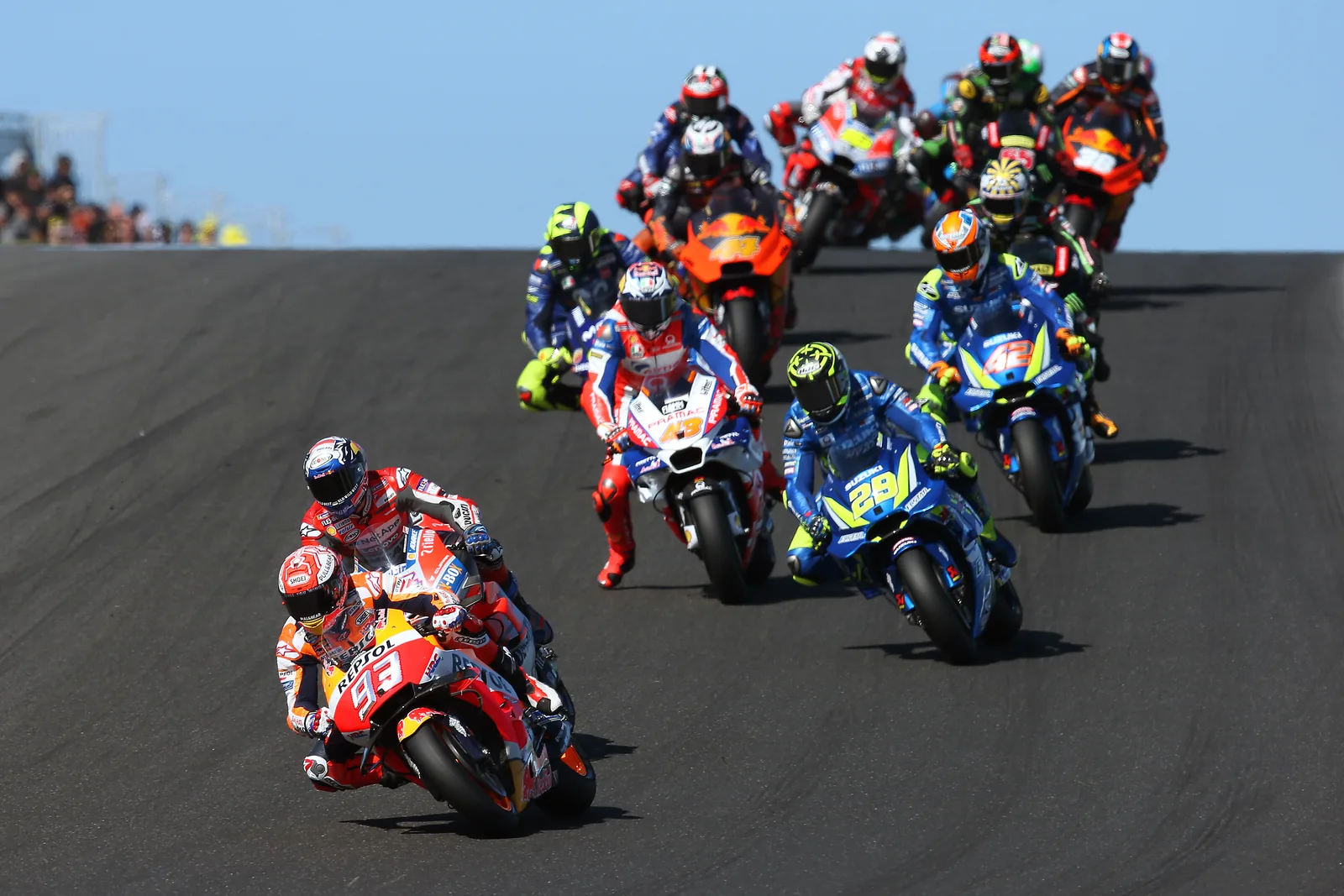
The MotoGP riders subsequently completed two laps behind the safety car and stopped on the main straight to greet the spectators. This was a ceremonial farewell, separate from a classified race. Their ability to circulate in that setting does not demonstrate that racing speeds could be accommodated with an equally available medical response.
Source: MotoGP, comunicado oficial; fecha visible 24oct y ruta fechada 25oct ↗
The circuit is not the entire safety system
An event needs to assess what happens when something goes wrong, alongside normal running. Medical response and evacuation form part of that capability. A surface that permits circulation under certain conditions cannot independently establish that every necessary resource can respond appropriately.
This does not create a universal helicopter rule for every circuit and category. Decisions depend on the event's arrangements and applicable conditions. The communicated fact at Phillip Island is specific: visibility affected the medical resource and the races were cancelled. Extending that to identical requirements across motorsport would require the relevant rules and event plans.
Cancellation is an operational sporting decision
Schedules, broadcasting and spectators create pressure for a Grand Prix to run. Recognising that pressure cannot establish that postponement would have been safe or that organisers possessed a viable alternative. Assessing those options would require event information not supplied by a general race report.
The useful question is which condition prevented racing and whether it changed sufficiently. Maintaining a decision can matter as much as responding to an actual improvement. We do not have every internal deliberation, so the analysis does not assign motives or reconstruct an instruction different from the public statement.
Tribute laps do not replace a race
Following a safety car has a different context and purpose from racing. The existence of that activity should not be used to infer that a full Grand Prix could run under equivalent conditions. Speed, competition and exposure do not become identical merely because vehicles are on the same asphalt.
A farewell should not be converted into a sporting result either. Coverage needs to distinguish race classification, ceremonial activity and earlier sessions. Explaining championship consequences requires the applicable results and rules rather than allocating points to a race that did not take place.
Travelling fans need specific practical information
For spectators who travelled, cancellation also raises questions about access, communication and ticket conditions. A sporting cancellation cannot establish a refund, compensation or travel policy. Those answers belong to the official terms of the organiser, ticket seller and contracted travel providers.
Useful reporting should avoid universal commercial promises. It can direct readers to retain receipts and review official notices without asserting unverified entitlements. The same principle applies to future bookings: a weather forecast does not replace cancellation terms or knowledge of the event's notification channels.
What the Sunday notice establishes and what it does not
The official communication is brief: it identifies the cancelled classes, the visibility problem affecting the helicopter and the riders’ farewell. It publishes no full medical decision timeline, alternative evacuation arrangement or ticket terms. Those limits prevent reconstruction of internal discussions or promises of compensation based on a sporting notice.
For spectators, the useful separation is between the sporting outcome—the cancelled races—and subsequent dealings with the organiser or seller. For understanding safety, the episode exposes a specific dependency between competition and response capability. It does not establish an identical rule for every circuit: it documents why this Grand Prix could not race on Sunday.
Source: MotoGP, comunicado oficial; fecha visible 24oct y ruta fechada 25oct ↗
Questions answered
Was the stated reason simply the track surface?
No. MotoGP identified limited visibility affecting operation of the medical helicopter.
Did the safety-car laps constitute a race?
The reviewed notice does not present them as a classified race, and no winners or points are assigned to them here.
Australia's Sunday ended without the scheduled races because visibility limited the medical arrangements. Accurate coverage preserves the reason, affected classes and distinction between tribute and competition. The lack of a race is the day's outcome, not an invitation to manufacture a classification.
Sources & editorial policy
Written by Autohaus Zephyr from the linked sources. Manufacturer figures are attributed claims, not our own tests. The practical comparisons and clearly identified examples are editorial analysis. Market availability and specifications require confirmation for the exact car.
Corrections: info@autohauszephyr.ch
How we work →