
Technology · News & analysis
Honda explains in-motion charging: 150 kW peaks and road trials ahead
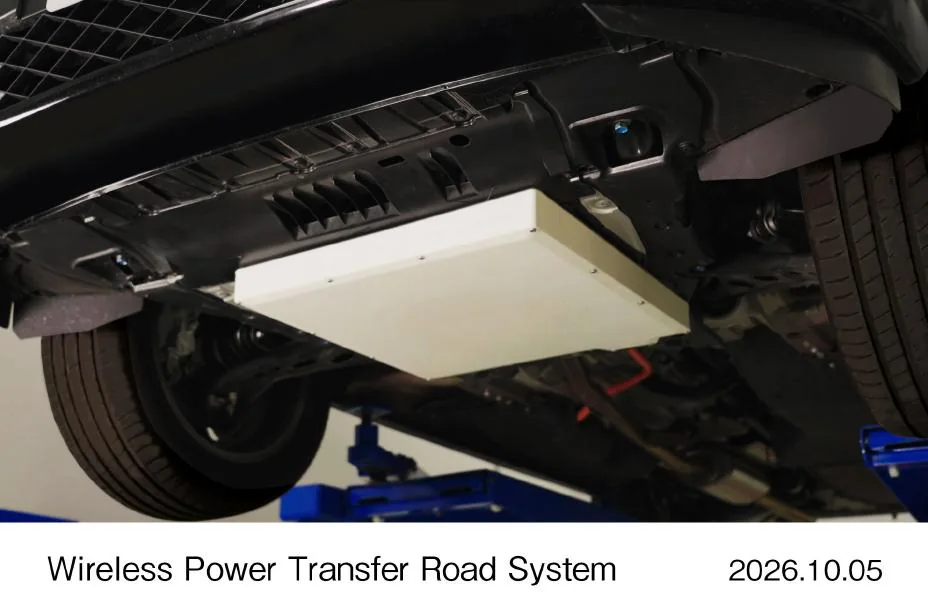
Honda detailed an in-motion wireless charging system on 19 October with peak output of up to 150 kW per transmitter. Copper-strip coils and road modules with integrated inverters aim to make the equipment compact and simplify installation. The research prioritises trucks, with Tateyama Expressway demonstrations planned from fiscal 2027.
What matters
The 150 kW figure is a per-unit peak; useful performance depends on receiving time and the equipped corridor.
The research and its timetable
Honda describes road-mounted transmitters and vehicle receivers, with instantaneous peak output of up to 150 kW per transmitter unit. It works with Taisei and Taisei Rotec and plans to participate in public-road demonstrations on the Tateyama Expressway from fiscal 2027. Logistics vehicles are the proposed initial commercial priority. This is research and trial planning, rather than an operating public service.
Source: Honda Technology, investigación Dynamic Wireless Power Transfer ↗
Instantaneous power is not delivered energy
Power describes the rate of energy transfer. Establishing how much reaches a vehicle requires the receiving time and losses. A brief peak can be technically significant without delivering a large amount over a journey. Battery capacity and vehicle consumption remain part of the balance.
For a purely hypothetical example, receiving an average one hundred kilowatts for two minutes would provide roughly 3.33 kWh before losses. This is not a measurement of Honda's system. It illustrates why equipped distance, speed and continuity of supply matter more than interpreting a peak figure as a complete recharge.
Copper strip makes the receiver more compact
The most specific engineering detail is replacing fine-stranded wire with copper strip optimised for frequencies around 85 kHz. Honda explains that high-frequency current concentrates near a conductor’s surface. Its design aims to use that surface with sufficiently wide strip no more than one millimetre thick.
Honda attributes an approximately 30% reduction in coil bulging relative to Litz wire to the arrangement, based on its calculations. Components occupy the centre space and the receiver fits within a passenger-car subframe. These are Honda’s stated development results, rather than independent measurements or proof of compatibility with any existing car.
Source: Honda Technology, investigación Dynamic Wireless Power Transfer ↗
The road changes too: DC distribution and integrated modules
Each road unit integrates its coil and inverter and receives power through a DC distribution line. Compared with distributing AC from a shared inverter through individual connections, Honda aims to reduce trenching and wiring. The industrial problem extends beyond transferring power: installation and maintenance must avoid turning each repair into extensive roadworks.
Taisei develops the DC supply and Taisei Rotec the road-construction methods; Honda works on transmitters and vehicle receivers. Planned Tateyama demonstrations from fiscal 2027 will test that combination beyond the development environment. Trucks and logistics are the initial commercial priority because intensive use makes fewer charging stops valuable, although system-wide cost remains to be demonstrated.
Source: Honda Technology, investigación Dynamic Wireless Power Transfer ↗
Interoperability needs evidence
An equipped road would be more useful if different vehicles could access it under compatible rules. An intention to standardise does not establish that an existing EV has a receiver, or that another manufacturer's installation will work without adaptation. Compatibility requires technical identification, communication and validation.
Buyers should not assign this capability to a car simply because it is electric. The receiver hardware, compatible systems and operating terms would need to be documented. An infrastructure timetable also cannot confirm that a car bought today will accept a future update. Development direction and contracted vehicle capability are separate matters.
What future trials should explain
Useful evidence would include effective energy per journey, availability, performance under different alignments and maintenance requirements. Reporting should distinguish measured results from simulation and commercial-scale expectations. It should identify which parts of the outcome depend on the vehicle and which depend on the prepared road section.
Fiscal 2027 should not become a January opening date or a general rollout commitment. A public-road demonstration is a trial in a different environment, not proof that every permission and operating model is complete. Preserving that sequence will allow progress to be recognised without first promising a network that does not yet exist.
Questions answered
Can any existing EV use it?
That is not established. Receiver hardware, compatibility and operating conditions would need to be documented.
Do the planned trials mean an open network in January 2027?
No. The source refers to fiscal 2027 and demonstrations, not a general service opening date.
Dynamic charging transfers part of the energy challenge to infrastructure. Its assessment needs useful energy, time and corridor operation alongside power. Honda has described research and a next trial setting, not established a commercial road compatible with the entire vehicle fleet.
Sources & editorial policy
Written by Autohaus Zephyr from the linked sources. Manufacturer figures are attributed claims, not our own tests. The practical comparisons and clearly identified examples are editorial analysis. Market availability and specifications require confirmation for the exact car.
Corrections: info@autohauszephyr.ch
How we work →