
Technology · News & analysis
Chery showcases Volt-dragon and V2G: what a complete station must prove
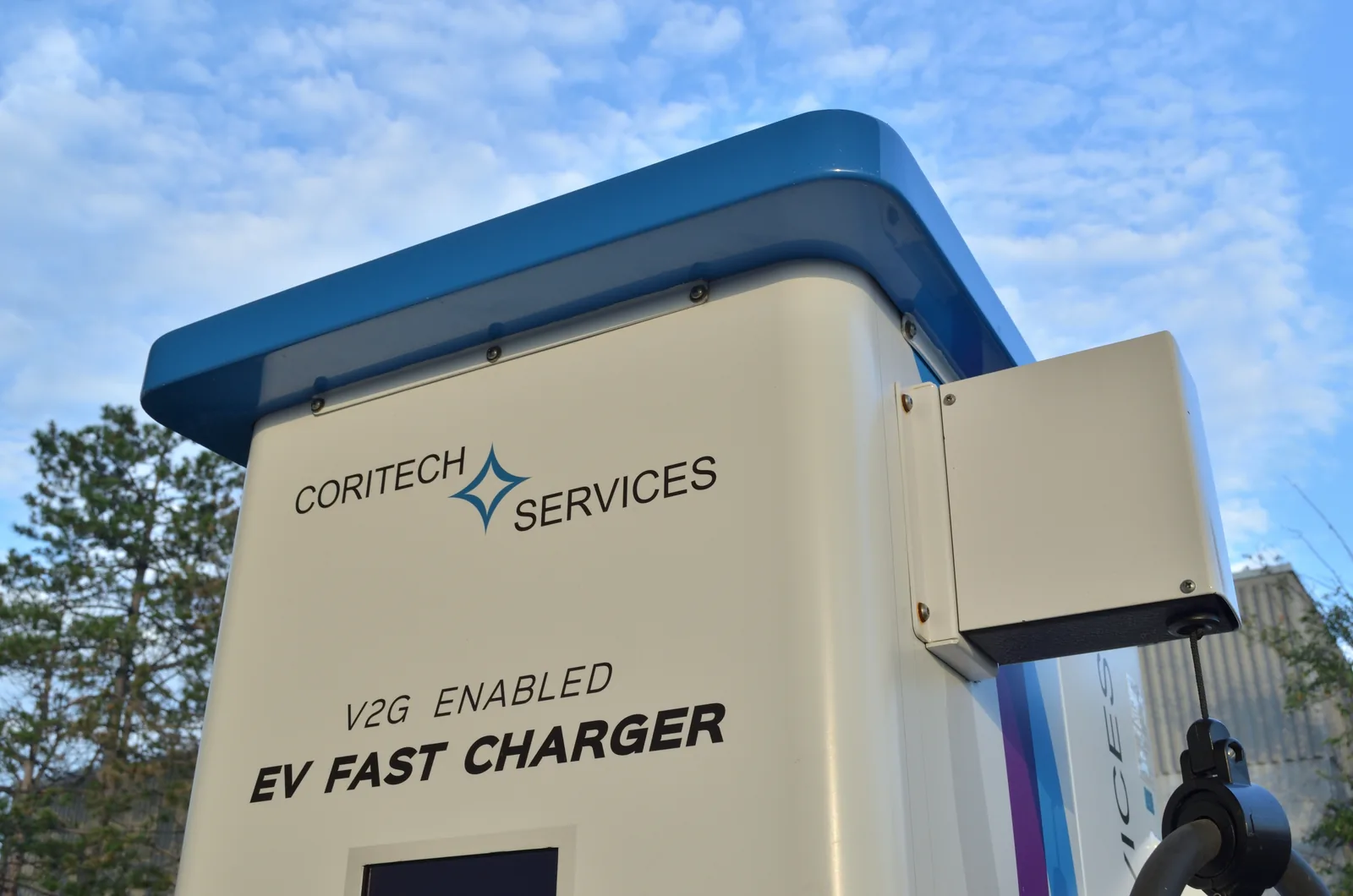
Chery showed Volt-dragon and a V2G demonstration station combining solar, storage and high-power charging, according to JETOUR’s 23 October release. The proposal treats charging as a complete energy system. The communication describes demonstrations and applications without establishing a European public network with verified commercial terms.
What matters
The primary source establishes a demonstrator; an operating service, compatible vehicles and local terms remain unverified.
What the primary release establishes
In its account of the Wuhu technology events, JETOUR described Volt-dragon and a V2G demonstration station combining solar generation, batteries and high-power charging. This is corporate disclosure of showcased technology, not verification of a global commercial network. The release does not identify a Spanish service with access terms, compatible vehicles and guaranteed performance.
Source: JETOUR Auto, comunicación primaria distribuida por GlobeNewswire ↗
The proposal connects mobility with energy supply
JETOUR’s release brings together two different applications: Volt-dragon fast-charging technology and a demonstration station combining solar, storage, high-power charging and V2G exchange. The useful development is the combination of those layers. The vehicle becomes part of an energy architecture coordinating generation, reserves and demand, rather than simply a load connected to a charger.
The same release mentions a solar-and-storage microgrid replacing diesel generation at an electric heavy-truck facility in Spain. It does not provide a location or sufficient operating conditions to verify the case or extrapolate its results. We retain it as a bounded corporate statement, without turning it into a Spanish public network or calculating savings and avoided emissions.
Source: JETOUR Auto, comunicación primaria distribuida por GlobeNewswire ↗
Advertised power and the vehicle's charging curve
Charging requires compatibility between infrastructure and vehicle. A car does not continuously receive the maximum rating printed on the charger: its battery and operating conditions limit acceptance. Temperature, state of charge and system management belong in the assessment. High-voltage architecture alone cannot promise a particular charging time.
A stronger comparison measures energy received during a defined interval, stating starting and finishing conditions. A peak may be brief. A claim about added driving distance also introduces a reference consumption which needs explanation. Without that context, apparently equivalent promises may describe different tests.
V2G needs more than an output socket
Vehicle-to-grid operation should not be confused with powering an appliance from a car. A functioning grid service needs a compatible chain and operating arrangements. A battery's ability to discharge does not establish that a specific vehicle has the feature enabled or that a service contract exists in its territory.
Prospective users should check bidirectional equipment, energy-reserve limits, discharge control and responsibility when faults occur. Warranty conditions and the intended vehicle duty cycle also deserve attention. A real commercial offer needs to answer those questions; a demonstration cannot supply universal answers.
Solar and storage do not remove the energy balance
Solar generation depends on availability, while stationary batteries hold finite energy. Combining them may help manage a site, but cannot create unlimited supply. Power, stored energy and the demand profile need to be stated and kept distinct.
Consider a conceptual station serving several vehicles during a peak and restoring its reserve afterwards. Handling that episode does not prove it can sustain the same load all day. Assessment must include the complete period, replenishment and losses. This is not a claimed Chery result: it identifies the evidence needed to evaluate one.
Event V2L and grid-connected V2G serve different uses
JETOUR also describes using V2L to power cooking and entertainment during a camping activity at the event. That demonstrates external consumption supplied by a vehicle. The V2G station has a different purpose: exchanging energy with a grid. Demonstrating one does not prove that every group model supports the other or that a customer can contract the service in their country.
An operator’s comparison needs a list of compatible vehicles, charging and discharge power, reserve limits and connection terms. A traveller can start with the specific location, access and payment method. The technology communication establishes a development direction, but does not yet provide those elements for planning a European commercial service.
Source: JETOUR Auto, comunicación primaria distribuida por GlobeNewswire ↗
Questions answered
Is V2G the same as running an appliance from a car?
No. Supplying an appliance and participating in a grid service are different applications with different requirements.
Will my car always receive the charger’s maximum power?
No. Acceptance depends on compatibility and vehicle conditions; a contextualised charging curve or measurement is needed.
Chery's proposition matters because it connects infrastructure and vehicles. Validation requires the whole system: useful energy, simultaneous demand, compatibility and operation. The communication establishes a technology showcase, not automatic grid participation for every EV or a reproducible charging session from a peak-power promise.
Sources & editorial policy
Written by Autohaus Zephyr from the linked sources. Manufacturer figures are attributed claims, not our own tests. The practical comparisons and clearly identified examples are editorial analysis. Market availability and specifications require confirmation for the exact car.
Corrections: info@autohauszephyr.ch
How we work →